


We help homeowners protect the people they love. A formal union can quietly alter earlier plans, leaving savings and the family home at risk if no action is taken.
This short guide explains in clear terms how the law treats an existing testament when you get married or enter a civil partnership. We focus on real concerns: who inherits the house, how pension pots are handled and the practical steps to set matters right.
Timing matters. We explain what happens before the ceremony, what changes at the moment of legal union and when to review plans again as life moves on.
For plain, practical information and sensible next steps, see our detailed note on changing your will after marriage or civil partnership.
Key Takeaways
- Marriage or a civil partnership can unintentionally revoke an earlier testament.
- Small steps often protect the home and household finances.
- Timing matters — check documents before and soon after the ceremony.
- Complex family situations need tailored legal advice.
- We offer plain guidance to reduce stress and protect family security.
How marriage or civil partnership affects an existing will in the UK
A legal union can quietly cancel a previously drafted testament unless specific wording saves it.
In England and Wales, the law normally revokes any testament made before a wedding or the registration of a civil partnership. The rule aims to protect a new spouse or partner by ensuring they are not cut out by an older document.

A testament can survive the ceremony if it states it was made in contemplation of that union and names the person involved. This phrase matters: it is the legal test that keeps earlier instructions valid.
The effect often catches people out. Couples make papers while engaged and then assume nothing changes on the date. Older homeowners, rapid relationships and cases where capacity is doubtful are common danger points.
Finally, the UK uses different rules in different places. Scotland and Northern Ireland treat revocation and intestacy differently. Where you live or are domiciled can change the outcome, so check local law.
If a testament is revoked and not replaced, intestacy rules decide who inherits. We explain those rules next.
What happens if you don’t update your will after getting married
If no fresh testament exists on the date a legal union is registered, the law treats the person as having died intestate. Dying intestate means there is no valid document naming beneficiaries, so a fixed legal formula decides who inherits.
How intestacy rules work
When intestacy rules apply and what “dying intestate” means
Intestacy rules apply automatically in England and Wales when no valid testament survives a union. A strict order of relations then steps in to inherit the estate.
How the estate is distributed when there is a spouse or civil partner and children
Under these rules the spouse civil partner takes property and other assets up to £322,000. Any remainder is split half to the spouse civil partner and half equally among children. Grandchildren can substitute if a child has already died.
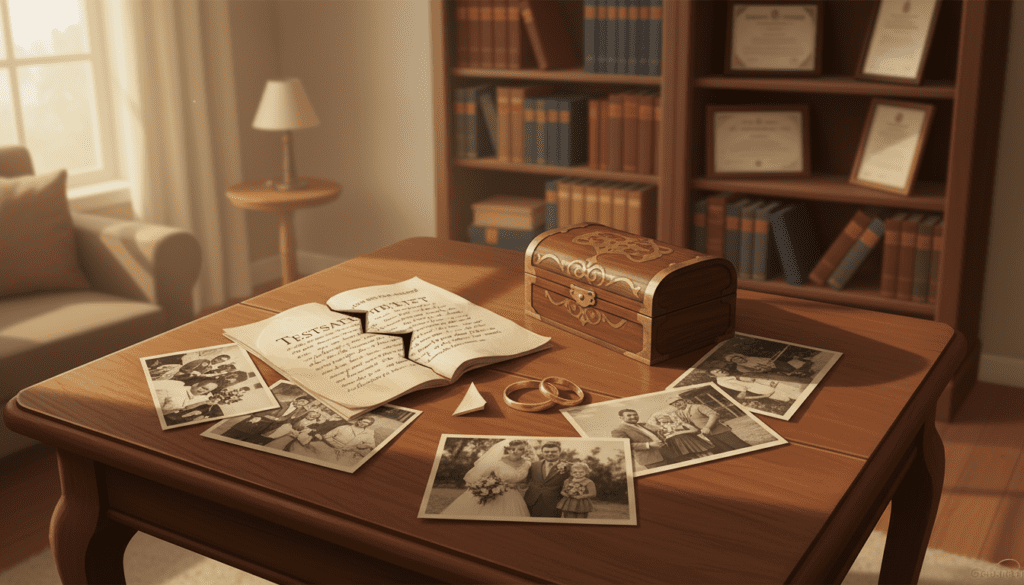
What the £322,000 threshold can mean for property and savings
Property value, savings and ISAs often push an estate above £322,000. That can force a sale of a home or delay payments to children until funds are available.
How intestacy affects children from previous relationships and wider family
Children from earlier relationships may get less than expected because the spouse civil partner receives a guaranteed share first. Other relatives inherit only in a set order.
When the estate could pass to the Government
If no eligible relatives exist under the rules, the full estate passes to the Government. That is rarely what people intend.
| Situation | Immediate outcome | Practical risk |
|---|---|---|
| Spouse civil partner and children | Spouse inherits £322,000 then half of remainder; children share the rest | Home sale to raise cash; reduced share for children |
| Spouse civil partner only | Spouse inherits all | Simple, but may not match earlier wishes |
| No living relatives | Estate passes to Government | Intended beneficiaries may be excluded |
Key takeaway: If you want specific people to inherit estate and property, a fresh, valid testament is usually needed to avoid the default rules intestacy imposes.
changing your will after marriage or civil partnership uk
A post-ceremony testament is the simplest way to ensure estate instructions reflect present circumstances. Making a new document reduces the risk of intestacy and keeps gifts in line with current wishes.
What people usually update first
- Executors and trustees: name (or re-name) an executor and a backup. Confirm trustees if a trust is in place.
- Guardians: appoint guardians for any children who remain minors.
- Gifts and provision: align monetary gifts and property shares with today’s assets and home arrangements.
Balancing needs
Many families want to protect a spouse civil partner so they can remain in the home, while also providing fairly for children and stepchildren. Careful drafting can create lifetime rights, trusts or staged gifts to achieve that balance.
Professional help matters
DIY wording often causes disputes later. Using a solicitor or qualified writer reduces common validity problems such as signing errors, unclear gifts and missing replacement executors. For plain guidance on when to take action, see this note on importance of updating a testament upon and further practical advice at amendments to a testament.

Complex situations that make updating your will especially important
B. Complex family setups call for a careful review of testament documents to avoid unintended outcomes.
Second unions and remarriage
Remarriage can revoke an earlier testament in England and Wales. That sudden effect can leave children from a prior relationship with little or nothing unless fresh provision is made.
Cohabiting partners
Cohabiting partners lack the automatic inheritance rights that a spouse or civil partner has. Without clear documents, a long-term partner may inherit nothing.

Divorce and dissolution
Divorce does not always cancel a testament. But gifts to a former spouse are treated as if they predeceased the testator and executor appointments can fail. That gap can create partial intestacy and delays for the family.
- Blended families: risk unintentional disinheritance of children from prior relationships.
- Practical risks: competing claims over a home, disputes and court delay.
- What ifs: think about simultaneous deaths, a beneficiary who dies first and an unavailable executor.
For timing and practical steps, see our note on the five most crucial times to update a and guidance on how marriage affects estate plans at protecting a family’s future.
Beyond the will: other documents to review after a change in relationship status
Many vital estate items sit outside a testament and need quick attention when status changes. These papers can affect who gets money and who makes decisions if a person lacks capacity.
Lasting Powers of Attorney
Who can act for you if you cannot
Make sure powers name the right person and sensible backups. That keeps decision-making consistent with family life.
Pensions, life insurance and nominations
Check forms that sit outside a testament
Pension nominations, life policies and death-in-service arrangements often pass straight to the named person. An old nomination can defeat the intentions set in a testament.

Simple checklist
- Pension nomination or expression of wish
- Life insurance beneficiaries and workplace benefits
- Lasting Powers of Attorney and registered agents
- Bank and investment account nomination details
When to review
We suggest a full review every three to five years and straight away after major life events. Big asset moves, a new home, or a different family situation can make old papers unsuitable.
Watch for legal reform
The Law Commission has noted risks linked to current revocation rules and exploitation. Reform may come, but plan on today’s rules for now. That gives people practical protection in place and cuts the chance of costly disputes.
Final thought
Checking these documents takes little time but gives significant peace of mind. Proper reviews reduce delay, protect people you care for, and keep plans working in real life.
Conclusion
An up-to-date testament helps avoid intestacy rules deciding who inherits at death. In England and Wales, a marriage or civil partnership can revoke an older document unless it was made in contemplation of that event.
If a testament lapses, intestacy may steer an estate away from the people you intend to protect. Think about a spouse, civil partner, children and any partner who lives in the property.
Next steps: review the testament, check Lasting Powers of Attorney and nomination forms, and seek professional advice for complex situations. For guidance on timing, see our note on how often to review a testament.
Putting the right paperwork in place is a small act that protects assets and reduces stress for those you care for.