


When it comes to estate planning, safeguarding your assets is one of the most important steps you can take. In England and Wales, trusts have been used for over 800 years to do exactly that — protect what matters most. England invented trust law, and it remains one of the most powerful legal tools available to ordinary families today.
A trust is a legal arrangement that allows you to separate the ownership of your assets from the benefit of those assets. You decide who benefits, when they benefit, and under what conditions — giving you control that extends far beyond what a Will alone can achieve.
Setting up the right trust means your assets are directed exactly where you want them to go. It helps protect your loved ones from threats like care fees, divorce, bankruptcy, and inheritance tax (IHT), while keeping your legacy intact for future generations.
Key Takeaways
- Trusts are a crucial tool for safeguarding assets in England and Wales — and they’re not just for the rich. They’re for the smart.
- A trust separates legal ownership (held by trustees) from beneficial ownership (enjoyed by beneficiaries), giving you lasting control over how your assets are used.
- Trusts provide protection against care fees, divorce, creditors, and inheritance tax — threats that affect ordinary homeowners, not just the wealthy.
- Assets held in trust bypass probate delays entirely — trustees can act immediately without waiting months for a Grant of Probate.
- Establishing a trust helps protect your legacy and provides for loved ones on your terms, not the government’s.
What is a Trust?
A trust is a legal arrangement — not a legal entity — that allows one person (the settlor) to transfer assets to trustees, who then hold and manage those assets for the benefit of named beneficiaries. The trust itself has no separate legal personality; it is the trustees who become the legal owners of the assets and who bear the responsibility for managing them properly.
Definition and Purpose
A trust has a clear structure with three key roles. The settlor creates the trust and transfers assets into it. The trustees become the legal owners and manage those assets according to the rules set out in the trust deed. The beneficiaries are the people who ultimately benefit from those assets. Trusts can protect assets from creditors, shield the family home from care fees, prevent sideways disinheritance, and help families plan for inheritance tax efficiently.
The purpose of a trust varies depending on the family’s circumstances. For many homeowners, the primary concern is protecting the family home — the average home in England is now worth around £290,000, and without proper planning, a significant portion of that value can be lost to care fees (averaging £1,200-£1,500 per week), IHT at 40%, or a beneficiary’s divorce. A properly structured trust addresses all of these threats.
To learn more about trusts, check out https://mpestateplanning.uk/what-is-a-trust-fund/. It gives detailed information on trust funds and their uses.
Types of Trusts
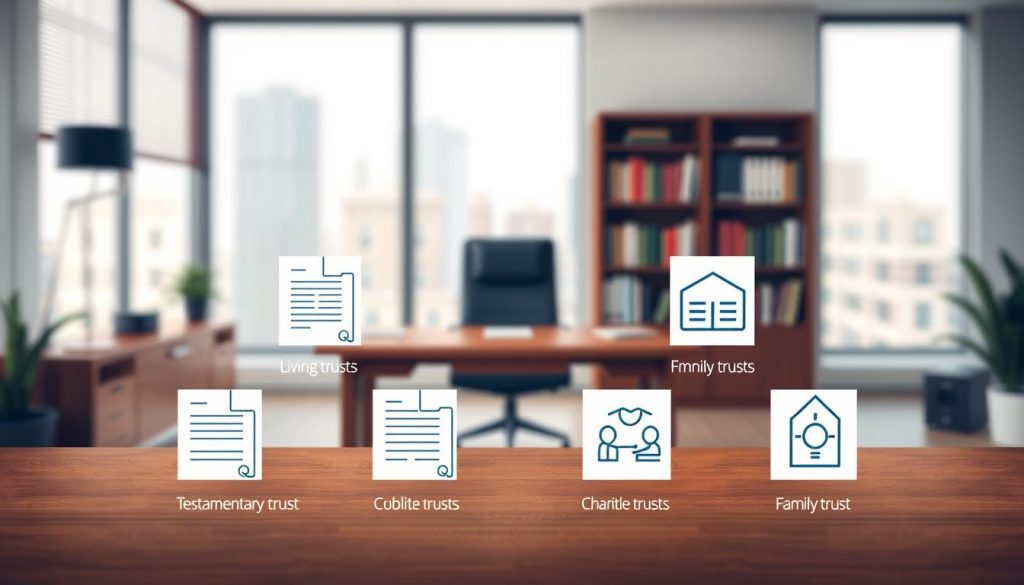
In English law, trusts are first classified by when they take effect: a lifetime trust is created during the settlor’s lifetime, while a will trust takes effect on death. They are then classified by how they operate. The main types of trusts used in estate planning are:
- Discretionary Trusts — the most common type, making up the vast majority of trusts created, where trustees have absolute discretion over who receives what and when
- Bare Trusts — where the beneficiary has an absolute right to the assets once they reach age 18 (16 in Scotland)
- Interest in Possession Trusts — where a life tenant receives income or use of trust property, with capital passing to remaindermen when the life interest ends
Understanding the differences between these types is essential, because they have very different legal, tax, and asset protection consequences.
| Type of Trust | Purpose | Benefit |
|---|---|---|
| Discretionary Trust | Provides maximum flexibility — trustees decide how, when, and to whom assets are distributed. No beneficiary has a fixed right to anything. | Strongest asset protection: shields against care fees, divorce, creditors, and bankruptcy. Can last up to 125 years. |
| Interest in Possession Trust | Gives a named beneficiary (life tenant) the right to income or use of the trust property during their lifetime. | Commonly used in will trusts to protect a surviving spouse while ensuring assets ultimately pass to children — preventing sideways disinheritance. |
| Bare Trust | Holds assets on behalf of a named beneficiary who has an absolute right to both income and capital at age 18. | Simple to administer, but offers no asset protection — the beneficiary can demand the assets at 18 and trustees cannot refuse (the principle from Saunders v Vautier). Not IHT-efficient. |

Why Consider Setting Up a Trust?
Trusts are one of the most effective ways to protect your assets and plan your estate properly. By setting up a trust, you ensure that your assets are managed and distributed according to your wishes — not left vulnerable to the threats that catch so many families off guard.
Benefits of Asset Protection
The single biggest advantage of a trust — particularly a discretionary trust — is the protection it provides. Because no beneficiary has a fixed legal right to the trust assets, those assets are shielded from a wide range of threats that would otherwise consume them.
The key asset protection benefits of a discretionary trust include:
- Care fee protection: If a beneficiary enters care, the local authority cannot force trustees to release trust assets — because the beneficiary doesn’t own them. Without a trust, anyone with savings above £23,250 must self-fund their care at £1,200-£1,500 per week until their assets are depleted to £14,250. Between 40,000 and 70,000 homes are sold every year in the UK to fund care — a trust can prevent yours from becoming one of them.
- Divorce protection: With a UK divorce rate of around 42%, trust assets are far harder for an ex-spouse to claim. As Mike Pugh puts it: “What house? I don’t own a house.”
- Creditor and bankruptcy protection: Trust assets sit outside a beneficiary’s personal estate, making them much harder for creditors to reach.
- Sideways disinheritance prevention: If your spouse remarries after your death, trust assets are protected for your children rather than passing to the new partner’s family.
The critical point is timing. You must plan years in advance — you cannot transfer assets into a trust once a need for care has become foreseeable, because the local authority may treat this as deprivation of assets. There is no fixed time limit on deprivation claims (unlike the 7-year IHT rule), but the longer the gap between the transfer and the need for care, the harder it is for the local authority to challenge it.

Estate Planning Advantages
Beyond asset protection, trusts offer significant estate planning advantages. They allow you to distribute assets on your terms, can be structured to reduce your inheritance tax liability, and — crucially — they bypass probate delays entirely. When you die, assets held in trust do not need to wait for a Grant of Probate. Trustees can act immediately, while sole-name assets outside the trust may be frozen for months during the probate process.
A comparison of estate planning options is shown in the table below:
| Estate Planning Tool | Asset Protection | Flexibility | Tax Efficiency |
|---|---|---|---|
| Trusts (Discretionary) | High — assets shielded from care fees, divorce, creditors, and bankruptcy | High — trustees can adapt to changing family circumstances over up to 125 years | Variable — can be highly tax-efficient when properly structured. Most family homes incur zero entry charges under the relevant property regime |
| Wills | Low — assets pass to beneficiaries outright and become personally vulnerable to their divorce, creditors, and care fee assessments | Low — takes effect only on death and becomes a public document once probate is granted | Variable — depends on estate value and available reliefs. No ongoing asset protection regardless of tax position |
Trusts stand out for their combination of flexibility, asset protection, and privacy. A Will is still essential — you need one for assets outside the trust — but a trust is often the cornerstone of a comprehensive estate plan.
Different Types of Trusts
Trusts come in several forms, each designed for different purposes and offering different levels of protection. Choosing the right type of trust is one of the most important decisions in estate planning, and it requires specialist advice — as Mike Pugh says, “The law — like medicine — is broad. You wouldn’t want your GP doing surgery.”
Bare Trusts
A bare trust is the simplest type of trust. The beneficiary has an absolute right to both the income and the capital of the trust, and once they reach age 18 (or 16 in Scotland), they can demand the trustees hand everything over. This is known as the principle from the case of Saunders v Vautier — the beneficiary can collapse the trust entirely.
Because the beneficiary has a fixed entitlement, bare trusts offer no asset protection. The assets are treated as belonging to the beneficiary for tax purposes, and they are vulnerable to that beneficiary’s creditors, divorce proceedings, and care fee assessments. A bare trust is not IHT-efficient either — the assets form part of the beneficiary’s estate.
Bare trusts are sometimes used to hold assets for very young children (for example, a grandparent gifting money to a grandchild), but they should be used with caution because of the complete lack of control once the beneficiary turns 18. All bare trusts must also now be registered on HMRC’s Trust Registration Service.
Discretionary Trusts
Discretionary trusts are by far the most common and most powerful type of trust used in UK estate planning — accounting for the vast majority of trusts created. The key feature is that no beneficiary has any fixed right to income or capital. Instead, the trustees have absolute discretion over who receives what, when, and how much.
This is what makes discretionary trusts so effective for asset protection. Because no beneficiary “owns” the trust assets, those assets cannot be seized by creditors, claimed in divorce proceedings, or assessed by the local authority for care fees. A discretionary trust can last for up to 125 years under the Perpetuities and Accumulations Act 2009, meaning it can protect your family’s wealth across multiple generations.
Discretionary trusts fall within the relevant property regime for IHT purposes. This means there is a potential entry charge of 20% on any value transferred above the available nil rate band (£325,000), periodic charges every 10 years (maximum 6% of value above the NRB), and exit charges when assets leave the trust. However, for most family homes valued below the nil rate band, all of these charges are zero.
The UK Government provides an overview of different trust types on their website, though for detailed planning you should always consult a specialist.
Trusts for Minors
Trusts for minors hold assets for children until they are old enough to manage them responsibly. These are particularly useful when grandparents or parents want to ensure that gifts or inheritances are protected rather than handed to an 18-year-old who may not yet have the maturity to manage significant assets.
There are important differences in how these trusts can be structured. A bare trust for a minor gives the child an absolute right to the assets at 18, which offers no ongoing protection — and an 18-year-old with sudden access to a large sum of money doesn’t always make the best decisions. A discretionary trust, by contrast, allows trustees to retain control well beyond the child’s 18th birthday — releasing funds gradually as the child demonstrates financial maturity, or holding them in trust to protect against the child’s future divorce, creditors, or poor financial decisions.
For families serious about protecting wealth across generations, a discretionary trust for minors is almost always the better choice.
Key Components of a Trust
A trust’s effectiveness depends entirely on how well its key components are set up. Getting the structure right from the start — choosing the right trustees, clearly defining the beneficiaries, and drafting a comprehensive trust deed — is the foundation of successful trust planning.
Trustees and Their Responsibilities
Trustees are the legal owners of the trust assets and bear significant legal responsibilities. A minimum of two trustees is required, and up to four can be registered on a property title at the Land Registry. The settlor can also act as a trustee — which is common in family trusts, as it keeps them involved in the management of their own assets.
Key trustee responsibilities include:
- Managing trust assets prudently and in accordance with the trust deed
- Acting in the best interests of the beneficiaries at all times — this is a fiduciary duty, the highest standard of obligation in English law
- Distributing income and capital in line with the terms of the trust deed and any letter of wishes from the settlor
- Keeping detailed records, maintaining trust accounts, and filing the SA900 trust tax return with HMRC when required
- Registering the trust on HMRC’s Trust Registration Service (TRS) within 90 days of creation — this applies to all UK express trusts, including bare trusts
The trust deed should also include a clear process for removing and replacing trustees, ensuring continuity of management across the trust’s lifetime — which can be up to 125 years.
To learn more about trusts, especially family trusts, check out what is a one-family trust fund.
Beneficiaries Explained
Beneficiaries are the people who benefit from the trust assets. Their rights vary significantly depending on the type of trust — which is why choosing the right trust structure is so important:
| Beneficiary Type | Rights | Typical Entitlements |
|---|---|---|
| Bare Trust Beneficiaries | Absolute right to income and capital from age 18 — can demand the trustees hand over all assets | Full access to all trust assets once they reach majority. No trustee discretion. No asset protection. |
| Income Beneficiaries (Life Tenants) | Right to income or use of trust property (e.g., right to live in a property) during their lifetime | Regular income payments or occupation of property. Capital passes to remaindermen on death. |
| Discretionary Beneficiaries | No fixed right to anything — can only receive assets if trustees exercise their discretion in their favour | Distributions entirely at trustees’ discretion. This is what provides the strongest asset protection. |
Understanding these distinctions is vital. In a discretionary trust, the fact that no beneficiary has a fixed entitlement is not a weakness — it is precisely what makes the trust so powerful as a protection tool. It is this absence of a fixed right that prevents creditors, divorcing spouses, and local authorities from claiming the assets.

How to Set Up a Trust in the UK
Setting up a trust requires careful planning and specialist advice. While the process is straightforward when guided by an experienced professional, getting the details right is essential — the wrong type of trust, or a poorly drafted trust deed, can leave your assets exposed to the very threats you were trying to avoid.
Initial Considerations
Before creating a trust, you need to be clear about what you’re trying to achieve. The most common reasons families set up trusts include protecting the family home from care fees, reducing or mitigating inheritance tax, preventing sideways disinheritance, and safeguarding assets from a beneficiary’s divorce or financial difficulties.
Key questions to consider at this stage:
- Which assets do you want to protect — your home, savings, investments, buy-to-let properties?
- Who should benefit, and are there any vulnerable beneficiaries who need extra protection?
- Who should act as trustee — and do you want to be a trustee yourself to retain day-to-day involvement?
- Is there a mortgage on the property? (This affects how the trust is structured — a mortgaged property requires a Declaration of Trust rather than a full legal transfer, because the lender’s consent is needed for a transfer of legal title.)
- What is the value of the assets? (If below the £325,000 nil rate band, the entry charge under the relevant property regime will be zero.)
Answering these questions helps a specialist recommend the right type of trust for your circumstances. MP Estate Planning uses a proprietary 13-point threat analysis — Estate Pro AI — to identify vulnerabilities in your estate that you may not have considered.
Legal Formalities
Once the right trust structure has been chosen, the legal formalities involve several steps. The first and most important is drafting the trust deed — this is the governing document that sets out the trust’s rules, the trustees’ powers (including standard and overriding powers), and the class of beneficiaries.
A well-drafted trust deed is the foundation of everything. It defines what the trustees can and cannot do, and it determines how well the trust will protect your assets in the years and decades ahead.
You will also need to transfer assets into the trust. For property without a mortgage, this involves a TR1 form to transfer legal title to the trustees at the Land Registry, along with a Form RX1 to place a restriction on the title. For property with a mortgage, a Declaration of Trust is used to transfer the beneficial (equitable) interest into the trust while legal title remains with the mortgage holder — over time, as the mortgage reduces and the property value increases, an ever-growing share of the property’s value sits safely inside the trust. This distinction between legal and beneficial ownership is the foundation of English trust law, invented over 800 years ago.
| Legal Formality | Description |
|---|---|
| Drafting the Trust Deed | The governing document setting out the trust’s terms, trustees’ powers (including standard and overriding powers), and the class of beneficiaries |
| Transferring Assets | TR1 transfer for unmortgaged property, or Declaration of Trust for mortgaged property. Other assets may require stock transfer forms or assignment deeds |
| Appointing Trustees | Selecting a minimum of two trustees. The settlor can be one of them. The trust deed should include a clear process for removing and replacing trustees |
| TRS Registration | All UK express trusts must be registered on HMRC’s Trust Registration Service within 90 days of creation. The TRS register is not publicly accessible (unlike Companies House) |
Some trusts, like a Protective Property Trust for jointly owned homes, may require an additional step: severing a joint tenancy into a tenancy in common. This allows each owner to place their share into a trust independently — a crucial step for protecting against sideways disinheritance and care fee erosion.
When you compare the cost of setting up a trust — typically from £850 for straightforward arrangements — to the potential cost of care fees at £1,200-£1,500 per week, or an IHT bill of 40% on everything above the nil rate band, it becomes clear that a trust is one of the most cost-effective forms of protection available. The cost of the trust is roughly equivalent to one or two weeks of care fees — a one-off investment versus ongoing costs that can drain a family’s entire savings.
Tax Implications of Trusts
Understanding the tax implications of trusts is essential for effective estate planning. Trusts are subject to income tax, capital gains tax (CGT), and potentially inheritance tax (IHT) — but when properly structured, they can be highly tax-efficient. The key is working with a specialist who understands both the planning opportunities and the compliance requirements.
It’s important to be clear: trusts are tax-efficient planning tools, not tax avoidance schemes. They work within the law to minimise your family’s tax exposure using the reliefs and allowances that Parliament has made available.
Income Tax on Trusts
How a trust is taxed on income depends on the type of trust:
- Bare trusts: Income is taxed as the beneficiary’s income at their personal tax rate. If the beneficiary is a minor child of the settlor and the income exceeds £100 per year, it’s taxed as the settlor’s income.
- Discretionary trusts: The first £1,000 of income is taxed at the basic rate (currently 20% for non-dividend income, 8.75% for dividends). Income above £1,000 is taxed at the trust rate — 45% for non-dividend income and 39.35% for dividends. When income is distributed to beneficiaries, they receive a tax credit and may be able to reclaim tax if they are basic rate or non-taxpayers.
- Interest in possession trusts: Income is taxed as the life tenant’s income at their personal rate.
For most family home protection trusts where the property isn’t generating rental income, income tax is rarely a significant concern. It becomes more relevant for trusts holding investment properties, savings, or share portfolios. Trustees must file an SA900 trust tax return with HMRC when income tax or CGT is due.

Capital Gains Tax Considerations
Capital Gains Tax (CGT) applies when trust assets are sold or transferred at a gain. The current CGT rates for trusts are 24% on residential property gains and 20% on other assets. Trusts receive an annual CGT exempt amount of half the individual level — currently £1,500.
However, there are important reliefs that reduce or eliminate CGT in many common trust scenarios:
- Principal Private Residence Relief (PPR): If you transfer your main residence into a trust while you’re living in it, PPR normally applies at the point of transfer, meaning there is no CGT to pay.
- Holdover relief: When assets are transferred into or out of certain trusts (including discretionary trusts), holdover relief is available. This defers the CGT charge — effectively meaning no CGT is payable at the time of transfer.
By understanding both income tax and CGT, you can work with a specialist to structure your trust in the most tax-efficient way possible — ensuring the maximum benefit reaches your beneficiaries rather than being lost to HMRC.
Trust vs. Will: What’s the Difference?
Many people assume that a Will is all they need to protect their family. In reality, a Will and a trust serve very different purposes, and for most homeowners, a Will alone leaves significant gaps in protection. Understanding the differences is essential for making the right estate planning decisions.
Control Over Assets
The most significant difference is control. A Will gives away your assets outright — once probate is complete, the beneficiaries own everything directly, and those assets become vulnerable to their divorce, creditors, care fees, and poor financial decisions. A trust, by contrast, keeps assets protected by separating legal ownership (trustees) from beneficial enjoyment (beneficiaries). You decide the conditions under which assets are released, and those conditions continue to apply long after you’re gone.
There’s also the question of privacy. A Will becomes a public document once a Grant of Probate is issued — anyone can obtain a copy for a small fee from the Probate Registry. A trust deed is a private document. It is not filed at court, and its contents are not disclosed to the public. Only the trustees and beneficiaries have a right to see it. The TRS register, where the trust is registered with HMRC, is also not publicly accessible.
Flexibility and Changes
A lifetime trust takes effect immediately — your assets are protected from the moment they are transferred in. A Will only takes effect after your death, meaning it provides zero protection during your lifetime. If you develop dementia or lose mental capacity, a Will cannot help you — but a trust, with appointed trustees, continues to operate and protect your assets without interruption.
In terms of changes, a Will can be updated at any time while you have mental capacity by creating a new Will or adding a codicil. A lifetime trust’s terms are generally fixed by the trust deed, but well-drafted trusts include standard and overriding powers that give trustees the flexibility to adapt to changing circumstances — without making the trust revocable. This is important: a revocable trust provides no IHT benefit because HMRC treats the assets as still belonging to the settlor. Irrevocable trusts with defined powers give you the best of both worlds — ongoing flexibility with genuine protection.
| Aspect | Trust | Will |
|---|---|---|
| Control Over Assets | Detailed, ongoing control — trustees manage assets according to the trust deed and letter of wishes, with conditions on how and when beneficiaries receive them | Assets pass outright on death — no ongoing control. Beneficiaries own everything directly and can do as they please |
| Flexibility | Takes effect immediately. Trustees’ powers allow adaptation to changing circumstances. Protects even if settlor loses capacity | Only takes effect on death. Can be changed during lifetime but provides no protection until the settlor dies |
| Privacy | Private — trust deeds are not public documents and are not filed with any court or registry | Public — once probate is granted, the Will is available for anyone to read at the Probate Registry |
| Probate | Trust assets bypass probate entirely — trustees can act on the settlor’s death without waiting for a Grant | All sole-name assets require a Grant of Probate before executors can distribute them — this typically takes months |
| Asset Protection | High — assets in a discretionary trust are shielded from care fees, divorce, creditors, and bankruptcy | None — once assets pass to beneficiaries outright, they are fully exposed to all threats |
The bottom line: a Will tells people what you want to happen after you die. A trust makes sure it actually happens — and protects those assets from threats you can’t predict.
Common Misconceptions About Trusts
Trusts are surrounded by myths and misunderstandings, many of them imported from American media and US-based legal websites. Here are the two most common misconceptions we encounter — and the reality under English and Welsh law.
Trusts are Only for the Wealthy
This is the biggest myth of all. The truth is, trusts are not just for the rich — they’re for the smart. With the average home in England now worth around £290,000 and the inheritance tax nil rate band frozen at £325,000 since 2009 (and confirmed frozen until at least April 2031), ordinary homeowners are increasingly caught by IHT, care fees, and other threats that were once concerns only for the wealthy.
Consider this: care fees average £1,200-£1,500 per week — and in London and the south, they can reach £1,700 or more. Between 40,000 and 70,000 homes are sold every year in the UK to fund care. A family home worth £290,000 can be consumed in just a few years of residential care. A trust costing from £850 to set up — roughly one week’s worth of care fees — can protect that home for up to 125 years.
Trusts are also vital for blended families, families with vulnerable beneficiaries, and anyone who wants to ensure their assets pass to the people they choose, not the people the intestacy rules dictate.
Trusts Avoid All Taxes
Trusts do not avoid all taxes — and any adviser who suggests otherwise should be avoided. Trusts are tax-efficient planning tools that work within UK law to minimise your family’s exposure to IHT, CGT, and income tax using legitimate reliefs and allowances.
For example, discretionary trusts are subject to the relevant property regime, which includes potential periodic charges every 10 years (maximum 6% of trust value above the nil rate band) and exit charges when assets leave the trust. However, for most family homes valued below the £325,000 nil rate band, these charges are zero. Even for higher-value trusts, the charges are typically modest — far less than the 40% IHT that would otherwise apply.
It’s also important to understand that trusts still pay income tax and CGT on gains. The benefit isn’t that trusts avoid tax altogether — it’s that they can significantly reduce the overall inheritance tax burden on your estate when properly structured, while simultaneously providing asset protection that no amount of tax planning through a Will alone can achieve.
Managing a Trust
Once a trust is established, ongoing management is essential to ensure it continues to serve its purpose. Trustees have a legal duty to manage the trust properly — this is not optional, and failure to fulfil trustee duties can result in personal liability.
The good news is that for most family trusts — particularly those holding a single residential property where the settlor continues to live — the ongoing management burden is relatively light. There’s no rental income to manage, no distributions to make, and the main requirements are keeping records, maintaining TRS registration, and filing tax returns when necessary.
Trustee Responsibilities
Trustees’ duties are set out in the trust deed and supplemented by general trust law. The core responsibilities include:
- Acting in good faith: All decisions must be made in the best interests of the beneficiaries — this is the overriding fiduciary duty
- Managing trust assets prudently: This includes proper maintenance of property, sensible investment of financial assets, and securing adequate insurance
- Keeping accurate records: Trust accounts must be maintained, and trustees should document all decisions — particularly distributions and the reasons for them
- Tax compliance: Filing the SA900 trust tax return with HMRC when required, paying any income tax or CGT due, and keeping TRS registration up to date
- Following the trust deed: Trustees must operate within the powers granted by the trust deed — they cannot exceed those powers, nor can they ignore the settlor’s letter of wishes without good reason
Distributions to Beneficiaries
How and when assets are distributed to beneficiaries depends on the type of trust. In a discretionary trust, trustees have absolute discretion — they decide who receives what, when, and how much. This flexibility is the trust’s greatest strength, but it comes with responsibility. Trustees should consider the settlor’s letter of wishes, each beneficiary’s needs and circumstances, and any potential threats to those assets once distributed.
In a bare trust, there is no discretion — the beneficiary has an absolute right to the assets at age 18 and can demand them at any time after that.
In an interest in possession trust, the life tenant receives income or use of the property during their lifetime, with the capital passing to the remaindermen when the life interest ends.
For more on setting up and managing trusts, including how to fund a trust in the UK, explore our detailed guides. Understanding the practical side of trust management helps you — and your trustees — make better decisions for the long term.
Not losing the family money provides the greatest peace of mind above all else. That’s what good trust management is all about.
Conclusion: Making Informed Decisions About Trusts
Understanding trusts is one of the most valuable things you can do for your family’s financial future. Trusts are not complicated legal instruments reserved for the ultra-wealthy — they are practical, proven tools that have been protecting English families for over 800 years. Today, with the nil rate band frozen at £325,000 since 2009 and confirmed frozen until at least April 2031, care costs rising, and the average home worth enough to trigger IHT, trusts are more relevant to ordinary families than ever before.
The most important step is getting the right advice from the right specialist. As Mike Pugh puts it, “The law — like medicine — is broad. You wouldn’t want your GP doing surgery.” Trust planning involves complex interactions between property law, tax law, and family circumstances — and getting it wrong can be worse than doing nothing at all.
Professional Guidance
A specialist in trust-based estate planning can assess your individual circumstances and recommend the right type of trust for your needs. This might be a Family Home Protection Trust (Plus) to safeguard your home from care fees while preserving IHT reliefs including the Residence Nil Rate Band, a Gifted Property Trust to remove value from your estate and start the 7-year clock for IHT purposes, a Life Insurance Trust to ensure your policy payout isn’t hit with a 40% IHT charge (typically free to set up), or a Settlor Excluded Asset Protection Trust for buy-to-let and investment properties. A comprehensive assessment — such as MP Estate Planning’s proprietary 13-point threat analysis using Estate Pro AI — can identify vulnerabilities in your estate that you may not have considered.
Future Asset Protection
The key to successful asset protection is planning ahead. You cannot transfer assets into a trust once a need for care has become foreseeable — the local authority can treat this as deprivation of assets, and there is no fixed time limit on deprivation claims. The 7-year rule for IHT on certain transfers means that the earlier you act, the greater the benefit. And with care fees capable of depleting a family’s entire savings in just a few years, the cost of delay far outweighs the cost of action. Plan, don’t panic — but do plan. Keeping families wealthy strengthens the country as a whole.