


Quick answer
In England and Wales, a trustee may be removed through several routes: by the other trustees (if they have power under the trust deed), by the beneficiaries acting together, or by application to the Court under the Trustee Act 1925. The grounds for removal typically include breach of trust, incapacity, conflict of interest, or where it becomes impracticable for the trustee to continue. Court applications under s.41 Trustee Act 1925 require demonstrating that removal is in the beneficiaries’ interests and that the trustee is unsuitable. The process generally involves obtaining legal advice, reviewing the trust documentation, and potentially obtaining court orders if trustees or beneficiaries cannot agree. This guide explains the legal grounds for trustee removal in 2026/27, the formal process and procedural steps, and your options for court intervention if necessary.
Last reviewed: 24 May 2026 by the MP Estate Planning editorial team. Jurisdiction: England and Wales. Scotland and Northern Ireland have different probate and intestacy rules; the IHT thresholds are UK-wide.
Three rule changes you may need to consider (2026/27)
1. Pensions become subject to IHT from 6 April 2027. Most unused defined-contribution pension pots currently sit outside the estate for IHT — that ends on 6 April 2027 (gov.uk policy paper). HMRC estimates around 10,500 estates will face IHT for the first time as a result.
2. Business and agricultural property reliefs capped at £2.5m per person from 6 April 2026. Above the cap, only 50% relief applies — effective IHT of 20%. AIM shares dropped to 50% relief and do not use the £2.5m allowance (Saffery — APR/BPR reforms).
3. The NRB, RNRB and £2m taper threshold are frozen until 5 April 2031 following the 2024 and 2025 Budgets (gov.uk — NRB and RNRB freeze). With inflation, more estates will be pulled into IHT each year — a process commonly called “fiscal drag.”
When managing a trust, the need to replace a trustee may arise due to various circumstances, such as retirement, death, or disagreement among trustees. In the UK, the process of trustee removal is governed by specific laws and guidelines.
We understand that navigating this complex situation can be challenging, especially when it involves protecting your family’s assets. Our expertise will guide you through the grounds and process of removing a trustee, ensuring that you have a clear understanding of the steps involved.
The trustee removal process requires careful consideration and adherence to the relevant laws and regulations. We will walk you through the key aspects of this process, providing you with the guidance you need to make informed decisions.
Key Takeaways
- Understand the grounds for removing a trustee in the UK.
- Learn about the legal process involved in trustee removal.
- Discover the importance of seeking professional guidance.
- Find out how to protect your family’s assets during this process.
- Gain clarity on the steps involved in replacing a trustee.
Understanding the Role of a Trustee
Understanding the duties and obligations of a trustee is essential for effective trust management. Trustees are individuals or entities appointed to manage trust assets for the benefit of beneficiaries. Their role is crucial in ensuring that the trust is administered according to its deed and the law.
Definition and Responsibilities
A trustee has a fiduciary duty to act in the best interests of the beneficiaries. This involves managing trust assets prudently, making informed investment decisions, and ensuring compliance with the trust deed and relevant laws. Trustees must also maintain accurate records and provide regular accounts to beneficiaries.
The responsibilities of a trustee can be summarized as follows:
- Managing trust assets with care and diligence
- Acting impartially and in the best interests of beneficiaries
- Complying with the terms of the trust deed
- Keeping accurate records and accounts
Types of Trustees
There are different types of trustees, including individual trustees and corporate trustees. Individual trustees are typically appointed based on their personal relationship with the settlor or their expertise. Corporate trustees, on the other hand, are professional entities that specialize in trust management.
Legal Obligations
Trustees have several legal obligations they must adhere to. These include the duty to act with due care and skill, to avoid conflicts of interest, and to comply with the Trustee Act 2000. Understanding these obligations is crucial in determining whether a trustee is fulfilling their role effectively.
When considering the removal of a trustee, it’s essential to understand these legal obligations and how they relate to the grounds for removal, such as breach of duties or mismanagement of funds. This knowledge will be crucial in subsequent sections as we explore the trustee removal procedure and legal steps to remove trustee.
Grounds for Removing a Trustee
The process of removing a trustee in the UK involves understanding the legal grounds for such an action. Trustees are appointed to manage trusts for the benefit of beneficiaries, and their removal is considered when they fail to uphold their duties or act in a manner contrary to the trust’s interests.

Breach of Duties
A trustee can be removed if they breach their duties. This includes failing to act in the best interests of the beneficiaries, neglecting to follow the terms of the trust deed, or not managing the trust assets properly. For instance, if a trustee makes unauthorized investments or fails to distribute assets as stipulated, it may constitute a breach of duty.
“A trustee must act with the utmost good faith and due care in administering the trust.” Failure to do so can lead to their removal. We recommend seeking the advice of a trustee removal solicitor UK to navigate such complex situations.
Mismanagement of Funds
Mismanagement of trust funds is another ground for removing a trustee. This can include misappropriating funds, failing to keep accurate accounts, or making reckless investments that jeopardize the trust’s assets. Beneficiaries have the right to expect that trustees manage the trust funds prudently.
- Failing to diversify investments
- Making unauthorized transactions
- Not maintaining proper financial records
Conflict of Interest
A conflict of interest arises when a trustee’s personal interests clash with their duties as a trustee. This can lead to decisions that benefit the trustee personally but harm the trust or its beneficiaries. Removing a trustee due to a conflict of interest is essential to maintaining the integrity of the trust.
“Trustees must avoid situations where their personal interests conflict with their duty to the trust.”
Loss of Capacity
If a trustee loses mental capacity or becomes otherwise incapacitated, it may be necessary to remove them. This ensures that the trust is managed by individuals capable of making informed decisions. The process typically involves obtaining medical evidence to support the claim of incapacity.
Understanding these grounds is crucial for beneficiaries or other trustees considering the removal of a trustee. It’s a complex process that requires careful consideration and often the guidance of professionals experienced in trust law.
The Legal Process of Removal
Understanding the legal process for removing a trustee is crucial for effective trust management. The process involves several key stages that must be carefully followed to ensure that the removal is legally valid.
Initiating the Process
To start the process of removing a trustee, the parties involved must first identify the grounds for removal, as previously discussed. It’s essential to document all instances of misconduct or failure to perform duties, as this will form the basis of your case. The next step is to file a petition with the court, outlining the reasons for the removal and providing supporting evidence.
Court Involvement
The court plays a crucial role in the removal process, as it must review the petition and make a determination based on the evidence presented. The court’s primary concern is the welfare of the beneficiaries, and it will consider whether removing the trustee is in their best interests. The court may also consider alternative solutions, such as mediation, before making a final decision.

Required Documentation
Gathering the necessary documentation is a critical step in the removal process. This may include:
- Records of the trustee’s misconduct or failure to perform duties
- Financial statements showing mismanagement of trust funds
- Witness statements from beneficiaries or other relevant parties
- Any other relevant evidence supporting the grounds for removal
It’s crucial to ensure that all documentation is accurate and comprehensive, as this will strengthen your case and help to achieve a successful outcome.
Alternative Solutions Before Removal
Trustee removal should be a last resort; alternative dispute resolution methods can often provide a more constructive path forward. When disputes arise involving a trustee, it’s crucial to explore other options before proceeding with removal.
Mediation and Conflict Resolution
Mediation is a valuable tool in resolving disputes between trustees or between a trustee and beneficiaries. It involves a neutral third-party facilitator who helps the parties communicate more effectively and reach a mutually acceptable agreement. For guidance on mediation in the UK, you can refer to resources that specialise in trustee removal and dispute resolution.
Using mediation can be less confrontational and less expensive than going to court. It’s a flexible process that can be tailored to the specific needs of the parties involved.
Trustee Resignation
In some cases, a trustee may be willing to resign, especially if the dispute is causing undue stress or if they feel they can no longer effectively perform their duties. Trustee resignation can be a straightforward solution if all parties agree.
However, it’s essential to ensure that the resignation is handled properly, with the trustee formally stepping down and transferring their responsibilities to another trustee or a newly appointed one.
Temporary Suspension
Temporary suspension of a trustee can be considered if there’s a need to investigate allegations against them or if their actions are causing immediate harm to the trust. This measure can provide a cooling-off period or allow for an investigation to take place without the trustee’s interference.
The process for temporary suspension should be outlined in the trust deed or governed by relevant laws. It’s crucial to follow the proper legal procedures to avoid any potential breaches of trust or fiduciary duty.
By considering these alternative solutions, you can often find a more amicable and less disruptive resolution to disputes involving a trustee. Whether through mediation, resignation, or temporary suspension, the key is to act in the best interests of the trust and its beneficiaries.
The Importance of Trust Deeds
In the process of removing a trustee, the trust deed plays a crucial role. The trust deed is a vital document that outlines the terms and conditions of the trust, including the provisions related to the appointment and removal of trustees.
We always emphasize the importance of reviewing the trust deed when considering the removal of a trustee. This document is the foundation of the trust’s administration and contains key information that will guide the removal process.
Key Provisions to Review
When reviewing the trust deed, there are several key provisions to look out for:
- The procedure for removing a trustee, including any required notices or approvals.
- The grounds for removal, such as breach of duties or mismanagement of funds.
- The process for appointing a new trustee, if necessary.
Understanding these provisions is essential to ensure that the removal process is carried out in accordance with the trust deed and applicable law.
Conditions for Removal
The trust deed will typically outline the conditions under which a trustee can be removed. These may include:
- Breach of fiduciary duties.
- Mismanagement of trust assets.
- Conflict of interest.
We work closely with our clients to review the trust deed and determine the specific conditions for removal that apply to their situation.
Amendments and Updates
In some cases, the trust deed may need to be amended or updated to reflect changes in the trust’s circumstances or to clarify the provisions related to trustee removal.
Our team can assist in drafting amendments to the trust deed, ensuring that they are legally compliant and align with the settlor’s original intentions.
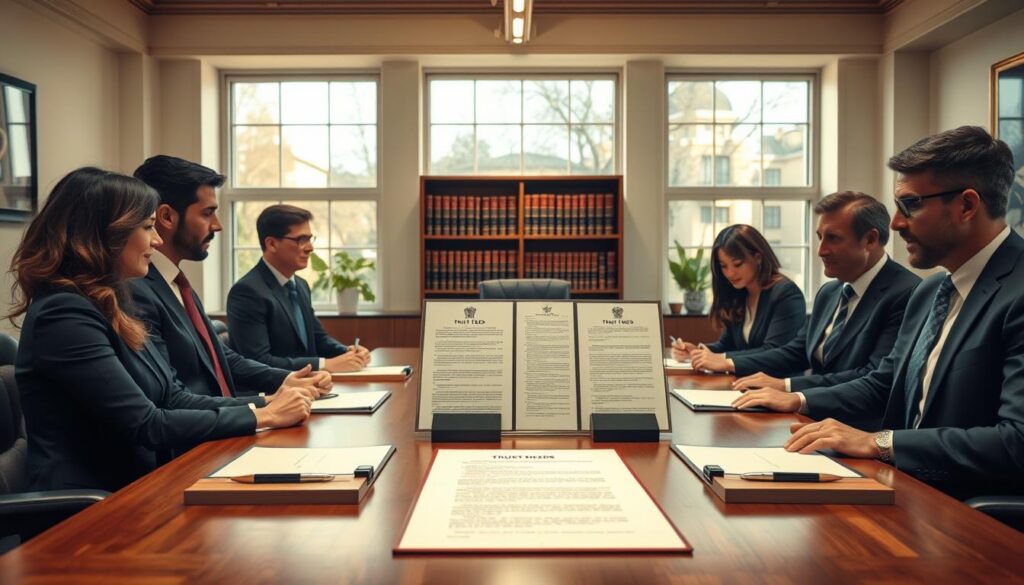
By understanding the importance of the trust deed and reviewing its provisions carefully, we can navigate the complexities of trustee removal and ensure that the process is carried out smoothly and in accordance with the law.
Implications of Trustee Removal
Trustee removal can lead to substantial changes in trust management, with potential financial and tax implications. When a trustee is removed, it’s essential to consider the broader effects on the trust, including its administration, finances, and tax obligations.
Effects on Trust Management
The removal of a trustee can significantly impact the trust’s management structure. We must consider how the change will affect the trust’s overall administration and ensure a smooth transition.
- Changes in decision-making processes
- Potential disruption to trust operations
- Need for re-evaluation of trust strategies
To mitigate these effects, it’s crucial to have a clear plan in place for the transition of trustee responsibilities. This includes identifying a suitable replacement trustee and ensuring that they are fully informed about the trust’s operations and obligations.

Financial Consequences
The financial implications of removing a trustee can be significant. We need to consider potential costs associated with the removal process, including legal fees and any potential compensation for the outgoing trustee.
- Legal costs associated with the removal process
- Potential impact on trust investments and financial planning
- Costs of recruiting and onboarding a new trustee
It’s also important to review the trust’s financial plans and investments to ensure they remain aligned with the beneficiaries’ interests and the trust’s objectives.
Tax Considerations
Removing a trustee can have tax implications for the trust. We must consider how the change will affect the trust’s tax obligations and ensure compliance with relevant tax laws.
Key tax considerations include:
- Potential impact on capital gains tax
- Income tax implications for the trust
- Inheritance tax considerations
To minimize any adverse tax effects, we recommend consulting with a tax specialist to review the trust’s tax position and plan accordingly.
Finding a Replacement Trustee
When a trustee is removed, identifying a suitable replacement is crucial for the continuity of the trust. The new trustee will be responsible for managing the trust assets and ensuring that the trust’s objectives are met.
Qualities to Consider
When selecting a replacement trustee, several qualities should be considered to ensure the chosen individual is capable and suitable for the role. These include:
- Integrity: The trustee should have a high level of integrity and be trustworthy.
- Financial Acumen: They should have a good understanding of financial matters and be able to manage the trust assets effectively.
- Legal Knowledge: Familiarity with trust law and the legal obligations of a trustee is essential.
- Impartiality: The ability to act impartially and make decisions in the best interest of the beneficiaries is crucial.
The Selection Process
The process of selecting a new trustee involves several steps:
- Identify potential candidates based on the qualities required for the role.
- Assess the candidates’ suitability through interviews or reviews of their professional backgrounds.
- Ensure that the selected candidate is willing and able to accept the responsibilities of the trustee.
It’s also important to consider seeking professional advice during this process to ensure that the selected trustee meets all legal and practical requirements.
Legal Requirements for New Trustees
New trustees must comply with certain legal requirements:
| Legal Requirement | Description |
|---|---|
| Acceptance of Trust | The new trustee must formally accept the trust and its responsibilities. |
| Registration | In some cases, the new trustee may need to be registered with the relevant authorities. |
| Compliance with Trust Deed | The trustee must adhere to the terms of the trust deed and relevant laws. |

By carefully considering the qualities and legal requirements for a new trustee, you can ensure a smooth transition and continuity of the trust’s management.
Common Challenges in Removal Cases
Removing a trustee involves navigating various obstacles that can complicate the process. In our experience, understanding these challenges is crucial to managing them effectively.
Opposition from the Trustee
One of the most significant challenges is opposition from the trustee themselves. Trustees may resist removal due to a misunderstanding of their role or a belief that they are acting in the best interest of the trust.
To overcome this, it’s essential to follow the legal steps to remove a trustee as outlined in the trust deed or relevant laws. Engaging a trustee removal solicitor UK can provide the necessary legal guidance to navigate this opposition.

Legal Hurdles
The legal process of removing a trustee can be daunting. Legal hurdles may include complex court procedures, documentation requirements, and potential disputes among beneficiaries.
- Understanding the legal framework governing trusts in the UK
- Gathering evidence to support the removal
- Navigating court proceedings
Seeking advice from a trustee removal solicitor UK can help mitigate these legal challenges.
Emotional Impact on Beneficiaries
The process of removing a trustee can also have an emotional impact on beneficiaries, particularly if they are closely related to the trustee or have conflicting interests.
It’s crucial to manage this aspect by maintaining open communication and ensuring that the beneficiaries understand the reasons behind the removal. This can help reduce tension and facilitate a smoother transition.
By understanding these common challenges and seeking professional guidance, you can navigate the complex process of removing a trustee from a trust more effectively.
Seeking Professional Guidance
Navigating the complex process of removing a trustee requires careful consideration and expert advice. When dealing with the intricacies of trust law in the UK, seeking professional guidance is essential to ensure that the process is handled correctly and efficiently.
Expert Legal Advice
Obtaining legal advice from a specialist in trust law is crucial when considering trustee removal guidance. They can provide clarity on the legal grounds for removal and guide you through the process of how to remove a trustee in the UK.
The Role of Financial Advisors
Financial advisors play a significant role in managing the financial implications of trustee removal. They can help assess the financial consequences and provide guidance on the best course of action for replacing a trustee in the UK.
Consultation with Trust Specialists
Trust specialists can offer valuable insights into the process, ensuring that all legal and financial considerations are addressed. By consulting with these experts, you can make informed decisions about the removal and replacement of a trustee.
FAQ
What are the grounds for removing a trustee in the UK?
A trustee can be removed due to breach of duties, mismanagement of funds, conflict of interest, or loss of capacity. These grounds are crucial in determining the appropriate course of action.
How do I initiate the process of removing a trustee?
Initiating the process involves understanding the trust deed, identifying the grounds for removal, and applying to the court. We guide you through the necessary steps and documentation required.
What is the role of the court in removing a trustee?
The court plays a crucial role in the removal process, ensuring that the trustee is removed in accordance with the law and the trust deed. We help you navigate the court’s involvement.
Are there alternative solutions before removing a trustee?
Yes, alternatives include mediation, trustee resignation, and temporary suspension. These options can provide a more constructive approach to resolving disputes.
How does the trust deed impact the removal of a trustee?
The trust deed governs the administration of the trust and outlines the provisions for trustee removal. Reviewing the trust deed is essential in understanding the conditions for removal.
What are the implications of removing a trustee on the trust’s management?
Removing a trustee can affect the trust’s management, finances, and tax obligations. We examine the potential implications and provide guidance on mitigating any adverse effects.
How do I find a suitable replacement trustee?
Finding a replacement involves identifying the right candidate, considering their qualities, and ensuring they meet the legal requirements. We guide you through the selection process.
What are the common challenges faced when removing a trustee?
Common challenges include opposition from the trustee, legal hurdles, and emotional impact on beneficiaries. We discuss these challenges and provide guidance on overcoming them.
Why is it essential to seek professional guidance when removing a trustee?
Seeking professional guidance is crucial due to the complexities involved in the removal process. We emphasize the importance of consulting with legal advisors, financial advisors, and trust specialists.
What is the trustee removal procedure in the UK?
The trustee removal procedure involves understanding the grounds for removal, initiating the process, and obtaining court approval. We provide guidance on the necessary steps and documentation.
Can a trustee be removed without court involvement?
In some cases, a trustee can be removed without court involvement if the trust deed allows for it. However, court approval is often necessary to ensure the removal is lawful.
Who Has the Power to Remove a Trustee in England and Wales
One of the most common points of confusion in trustee removal is understanding who actually holds the legal power to act. The answer depends on the circumstances, the wording of the trust deed, and whether statutory or court-based routes are being used. In our experience, families often assume beneficiaries have more power than they typically do — and that the process is simpler than it tends to be in practice.
The Role of Co-Trustees and the Settlor
In many cases, the most straightforward route to removing a trustee does not involve the courts at all. Under Section 36 of the Trustee Act 1925, a trustee may be replaced without court involvement where they have died, remained outside the UK for more than twelve months, refused to act, become unfit to act, or become incapable of acting. In these circumstances, the surviving or continuing trustees — or, where relevant, a person with a power of appointment under the trust deed — may appoint a replacement. The settlor may also hold this power if it was expressly reserved in the deed. It is worth noting that Section 36 facilitates replacement rather than outright removal, so a new trustee must generally be appointed at the same time.
Can Beneficiaries Remove a Trustee?
Beneficiaries do not typically have a unilateral right to remove a trustee simply because they are dissatisfied. However, where all beneficiaries are adults, of sound mind, and together hold the entire beneficial interest, they may collectively direct the trustees under the rule in Saunders v Vautier (1841) — including, in some cases, collapsing the trust or directing a change of trustee. This route is relatively narrow and should be explored with a qualified solicitor before any action is taken. The HMRC guidance on trusts and taxes is also relevant here, as any restructuring of the trust may carry tax reporting obligations that should not be overlooked.
Statutory Appointment by the Court: Section 41
Where the Section 36 route is unavailable — for example, because there are no continuing trustees willing or able to act, or because the circumstances do not meet the statutory criteria — Section 41 of the Trustee Act 1925 gives the court power to appoint a new trustee whenever it is judged expedient to do so. This is a broader discretionary power and is most commonly used where a trust has become effectively deadlocked. Court applications under Section 41 are generally more costly and time-consuming than the statutory replacement route, and our team would always encourage exploring alternatives first.
Common Questions About Removing a Trustee
Is it hard to remove a trustee?
In most cases, removing a trustee is not straightforward, and the difficulty varies considerably depending on the grounds and the route being taken. Where a trustee has lost capacity or has been absent from the UK for over twelve months, the statutory process under Section 36 of the Trustee Act 1925 may operate relatively smoothly. However, where the removal is contested — for example, because the trustee disputes allegations of misconduct — the matter will often need to go before the court, which can be a lengthy and costly process. Solicitor costs for contested trustee removal proceedings can range indicatively from £5,000 to well in excess of £20,000 depending on complexity, and timelines of twelve months or more are not unusual. Our team would generally recommend seeking early legal advice and exploring mediation before initiating formal proceedings.
Can a trustee be removed without consent?
Yes, in certain circumstances. Under Section 36 of the Trustee Act 1925, a trustee may be replaced by continuing trustees or an appointed person without the departing trustee’s consent, provided the statutory grounds are met. Where grounds do not meet the Section 36 threshold, the court retains an inherent jurisdiction to remove a trustee, even against their wishes. The leading test applied by the courts derives from Lettersteiner v Lettersteiner (1835) and was reaffirmed in Alsop Wilkinson v Neary [1996], which established that the welfare of the beneficiaries is the court’s paramount consideration — not punishment of the trustee or the preferences of any individual party. A trustee acting in good faith but ineffectively may still be removed if their continuation demonstrably prejudices the beneficiaries’ interests.
What happens when a trustee is removed from a trust?
Once a trustee is removed or replaced, they are generally required to transfer trust property, accounts, and all relevant documentation to the incoming trustee. Any ongoing trust tax reporting obligations — including ten-year anniversary charges and exit charges under the relevant property regime — continue uninterrupted and must be managed by the remaining or replacement trustees. The removal itself does not, in most cases, create an immediate tax event, but any associated changes to the trust’s structure or administration should be reviewed carefully. HMRC’s Inheritance Tax Manual provides detailed guidance on trustee obligations in relation to ongoing IHT reporting. Our team can help identify whether a change in trusteeship has any implications for your wider estate plan.
Can professional trustee services prevent these situations?
In many cases, yes. Appointing a professional or corporate trustee from the outset significantly reduces the risk of deadlock, incapacity disputes, and conflicts of interest that typically give rise to removal proceedings. Professional trustees are subject to regulatory oversight and are generally better placed to administer complex or long-running trusts impartially. While professional trustees do charge ongoing fees, these costs are often modest when weighed against the indicative legal costs and emotional strain of contested removal proceedings. If you are in the process of setting up a trust, our team would encourage you to consider whether a professional trustee appointment — either sole or alongside lay trustees — may be appropriate for your circumstances.