


Quick answer
Forensic handwriting analysis in UK will disputes is used when the validity of the testator’s signature or the witnesses’ signatures is challenged — typically in suspected forgery, undue influence (where the signature was guided by someone else) or contested capacity cases. A forensic document examiner compares the disputed signature against known authentic samples, looks at line pressure, pen lifts, slant consistency, micro-features, and (with expert microscopy) ink chemistry and paper analysis. Expert reports are admissible in the Family Court and High Court probate proceedings; the expert can be cross-examined. Cost typically £800–£3,000 for the report plus £1,500/day for court attendance. Useful where the dispute hinges on a specific signature; rarely useful where the issue is testamentary capacity or the contents of the will themselves. This guide explains when forensic handwriting analysis is needed in UK will disputes in 2026, the realistic process, the costs, and the limits of what it can prove.
Last reviewed: 24 May 2026 by the MP Estate Planning editorial team. Jurisdiction: England and Wales. Scotland and Northern Ireland have different probate and intestacy rules; the IHT thresholds are UK-wide.
Three rule changes you may need to consider (2026/27)
1. Pensions become subject to IHT from 6 April 2027. Most unused defined-contribution pension pots currently sit outside the estate for IHT — that ends on 6 April 2027 (gov.uk policy paper). HMRC estimates around 10,500 estates will face IHT for the first time as a result.
2. Business and agricultural property reliefs capped at £2.5m per person from 6 April 2026. Above the cap, only 50% relief applies — effective IHT of 20%. AIM shares dropped to 50% relief and do not use the £2.5m allowance (Saffery — APR/BPR reforms).
3. The NRB, RNRB and £2m taper threshold are frozen until 5 April 2031 following the 2024 and 2025 Budgets (gov.uk — NRB and RNRB freeze). With inflation, more estates will be pulled into IHT each year — a process commonly called “fiscal drag.”
We understand that will disputes can be emotionally challenging and legally complex. At times, determining the authenticity of a will or signature becomes crucial in resolving these disputes.
According to Docufraud Canada, a forensic document examiner is necessary to successfully litigate a contested will or prove a document or signature is genuine. Forensic handwriting analysis plays a crucial role in resolving these disputes.
We protect families’ assets through clear, accessible estate planning guidance. In this article, we will explore the importance of forensic handwriting in will disputes and how it can help protect your family’s future.
Key Takeaways
- Forensic handwriting analysis is crucial in resolving will disputes.
- A forensic document examiner can help prove the authenticity of a will or signature.
- Clear estate planning guidance can protect families’ assets.
- Contested wills can be emotionally challenging and legally complex.
- Forensic handwriting analysis can help determine the genuineness of a document or signature.
Understanding Forensic Handwriting Analysis
Understanding the intricacies of forensic handwriting analysis is essential for navigating will disputes effectively. Forensic handwriting analysis is a scientific process used to examine handwriting samples and determine their authenticity. In the context of will disputes, this analysis is crucial in verifying the legitimacy of a will or signature.
Definition of Forensic Handwriting Analysis
Forensic handwriting analysis involves a detailed examination of the unique characteristics of an individual’s handwriting to determine the authenticity of a document. As explained by Wendy Carlson, a certified handwriting specialist in forensics, this process is intricate and requires a deep understanding of handwriting patterns.
Importance in Legal Context
In legal disputes, particularly those involving wills, forensic handwriting analysis plays a pivotal role. It helps in verifying the authenticity of signatures and documents, thereby providing crucial evidence. Our team of experts uses advanced techniques and technology to provide accurate and reliable results.
Key Techniques Used
Forensic handwriting analysis employs several key techniques, including:
- Examination of handwriting characteristics such as letter formation, spacing, and slant.
- Comparison of questioned documents with known handwriting samples.
- Use of advanced technology to analyze ink, paper, and other document features.
By combining these techniques, we can provide a comprehensive analysis that aids in resolving will disputes.
The Role of Handwriting Experts in Legal Disputes
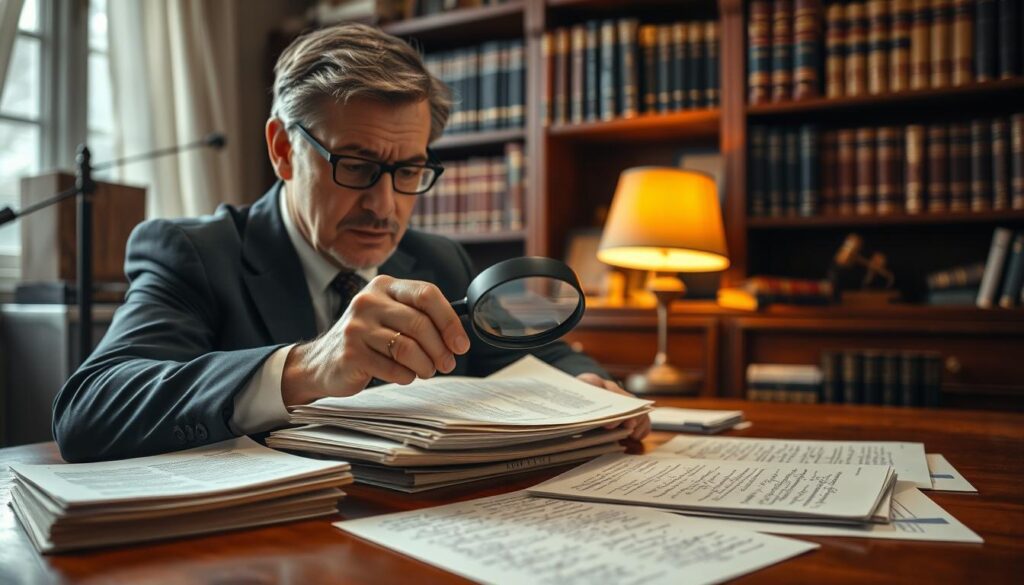
In the complex world of disputed wills, forensic handwriting experts play a crucial role in uncovering the truth. We work closely with these specialists to provide our clients with the best possible guidance in resolving will disputes.
Qualifications of Handwriting Experts
Handwriting experts must possess specific qualifications to be considered credible in legal disputes. These include extensive training in forensic document examination and significant experience in analyzing handwriting samples. We ensure that the experts we work with are court-qualified, having demonstrated their expertise in previous legal cases.
The importance of using a qualified expert cannot be overstated, as their testimony can significantly influence the outcome of a case involving a disputed will. By examining the handwriting and signatures on a will, these experts can provide critical evidence regarding its authenticity.
Processes Followed by Experts
The process followed by handwriting experts involves a meticulous examination of the handwriting samples in question. This includes comparing the handwriting on the disputed will with known samples from the individual whose signature is in question.
- Collection of handwriting samples for comparison
- Detailed analysis of handwriting characteristics, such as letter formation and spacing
- Examination of signatures for signs of forgery or tampering
By following this rigorous process, handwriting experts can provide a professional opinion on the authenticity of the will, which is invaluable in resolving disputes.
Case Studies Demonstrating Expertise
There are numerous case studies that demonstrate the expertise of handwriting analysts in resolving legal disputes. For instance, in a notable case involving a contested estate, a handwriting expert was able to identify a forged signature on a will, leading to the will being declared invalid.
Such cases highlight the critical role that handwriting experts play in ensuring justice is served in disputes over wills and estates. We have seen firsthand how the testimony of these experts can clarify complex issues and lead to a fair resolution.
Common Reasons for Will Disputes in the UK
Understanding the common reasons behind will disputes is crucial for families in the UK. Will disputes can arise due to various factors, and being aware of these can help in navigating the complexities of estate planning.
Lack of Testamentary Capacity
One of the primary reasons for will disputes is the lack of testamentary capacity. This refers to the testator’s mental ability to understand the nature of their actions when making the will. If it is suspected that the testator was not of sound mind, the will can be contested.
For instance, if a testator was suffering from dementia or another condition that impairs cognitive function, it could be argued that they lacked the necessary mental capacity to make a valid will.
Undue Influence on the Testator
Undue influence occurs when someone exerts pressure on the testator, influencing the content of the will in their favor. This can lead to disputes among beneficiaries who feel that the testator was coerced.
To contest a will on the grounds of undue influence, it must be proven that the testator was subjected to significant pressure or manipulation. Our team can guide you through the process of investigating such claims, including the use of forensic handwriting analysis to assess the authenticity of the will.
Issues of Authenticity and Forgery
Issues related to the authenticity of the will, including forgery, are another common reason for disputes. If there is suspicion that a will or signature is forged, it can lead to significant legal challenges.
Forensic handwriting analysis plays a crucial role in determining the authenticity of a will. By comparing the handwriting in the will with known samples of the testator’s handwriting, experts can provide evidence regarding its legitimacy.
| Reason for Dispute | Description | Common Evidence |
|---|---|---|
| Lack of Testamentary Capacity | Testator lacked mental capacity to make a valid will. | Medical records, witness testimony |
| Undue Influence | Testator was coerced into making the will. | Witness statements, suspicious circumstances |
| Authenticity and Forgery | Will or signature is not genuine. | Forensic handwriting analysis, document examination |
By understanding these common reasons for will disputes, families can better prepare for potential challenges. Our team is dedicated to providing clear guidance and support to protect your family’s interests.
How Forensic Handwriting Analysis Works
Forensic handwriting analysis is a meticulous process that involves comparing handwriting samples to determine the authenticity of a document. At its core, this analysis relies on the unique characteristics of an individual’s handwriting, which can be as distinct as a fingerprint.
Our team of experts, including specialists like Wendy Carlson, employs various techniques to analyze handwriting. These techniques are crucial in resolving disputed wills and other legal disputes in the UK.
Handwriting Comparison Techniques
Handwriting comparison is at the heart of forensic handwriting analysis. Our team examine various aspects of handwriting, including letter formation, spacing, slant, and other unique features. By comparing these characteristics between known and disputed handwriting samples, we can determine whether they originate from the same individual.
The process involves:
- Examining the overall appearance and layout of the handwriting
- Analyzing specific letterforms and their connections
- Comparing the size, slant, and spacing of the handwriting
- Identifying any unusual characteristics or features

Use of Technology in Analysis
Technology plays a significant role in modern forensic handwriting analysis. Our team utilize advanced tools and software to enhance and analyze handwriting samples. These technologies allow for a more detailed examination of handwriting characteristics, improving the accuracy of our analyses.
Some of the technologies we use include:
- High-resolution digital microscopes for detailed examination
- Specialized software for comparing and analyzing handwriting samples
- Advanced image processing techniques to enhance faint or altered handwriting
By combining traditional handwriting analysis techniques with cutting-edge technology, we provide comprehensive and reliable expert testimony in forensic handwriting will disputes UK, helping to resolve complex legal cases involving disputed documents.
Identifying Forged Signatures
The authenticity of a signature is often a deciding factor in will disputes, making it essential to understand how to identify forged signatures. In our experience, forensic handwriting analysis plays a critical role in verifying the legitimacy of signatures on contested wills.
Signs of Forgery to Look For
According to experts like Wendy Carlson, there are several signs that may indicate a signature is forged. These include:
- Shaky lines or tremors in the signature, which can suggest that the person signing was not comfortable with the signature or was attempting to mimic someone else’s handwriting.
- Unnatural pen lifts, where the pen is lifted off the paper at unusual points, disrupting the natural flow of the signature.
- Inconsistent pressure, where the pressure applied to the paper varies unnaturally throughout the signature.
By recognizing these signs, our handwriting expert services in the UK can help determine whether a signature is genuine or forged.
Differences Between Genuine and Forged Handwriting
Genuine handwriting typically exhibits natural variations and fluidity, whereas forged handwriting often lacks these characteristics. To illustrate the differences, consider the following table:
| Characteristics | Genuine Handwriting | Forged Handwriting |
|---|---|---|
| Line Quality | Smooth, consistent lines | Shaky, uneven lines |
| Pen Lifts | Natural pen lifts at expected points | Unnatural pen lifts, disrupting the signature flow |
| Pressure | Consistent pressure throughout | Inconsistent pressure, varying throughout |
As shown in the table, genuine and forged handwriting can be distinguished by examining specific characteristics. Our team of experts uses these differences to provide accurate assessments in contested wills.

Legal Standards and Procedures in Will Disputes
Navigating the complexities of will disputes requires a thorough understanding of the legal standards and procedures in place within the UK. We guide our clients through the legal process, ensuring they understand the relevant laws and regulations governing disputed wills forensic investigation.
Relevant Laws and Regulations in the UK
The UK has a well-established legal framework for handling will disputes, which includes the use of forensic document examination UK to verify the authenticity of wills and signatures. The Rules of Civil Procedure play a crucial role in governing the withdrawal of a will for forensic analysis.
Some key regulations and laws include:
- The Wills Act 1837, which sets out the formal requirements for making a valid will.
- The Civil Procedure Rules, which govern the process of contesting a will, including the use of forensic evidence.
Role of Courts in Assessing Handwriting Evidence
Courts in the UK play a pivotal role in assessing handwriting evidence presented during will disputes. Judges rely on expert testimony from handwriting analysts to determine the authenticity of signatures and handwritten wills. For more information on contesting a will, you can visit BBC Law’s article on the evidence needed to contest a.
| Aspect | Description | Relevance to Will Disputes |
|---|---|---|
| Laws and Regulations | Govern the process of will disputes, including the admissibility of forensic evidence. | High |
| Court Procedures | Outline the steps involved in presenting and assessing handwriting evidence. | High |
| Expert Testimony | Provides critical analysis of handwriting samples to determine authenticity. | Crucial |
By understanding the legal standards and procedures in will disputes, individuals can better navigate the complexities of contested probate cases, ensuring that their rights are protected and that justice is served.
Cost Implications of Forensic Handwriting Services
Forensic handwriting services come with a price tag that varies based on the complexity of the case. When considering forensic handwriting analysis in England, it’s essential to understand the factors that influence the cost and how they impact the overall outcome of a contested estate.
Factors Affecting the Cost
Several factors contribute to the overall cost of forensic handwriting services. These include:
- The complexity of the handwriting samples being analyzed
- The number of documents to be examined
- The level of expertise required for the analysis
- The technology and tools used in the analysis process
We provide our clients with a clear understanding of these factors and how they affect the overall cost. By doing so, we enable our clients to make informed decisions about their case.
Cost-Benefit Analysis for Will Disputes
When engaging contested estate handwriting analysis, it’s crucial to consider the cost-benefit analysis. While the initial cost may seem significant, the value it brings to resolving disputes can be substantial. A thorough handwriting analysis can provide critical evidence, potentially saving time and resources in the long run.
For instance, if a will is found to be forged based on handwriting analysis, it can prevent lengthy legal battles. As discussed in a related article on challenging the validity of a will based on forgery and, the role of forensic handwriting analysis is pivotal.
By understanding the costs involved and the potential benefits, individuals involved in will disputes can make more informed decisions about pursuing forensic handwriting services.
The Impact of Forensic Handwriting Findings
Forensic handwriting analysis has a profound impact on will disputes, helping to uncover the truth behind disputed documents. Aswill dispute investigation experts in the UK, we have seen firsthand how this analysis can significantly influence the outcome of a case.
Outcomes of Handwriting Analysis
The outcomes of handwriting analysis can be far-reaching, providing critical evidence that can make or break a case. By comparing the handwriting in a disputed will to known samples, Our team can determine whether the document is genuine or forged. This information is invaluable in resolving disputes, as it provides a clear and objective assessment of the document’s authenticity.
In many cases, the results of handwriting analysis can lead to a settlement without the need for further litigation. For instance, if the analysis reveals that a signature is genuine, the parties involved may be more likely to negotiate a settlement rather than proceed to court. Conversely, if the analysis indicates that a document is forged, this can strengthen the case against the fraudulent document, potentially leading to its invalidation.

Case Result Examples and Precedents
There are numerous examples where forensic handwriting analysis has played a decisive role in will disputes. For example, in a notable case in London, Our team were able to determine that a disputed will was forged by comparing the handwriting to known samples of the deceased’s writing. The court’s acceptance of our findings was instrumental in the case being resolved in favor of our client.
Such cases demonstrate the value of engagingdisputed wills forensic experts in Londonwho can provide objective, unbiased analysis. By examining the handwriting characteristics and comparing them to known samples, Our team can provide a detailed report that highlights any discrepancies or consistencies, thereby aiding the court in making an informed decision.
In conclusion, the impact of forensic handwriting findings in will disputes is significant. By providing clear and objective evidence, our analysis can help resolve disputes efficiently and effectively. Whether it’s determining the authenticity of a signature or identifying forged documents, forensic handwriting analysis is a powerful tool in the resolution of will disputes.
Finding the Right Forensic Handwriting Expert
When dealing with will disputes in the UK, selecting a qualified forensic handwriting expert is crucial. We understand the importance of finding the right professional to handle your case with care and precision.
Expert Qualifications to Consider
To ensure you’re working with a credible expert, look for individuals with a strong background in forensic handwriting analysis. They should have relevant qualifications and experience in handling contested wills and forensic analysis.
Key Questions to Ask
Before hiring a forensic handwriting expert, we recommend asking about their experience with cases similar to yours, their methodology for analyzing handwriting samples, and their success rate in court. This will help you gauge their expertise and confidence in handling your case.
By choosing the right forensic handwriting expert, you can strengthen your case in will disputes, leveraging their expertise in forensic handwriting will disputes UK to achieve a more favorable outcome.
FAQ
What is forensic handwriting analysis, and how is it used in will disputes?
Forensic handwriting analysis is a scientific process used to examine handwriting samples and determine their authenticity. In will disputes, it is used to verify the legitimacy of a will or signature, helping to resolve disputes over the authenticity of the document.
What qualifications do handwriting experts need to have, and what processes do they follow?
Handwriting experts typically possess specialised training and qualifications in forensic document examination. They follow a rigorous process to analyze handwriting samples, using advanced techniques and technology to provide accurate and reliable results.
What are the common reasons for will disputes in the UK?
Will disputes in the UK can arise due to various reasons, including lack of testamentary capacity, undue influence on the testator, and issues of authenticity and forgery. Understanding these common reasons can help navigate the complexities of will disputes.
How do forensic handwriting experts identify forged signatures?
Forensic handwriting experts identify forged signatures by recognising signs of forgery, such as shaky lines and unnatural pen lifts. They compare the disputed signature with known handwriting samples to determine whether it is genuine or not.
What are the legal standards and procedures in will disputes, and how do courts assess handwriting evidence?
Will disputes involve complex legal procedures and standards. Courts assess handwriting evidence by considering the expert testimony and the results of forensic handwriting analysis. Understanding the relevant laws and regulations in the UK is crucial in navigating these disputes.
How much do forensic handwriting services cost, and what factors affect the cost?
The cost of forensic handwriting services varies depending on the complexity of the case, the expertise of the analyst, and the technology used. A cost-benefit analysis can help determine the value of these services in resolving will disputes.
What is the impact of forensic handwriting findings on the outcome of a will dispute?
The findings of forensic handwriting analysis can have a profound impact on the outcome of a will dispute. By examining the outcomes of handwriting analysis and reviewing case result examples and precedents, it is possible to demonstrate the value of this analysis in resolving disputes.
How do I choose the right forensic handwriting expert for my case?
To choose the right forensic handwriting expert, consider their qualifications, experience, and expertise. Ask questions about their approach, the techniques they use, and their experience with similar cases to ensure you find the best expert for your needs.
What should I consider when hiring a forensic handwriting expert for a contested will or estate dispute?
When hiring a forensic handwriting expert, consider their ability to provide objective, unbiased analysis, and their experience with cases involving disputed wills or estate disputes. Ensure they are familiar with UK laws and regulations regarding handwriting evidence.
Can forensic handwriting analysis be used in conjunction with other forms of evidence in a will dispute?
Yes, forensic handwriting analysis can be used in conjunction with other forms of evidence, such as witness testimony or documentary evidence, to build a stronger case and help resolve the dispute.
Forensic Handwriting Expert Titles, Qualifications and Reliability in UK Proceedings
One source of confusion for executors, beneficiaries and solicitors approaching a disputed will is the inconsistent terminology used to describe the professionals who examine questioned documents. Understanding who these experts are, how they are qualified and how reliable their evidence is considered to be in English and Welsh courts may help you decide whether instructing one is the right step for your estate matter.
What Are Forensic Handwriting Experts Called in the UK?
In the United Kingdom, practitioners in this field are most commonly referred to as Questioned Document Examiners (QDEs) or Forensic Document Examiners (FDEs). Both titles are used in professional and court contexts, and there is no single protected title regulated by statute. Some practitioners also use the broader label forensic handwriting analyst, though this is generally considered less precise within the field itself. When instructing an expert for civil proceedings, the specific title matters less than whether the individual can demonstrate appropriate qualifications and independence under Civil Procedure Rules Part 35 and Practice Direction 35, which govern how expert witnesses must conduct themselves and present their findings in civil litigation in England and Wales.
Professional Bodies and Qualification Pathways
The principal recognised body in this field is the British Association of Forensic Document Examiners (BAFDE), alongside membership of the broader British and Irish Association of Law Librarians and, at an international level, the European Network of Forensic Handwriting Experts (ENFHEX). There is no single prescribed academic route; practitioners typically combine a background in forensic science, document examination or a cognate discipline with supervised casework experience and ongoing continuing professional development. When a court is asked to admit handwriting evidence, the judge will generally scrutinise the expert’s training, methodology and independence rather than their job title alone. Our team would always recommend that any expert instructed in a will dispute can demonstrate membership of, or compliance with the standards of, a recognised professional body.
Is Forensic Handwriting Analysis Accurate Enough to Be Determinative?
This is a question our team is frequently asked, and the honest answer is that forensic handwriting analysis is typically treated as probative evidence in UK civil proceedings rather than conclusive proof in isolation. The reliability of a finding depends substantially on the quality and quantity of comparison specimens available, the examiner’s methodology and whether the original document can be examined directly rather than from a copy. In most cases, courts in England and Wales treat handwriting evidence as one strand within a wider body of evidence. A positive finding of forgery may strongly support a claim, but it will generally need to corroborate other evidence such as witness testimony or circumstantial factors. Where forgery is alleged, it is also worth noting the criminal dimension: forgery of a will may constitute an offence under the Forgery and Counterfeiting Act 1981, carrying a maximum custodial sentence of ten years, and may additionally engage the Fraud Act 2006 (England and Wales), which establishes the statutory framework under which dishonest conduct involving false documents is prosecuted. The existence of these serious criminal sanctions underlines why courts approach handwriting evidence with care and why the standard of expert instruction matters considerably.
Common Questions About Forensic Handwriting Experts
What is a forensic handwriting expert called?
In England and Wales, these professionals are most commonly called Questioned Document Examiners or Forensic Document Examiners. The terms are largely interchangeable in practice. What matters for legal proceedings is not the title itself but whether the individual meets the independence and competence requirements set out in CPR Part 35 and Practice Direction 35.
Is there such a thing as a handwriting expert?
Yes. Questioned document examination is a recognised forensic science discipline with dedicated professional bodies, published methodology and an established history of use in UK courts. These practitioners examine signatures, handwritten text and documents in disputes ranging from will forgery to commercial fraud.
Do handwriting experts still exist?
They do, and they remain active in English and Welsh civil and criminal proceedings. While digital communication has reduced the volume of handwritten documents in everyday life, contested wills, deeds and signatures continue to require expert examination, and the field has adapted to incorporate digital imaging and spectral analysis alongside traditional comparison methods.
Is forensic handwriting analysis accurate?
It is generally considered reliable when conducted by a suitably qualified examiner using adequate comparison specimens and the original document. However, it is not infallible, and courts in England and Wales typically treat it as corroborative evidence rather than standalone proof. The strength of a finding may vary depending on the complexity of the signature in question and the condition of available samples.
How much does a forensic handwriting expert cost?
Fees vary considerably depending on the complexity of the case, the number of documents examined and the examiner’s experience. In our experience, instructing a qualified Questioned Document Examiner in a will dispute in England and Wales may involve fees ranging from several hundred pounds for a preliminary assessment to several thousand pounds for a full report suitable for court proceedings. Where litigation is contemplated, costs should be discussed with the instructing solicitor, as expert fees may in some circumstances be recoverable as part of a costs order. It is worth noting that if a positive forgery finding is made, the matter may engage both the civil courts and potentially the police, given that will forgery may constitute an offence under the Forgery and Counterfeiting Act 1981 and the Fraud Act 2006.