


When considering estate planning, one of the most important questions is whether you need a will, a trust, or both. There is a great deal of conflicting advice out there — much of it based on American law rather than the English and Welsh system — and that makes it difficult to know what is right for your family.
At MP Estate Planning, we believe that trusts are not just for the rich — they are for the smart. We help ordinary homeowners and families understand the real differences between wills and trusts under UK law, so you can make an informed decision. By exploring the trust vs will question properly, we can work together to create a plan that genuinely protects your loved ones — not just on paper, but in practice.
For more information on protecting your family’s future, visit our page on protecting your loved ones with a will or trust.
Key Takeaways
- Understand the fundamental differences between wills and trusts under English and Welsh law.
- Determine whether a will alone is enough, or whether a lifetime trust gives your family better protection.
- Learn how trusts can protect your home from care fees, divorce, and inheritance tax (IHT).
- Discover why specialist legal guidance matters — the law, like medicine, is broad, and you would not want your GP doing surgery.
- Explore the importance of reviewing and updating your estate plan as your circumstances change.
Understanding the Basics of Wills and Trusts
When it comes to estate planning, understanding the fundamentals of wills and trusts under English and Welsh law is essential for protecting your family’s future. Many people assume these two tools do the same thing, but they work very differently — and the level of protection they offer is not the same.

What is a Will?
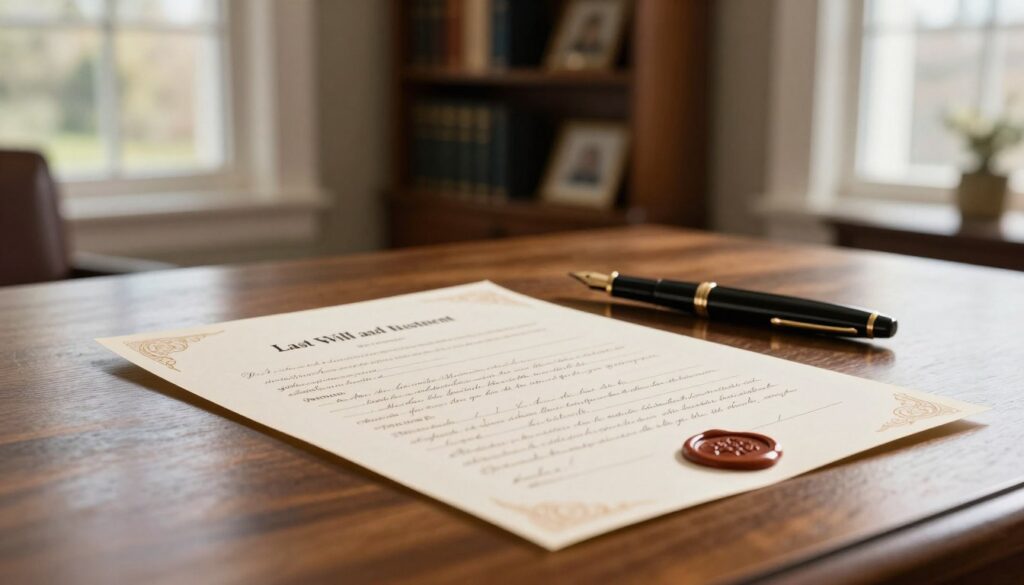
A last will and testament is a legal document that sets out how you want your assets distributed after you die. It allows you to name beneficiaries, appoint executors to administer your estate, and — crucially if you have young children — name guardians. A will only takes effect on your death, and it must go through the probate process before your executors can distribute your estate. During that time, which typically takes between three and twelve months (and often longer when property is involved), your assets in sole names are frozen. Your family cannot access bank accounts, sell property, or distribute anything until a Grant of Probate is issued by the Probate Registry.
What is a Trust?
A family trust is a legal arrangement — not a separate legal entity — where the settlor (the person creating the trust) transfers ownership of assets to trustees, who then hold and manage those assets for the benefit of named beneficiaries. England invented trust law over 800 years ago, and the distinction between legal and beneficial ownership is the foundation of the entire system. Trustees are the legal owners; beneficiaries hold the beneficial interest. A lifetime trust takes effect immediately during the settlor’s lifetime, meaning it can protect assets right away — without waiting for death and without going through probate. A will trust, by contrast, is created within your will and only comes into existence after you die.
Key Differences Between Wills and Trusts
Understanding the differences between a will and a trust is vital for effective estate planning. Here are some key distinctions under English and Welsh law:
- Probate: A will must go through the probate process, during which assets in sole names are frozen. Assets held in a lifetime trust bypass probate entirely — trustees can act immediately on the settlor’s death with no court involvement or delay.
- Privacy: Once a Grant of Probate is issued, a will becomes a public document — anyone can obtain a copy for a small fee. A trust deed is a private document and is not publicly accessible (the Trust Registration Service is not a public register like Companies House).
- Control and Protection: A will simply gives assets away on death. A discretionary trust gives trustees the flexibility to decide how and when beneficiaries receive support, which protects those assets from threats like divorce, bankruptcy, care fees, and poor financial decisions.
- When They Take Effect: A will only operates on death. A lifetime trust takes effect immediately, providing protection during your lifetime and beyond.
By understanding these basics, you can make genuinely informed decisions about your estate planning — and ensure your family gets real protection, not just a piece of paper.
Why Protecting Your Family is Important
Securing your family’s future through effective estate planning is not something to put off. It is not just about what happens when you die — it is about protecting everything you have built during your lifetime, too. With the average home in England now worth around £290,000, even modest family estates can face serious threats from inheritance tax, care fees, divorce, and family disputes.

The Role of Estate Planning
Estate planning plays a crucial role in safeguarding your family’s financial well-being. It involves making decisions about how your assets will be managed and distributed, both during your lifetime and after your death. Effective estate planning can help:
- Ensure your wishes are respected regarding the distribution of your assets — rather than leaving it to the intestacy rules, which may not reflect what you want at all.
- Reduce or mitigate inheritance tax (IHT), which is charged at 40% on everything above the nil rate band of £325,000 per person. The nil rate band has been frozen since 2009 and will not increase until at least April 2031 — which is the single biggest reason ordinary homeowners are now being caught by IHT.
- Protect your beneficiaries from threats such as divorce (the UK divorce rate is around 42%), creditor claims, and poor financial management.
- Safeguard your home from being sold to pay for care fees, which currently average £1,100 to £1,500 per week depending on the type of care and location.
Potential Risks Without Protection
Without proper estate planning, your family may face significant financial and emotional challenges. Some of the most common risks include:
- Care Fee Depletion: If you need residential or nursing care, the local authority will assess your assets. If you have capital above £23,250 (in England), you must self-fund your care. Between 40,000 and 70,000 homes are sold every year to pay for care. Without planning, your family home — the single biggest asset most families own — could be consumed entirely, with your savings depleted down to just £14,250 before the local authority contributes.
- Family Conflict and Sideways Disinheritance: Without a clear plan, disputes can arise. And if a surviving spouse remarries and then dies without adequate protection in place, your children could lose their inheritance entirely — this is known as sideways disinheritance.
- Inheritance Tax Bills: A married couple with a home worth £500,000 and savings of £200,000 has a combined estate of £700,000. Even with full use of both nil rate bands (£650,000) and both residence nil rate bands (£350,000), an estate of this size would fall within the combined £1,000,000 allowance — but only if the home passes to direct descendants and everything is properly planned. Without planning, and particularly for single people or those without direct descendants, the IHT bill can run into tens of thousands of pounds. That bill must be paid before beneficiaries receive anything — and it often forces a property sale.
- Probate Delays: During the probate process, all sole-name assets are frozen. Your family cannot access bank accounts, sell property, or distribute anything until the Probate Registry issues a Grant. This can take months and creates real hardship at an already difficult time.
By understanding the importance of estate planning and taking proactive steps, you can ensure that your family is protected and your wishes are carried out. As Mike Pugh says: not losing the family money provides the greatest peace of mind above all else.
Benefits of Having a Will
A will is an essential starting point for anyone who wants to control what happens to their assets after they die. It provides a legally binding set of instructions that ensure your wishes are recorded and your loved ones know where they stand.
Simple and Cost-Effective
One of the primary benefits of having a will is that it is a relatively straightforward and affordable document to put in place. A simple will can be prepared by a solicitor for a few hundred pounds. For people with uncomplicated estates and straightforward family situations, a will may be all that is needed to ensure assets pass to the right people.
Clear Distribution of Assets
A will allows you to set out exactly who receives what. You can specify the distribution of your property, savings, investments, and personal possessions. This clarity helps prevent potential disputes and ensures that your wishes are respected. Without a will, your estate is distributed according to the intestacy rules — and these rules may not match your wishes at all. Under intestacy, for example, unmarried partners receive nothing, regardless of how long you have been together.
Appointment of Guardians for Minors
If you have minor children, a will is the only legal way to nominate guardians who will care for them if both parents die. This is arguably the most important reason for any parent to have a will in place. Without this appointment, the court will decide who raises your children — and that decision may not reflect your wishes.
To illustrate the importance of having a will, consider the following comparison:
| Aspect | With a Will | Without a Will |
|---|---|---|
| Distribution of Assets | Clear instructions on asset distribution | Assets distributed according to intestacy rules — which may exclude partners, friends, and charities entirely |
| Guardianship | Appointment of guardians for minor children | Court decides on guardianship |
| Probate Process | Clearer instructions for executors, potentially faster process | Letters of Administration required instead — a more complex and often slower process |
As shown in the table, having a will in place can streamline the administration of your estate and ensure that your wishes are respected. However, it is important to understand that a will alone does not protect your assets from care fees, divorce, IHT, or probate delays. For that level of protection, a trust is needed alongside your will.
Advantages of Establishing a Trust
A trust can offer powerful benefits for families looking to genuinely protect their assets — not just pass them on, but shield them from the major threats that a will simply cannot address. Under English and Welsh law, a properly structured lifetime trust can protect your family home, your savings, and your legacy in ways that a will never will.
Bypassing Probate Delays
One of the most significant advantages of a lifetime trust is that assets held within it bypass the probate process entirely. When someone dies, their sole-name assets are frozen until the Probate Registry issues a Grant of Probate (or Letters of Administration under intestacy). This process typically takes three to twelve months, and often longer where property is involved. During that time, the family cannot access bank accounts, sell property, or distribute anything.
Assets held in trust are different. Because the trustees — not the deceased — are the legal owners, there is no need to wait for a Grant. The trustees can act immediately, ensuring the family has access to support when they need it most, without delays or court involvement.
Privacy Benefits
Trusts also offer a level of privacy that wills cannot match. Once a Grant of Probate is issued, the will becomes a public document — anyone can obtain a copy for a small fee. This means the details of your estate, your beneficiaries, and the value of your assets become public knowledge. A trust deed, by contrast, is a private document. The Trust Registration Service (TRS), where all UK express trusts must be registered, is not a public register. Your family’s financial affairs remain confidential.
Flexibility in Distribution
Perhaps the greatest advantage of a discretionary trust is the flexibility it provides. In a discretionary trust — which is by far the most common type used in family estate planning (around 98-99% of the trusts we set up) — the trustees have absolute discretion over how, when, and to whom distributions are made. No beneficiary has an automatic right to income or capital. This is the key protection mechanism.
Why does this matter? Because if a beneficiary faces a divorce, their spouse cannot claim a share of trust assets — the beneficiary does not own them. If a beneficiary is declared bankrupt, creditors cannot reach trust assets. If a beneficiary needs local authority care, the trust assets are not theirs to be assessed. The trustee simply says: these assets belong to the trust, not to any individual. This is the concept Mike Pugh describes as: “What house? I don’t own a house.”

| Feature | Lifetime Trust | Will |
|---|---|---|
| Probate | Bypasses probate entirely — trustees act immediately | Must go through probate — assets frozen for months |
| Privacy | Trust deed is a private document | Becomes a public document once Grant is issued |
| Flexibility | Discretionary trusts give trustees full flexibility over distributions | Assets pass outright to named beneficiaries — no ongoing protection |
| Asset Protection | Protects against care fees, divorce, bankruptcy, and can help mitigate IHT | No protection — assets belong to the beneficiary outright |
As shown in the table above, lifetime trusts offer several critical advantages over wills alone, including bypassing probate delays, maintaining privacy, providing flexible distribution, and — most importantly — genuine asset protection that a will simply cannot deliver.
When to Choose a Will Over a Trust
For some people, the decision to opt for a will rather than a trust comes down to the simplicity of their estate and their personal circumstances. A last will and testament is the foundation of any estate plan, and there are situations where it may be sufficient on its own.
Suitable Scenarios for Wills
A will on its own may be appropriate if your situation is genuinely straightforward. This is typically the case for people who:
- Have modest assets well below the IHT threshold (currently £325,000 per person, or £500,000 with the residence nil rate band if leaving the home to direct descendants)
- Have no property to protect, or rent rather than own their home
- Have a simple family structure with no blended families, vulnerable beneficiaries, or potential disputes
Simple Estates and Family Dynamics
If your estate is small, your family dynamics are straightforward, and your main concern is simply ensuring your assets go to the right people, a will can be a cost-effective and efficient solution. It is also worth noting that a will is the only document that allows you to appoint guardians for minor children — so even if you also set up a trust, you will still need a will alongside it.
However, it is important to be realistic about what a will cannot do. A will does not protect your assets from care fees (currently averaging £1,100 to £1,500 per week). It does not protect your beneficiaries from divorce. It does not reduce your inheritance tax liability. And it does not prevent probate delays. If any of these risks concern you, a trust is likely the better option — even for what might seem like a “simple” estate.
| Characteristics | Wills | Trusts |
|---|---|---|
| Complexity | Straightforward to create | Requires specialist advice, but provides far greater protection |
| Cost | A few hundred pounds | From £850 for straightforward trusts — the equivalent of roughly one week of care fees |
| Family Dynamics | Suitable for simple, unblended families | Essential for blended families, vulnerable beneficiaries, or anyone wanting to protect assets from external threats |
For more detailed information on the differences between wills and trusts, you can visit our page on wills vs trusts, which provides a comprehensive comparison under English and Welsh law.

When a Trust is the Better Option
The choice between a trust and a will depends on what you are actually trying to achieve. If your goal is simply to say who gets what when you die, a will does that. But if your goal is to protect what you are passing on — from IHT, from care fees, from divorce, from family disputes — then a trust is the better option in almost every case.
This is especially true for homeowners. With the average home in England now worth around £290,000, and the IHT nil rate band frozen at £325,000 since 2009 (and not due to increase until at least April 2031), even ordinary families with a home and some savings can face an IHT bill. And that is before you consider the risk that the home could be sold to fund care.
Complex Estates and Multiple Beneficiaries
For families with blended family structures, multiple properties, business interests, or beneficiaries with different needs, a trust provides the structured, flexible approach that a will simply cannot offer. By placing assets into a trust, you can ensure they are managed according to your wishes for up to 125 years under current English law.
Some key benefits of using a trust for more complex situations include:
- Flexibility in Distribution: A discretionary trust allows trustees to decide how and when beneficiaries receive support, adapting to changing circumstances over decades. This is far more powerful than the fixed bequests in a will.
- Protection from Divorce and Creditors: Assets held in a discretionary trust do not belong to any individual beneficiary, which means they are far harder for a divorcing spouse or creditor to claim. With the UK divorce rate at around 42%, this is not a theoretical risk — it is a practical one.
- Bypassing Probate Delays: Trust assets do not form part of the deceased’s probatable estate. Trustees can continue to manage and distribute assets immediately, without waiting months for a Grant of Probate.
- Care Fee Protection: Assets held in trust are not owned by the beneficiary, so they are not automatically included in a local authority financial assessment for care. However, this must be planned well in advance — you cannot transfer assets after a foreseeable need for care has arisen, as the local authority may treat this as deliberate deprivation of assets. Unlike the seven-year rule for IHT, there is no fixed time limit for deprivation claims — but the longer the gap between the transfer and the need for care, the harder it is for the local authority to argue that avoidance was a significant purpose.
Long-term Asset Management
Trusts are also invaluable for long-term asset management. Whether you are planning for minor children, a beneficiary with a disability, or adult children who you worry may not manage a large inheritance wisely, a trust can be tailored to provide ongoing, controlled support.
For example, you can establish a trust to:
- Hold the family home for your children’s benefit, allowing them to live in it without owning it outright — protecting it from their future divorce, bankruptcy, or care fee assessment.
- Provide ongoing financial support for a beneficiary with special needs, without affecting their entitlement to means-tested benefits.
- Distribute assets gradually to younger beneficiaries as they reach certain ages or milestones, rather than handing over a large sum at 18 when they may not be ready to manage it.
By using a trust, you ensure that your estate is managed in a way that aligns with your values and priorities. Plan, don’t panic — and the earlier you start, the stronger the protection.

The Process of Creating a Will
Understanding the process of creating a will is an important first step in estate planning. While a will may not provide the level of protection that a trust does, it remains an essential document — and getting it right matters.
Essential Elements of a Will
For a will to be valid under English and Welsh law, it must meet specific requirements:
- The testator (the person making the will) must be 18 or over and have mental capacity
- The will must be in writing
- It must be signed by the testator in the presence of two independent witnesses, who must also sign. The witnesses (and their spouses or civil partners) cannot be beneficiaries under the will
- The will should name executors, specify how assets are to be distributed, and include any appointment of guardians for minor children
It is also important to ensure that your will is clearly written and free from ambiguity. Poorly drafted wills are one of the most common causes of inheritance disputes and contested estates in England and Wales.
Common Mistakes to Avoid
When creating a will, there are several common mistakes you should be aware of:
- Failing to have the will properly witnessed — this can invalidate the entire document
- Not updating your will after major life events such as marriage (which automatically revokes a previous will under English law), divorce, or the birth of children or grandchildren
- Being vague or ambiguous about your wishes, which invites disputes and potential legal challenges
- Forgetting to consider jointly owned assets, pension death benefits, and life insurance policies — these pass outside the will and need separate planning
- Not considering inheritance tax implications — a will distributes your assets, but without proper planning, HMRC takes 40% of everything above the nil rate band before your beneficiaries see a penny
A will is not a document you create once and forget about. It should be reviewed every few years, or whenever your circumstances change significantly. The most important thing is to get proper advice from a specialist — not a generalist solicitor who does a bit of everything. The law, like medicine, is broad. You would not want your GP doing surgery.
The Process of Setting Up a Trust
Setting up a trust is one of the most effective ways to protect your family’s assets under English and Welsh law. A trust is a legal arrangement where the settlor (the person creating the trust) transfers assets to trustees, who then hold and manage those assets for the benefit of named beneficiaries. The trustees become the legal owners; the beneficiaries hold the beneficial interest. This separation of legal and beneficial ownership is the mechanism that provides protection.
When considering a trust, it is essential to understand the different types available and the steps involved in establishing one. This is not something to do without specialist advice — getting the right trust structure is critical.
Types of Trusts Explained
Under English and Welsh law, trusts are classified primarily by when they take effect and how they operate — not simply by whether they are revocable or irrevocable (which is a US-centric framework).
The two primary categories are:
- Lifetime Trusts: Created during the settlor’s lifetime and take effect immediately. These are the trusts that provide asset protection, can help mitigate IHT, and bypass probate. The vast majority of trusts used in family estate planning are irrevocable lifetime discretionary trusts.
- Will Trusts: Created within a will and only come into existence on the testator’s death. These are useful but do not provide protection during the settlor’s lifetime and must still go through probate before they are funded.
The most common types of trust by how they operate are:
- Discretionary Trusts: The most common type (around 98-99% of the trusts we set up). Trustees have absolute discretion over distributions — no beneficiary has an automatic right to income or capital. This is what provides the protection from care fees, divorce, and creditors. Can last up to 125 years. Subject to the relevant property regime for IHT purposes.
- Bare Trusts: The beneficiary has an absolute right to the trust assets once they reach 18. The trustee is merely a nominee. Bare trusts offer no asset protection and are not IHT-efficient — they are treated as belonging to the beneficiary. Under the principle in Saunders v Vautier, the beneficiary can collapse the trust once they reach majority.
- Interest in Possession Trusts: An income beneficiary (life tenant) receives income or use of the trust property during their lifetime, with the capital passing to a remainderman on their death. Often used in will trusts to prevent sideways disinheritance. Post-March 2006 interest in possession trusts are generally treated as relevant property for IHT purposes, unless they qualify as an immediate post-death interest or disabled person’s interest.
It is worth noting that a revocable trust provides no IHT benefit — HMRC treats the assets as still belonging to the settlor (a settlor-interested trust). For genuine asset protection and tax efficiency, the trust must be irrevocable. Mike Pugh’s family trusts use irrevocable structures with “standard and overriding powers,” which give trustees defined powers and flexibility without making the trust revocable.
Steps to Establish a Trust
Establishing a trust involves several key steps:
- Get specialist advice: Determine which type of trust is right for your situation. A Family Home Protection Trust, a Gifted Property Trust, or a Settlor Excluded Asset Protection Trust each serve different purposes — and choosing the wrong one could leave you without the protection you need.
- Select your trustees: A minimum of two trustees is required. The settlor can be a trustee, which means you stay involved in the management of the trust. Up to four trustees can be named on a property title at the Land Registry. Choose people you trust implicitly — they will have legal ownership of your assets.
- Draft the trust deed: This is the founding legal document that sets out the terms, powers, and beneficiaries of the trust. It must be drafted by a specialist — not downloaded from the internet. A poorly drafted trust deed could fail to provide any of the protection you intended.
- Transfer assets into the trust: For property without a mortgage, this is done via a TR1 form (transfer of legal title to the trustees). For property with a mortgage, a Declaration of Trust is typically used to transfer the beneficial interest while legal title remains with the mortgagor — because the lender’s consent would be needed to transfer legal title. Over time, as the mortgage reduces and the property value increases, the growth happens inside the trust. A Form RX1 restriction is placed on the title at the Land Registry to protect the trust’s interest.
- Register the trust with HMRC’s Trust Registration Service (TRS): This must be done within 90 days of creation. All UK express trusts — including bare trusts — must be registered under the current rules. The TRS register is not publicly accessible.
By following these steps with proper specialist guidance, you can effectively set up a trust that provides genuine asset protection for your family — protection that a will alone simply cannot deliver.
Costs Involved in Wills and Trusts
The financial implications of wills and trusts are a critical part of family financial planning — and one of the areas where the most confusion exists. Many people assume trusts are prohibitively expensive, but when you compare the cost to the threats they protect against, the numbers tell a very different story.
Legal Fees and Documentation
A straightforward will typically costs a few hundred pounds when prepared by a solicitor. A trust costs more, but not as much as most people think. At MP Estate Planning, straightforward trust setups start from £850, with more complex arrangements typically ranging up to £2,000 or more depending on the situation. Mike Pugh is the first and only company in the UK that actively publishes all prices on YouTube — so there are no hidden costs or surprises.
To put that in perspective: the average cost of residential care in England is currently around £1,200 to £1,500 per week. A trust that protects your home from care fees costs the equivalent of roughly one to two weeks of care — a one-time fee versus an ongoing cost that continues until your assets are depleted to £14,250 or you die. When you look at it that way, the question is not whether you can afford a trust — it is whether you can afford not to have one.
Long-term Financial Implications
Beyond the initial setup costs, it is important to understand the long-term financial picture. A will, while cheaper to create, does nothing to reduce your IHT liability, protect assets from care fees, or bypass probate delays. Every asset in your sole name will be frozen during probate, and your estate may face a 40% IHT bill on everything above the nil rate band.
A trust, properly structured, can mitigate or eliminate several of these costs. For most families putting their home into trust, if the value is within the nil rate band (£325,000 per person), there is no entry charge. The ten-year periodic charge on a discretionary trust is a maximum of 6% of the value above the NRB — which for most family homes means zero. And the exit charge when assets are distributed is proportional to the last periodic charge — typically less than 1%, and often zero.
Here is a realistic comparison of the costs of not planning versus the cost of proper planning:
| Threat | Potential Cost Without Planning |
|---|---|
| Care Fees | £57,000 to £78,000+ per year until assets depleted to £14,250 |
| Inheritance Tax | 40% of everything above £325,000 (or £500,000 with RNRB for direct descendants) |
| Probate Delays | Assets frozen for 3-12+ months; a nominal court fee plus solicitors’ costs for administration |
| Divorce of a Beneficiary | Up to 50% or more of inherited assets lost in a financial settlement |
| Family Disputes | Tens of thousands in legal fees; potential destruction of family relationships |
For a comprehensive understanding of the UK estate planning process and to explore your options, we recommend visiting MP Estate Planning’s comprehensive guide. When you compare the cost of a trust to the potential costs of care fees, IHT, or family disputes, it is one of the most cost-effective forms of protection available.
Common Misconceptions About Wills and Trusts
The world of estate planning is full of myths and misconceptions — many of them imported from American television, websites, and social media. Getting the facts right under English and Welsh law is essential before making any decisions.
Myths Surrounding Estate Planning
The most damaging myth is that wills and trusts are only for the wealthy. This could not be further from the truth. With the average home in England now worth around £290,000 and the IHT nil rate band frozen at £325,000 since 2009, ordinary homeowners are increasingly caught by inheritance tax. And care fees of £1,100 to £1,500 per week do not discriminate based on wealth — they affect anyone who owns a home and needs care. As Mike Pugh says: trusts are not just for the rich — they are for the smart.
Another common misconception is that a will provides “protection.” It does not. A will is simply a set of instructions for distributing your assets after you die. It offers zero protection from care fees, divorce, creditor claims, or IHT. Only a properly structured trust can provide that level of protection.
A third myth is that putting your home in a trust means you lose control of it. In fact, the settlor can be a trustee — meaning you remain involved in the management of the property and continue to live in it. You do not need to move out or ask anyone’s permission.
Common Myths Debunked:
- Myth: “Trusts are only for the rich.” Reality: Anyone who owns a home or has assets above the IHT threshold needs to consider a trust. Keeping families wealthy strengthens the country as a whole.
- Myth: “Estate planning is too complicated and expensive.” Reality: Straightforward trusts start from £850 — the equivalent of one week of care fees. The process, with specialist guidance, is straightforward.
- Myth: “A DIY will kit is good enough.” Reality: Mistakes in wills and trusts can be catastrophic and irreversible. A poorly worded will can lead to inheritance disputes, and a badly structured trust may not provide any of the protection you intended. Specialist advice is essential.
- Myth: “Trusts avoid tax.” Reality: Trusts are tax-efficient planning tools, not tax avoidance schemes. They work within the law to reduce liabilities — HMRC is fully aware of how trusts work, and there are specific tax rules (the relevant property regime) that apply to them.
Clarifying Legal Jargon
Legal terminology surrounding wills and trusts can be daunting. Here are some key terms explained in plain English:
- Probate: The legal process of validating a will and authorising executors to administer the estate. During probate, sole-name assets are frozen. A Grant of Probate (if there is a will) or Letters of Administration (if there is no will) must be obtained from the Probate Registry.
- Executor: The person you name in your will to administer your estate after you die.
- Trustee: The legal owner of trust assets, responsible for managing them according to the trust deed for the benefit of the beneficiaries. A trust requires a minimum of two trustees.
- Settlor: The person who creates the trust and transfers assets into it.
- Beneficiary: A person who benefits from the will or trust.
- Discretionary trust: A trust where the trustees have absolute discretion over distributions. No beneficiary has a right to anything — which is exactly what provides the protection.
- Nil rate band: The IHT threshold — currently £325,000 per person, frozen since 2009 and not due to increase until at least April 2031. Assets below this level are not subject to IHT.
- Residence nil rate band (RNRB): An additional £175,000 per person allowance, available only when a qualifying residential property is passed to direct descendants (children, grandchildren, or step-children). Not available for nephews, nieces, siblings, or friends.
By clearing up these misconceptions and understanding the terminology, you can make properly informed decisions about your estate planning. Whether you need a will, a trust, or both, the key is to get specialist advice tailored to your specific circumstances.
Making the Right Choice for Your Family
Deciding between a will and a trust — or understanding that you likely need both — is one of the most important financial decisions you will ever make. The right choice depends on your specific circumstances, but the goal is always the same: keeping your family’s wealth intact and protected.
Assessing Your Family’s Requirements
Start by honestly assessing your situation. Ask yourself these questions:
- Do you own a home? If so, it is almost certainly your largest asset — and it is exposed to care fees, IHT, and probate delays without a trust.
- Are your total assets (home, savings, pensions, investments) likely to exceed the IHT nil rate band of £325,000 per person? Remember, from April 2027, inherited pensions will also become liable for IHT — potentially pushing more families over the threshold.
- Do you have a blended family, or is there any risk of sideways disinheritance if your spouse remarries?
- Are any of your beneficiaries vulnerable — due to age, disability, financial immaturity, or an unstable marriage?
- Are you concerned about the possibility of needing care in the future? Planning must happen years in advance — you cannot transfer assets once a foreseeable need for care has arisen.
If you answered yes to any of these, a will alone is unlikely to provide adequate protection. A lifetime discretionary trust, used alongside a will, gives your family genuine, tested, legally robust protection.
Seeking Professional Guidance
Estate planning is not an area for guesswork. The law — like medicine — is broad, and you need a specialist, not a generalist. A solicitor who dabbles in estate planning alongside conveyancing and divorce is not the same as a firm that specialises exclusively in trusts and inheritance tax planning.
At MP Estate Planning, we use our proprietary Estate Pro AI — a 13-point threat analysis — to assess every client’s situation and identify the specific risks their family faces. From there, we recommend the right combination of tools: whether that is a Family Home Protection Trust, a Gifted Property Trust, a Settlor Excluded Asset Protection Trust for investment properties, a Life Insurance Trust (which is typically free to set up and ensures your life insurance payout avoids the 40% IHT charge), Lasting Powers of Attorney, or simply a well-drafted will.
The cost of getting this right is small. The cost of getting it wrong — or doing nothing — can be devastating. Keeping families wealthy strengthens the country as a whole. And not losing the family money provides the greatest peace of mind above all else.