


Quick answer
Putting a house in trust means transferring legal ownership of your property to trustees who manage it on your behalf for chosen beneficiaries, typically used for inheritance planning and asset protection in England and Wales. This arrangement can offer potential inheritance tax benefits, particularly relevant given the nil-rate band of £325,000 (gov.uk, Inheritance Tax) and the residence nil-rate band threshold, though tax implications vary depending on trust type and your circumstances. Lifetime trusts may trigger inheritance tax at 20% on transfers above thresholds, whilst will trusts established on death may utilise your nil-rate band differently. The approach generally requires professional legal advice, as trusts involve complex tax and legal considerations governed by HMRC rules. This guide explains putting a house in trust in 2026/27, the main trust types available to you, and the potential inheritance tax and asset protection benefits.
Last reviewed: 24 May 2026 by the MP Estate Planning editorial team. Jurisdiction: England and Wales. Scotland and Northern Ireland have different probate and intestacy rules; the IHT thresholds are UK-wide.
By the MP Estate Planning UK editorial team · Estate planning information for England & Wales · Updated June 15, 2026
When considering the future of your property, you may have come across the concept of putting a house in trust. This legal arrangement, one that England invented over 800 years ago, allows you to separate the legal ownership of your home from the beneficial ownership, giving you powerful control over how your property is managed, protected, and ultimately passed on to your loved ones.
A trust is a legal arrangement where you (the settlor) transfer assets, such as your home, to a group of trustees who hold and manage the property on behalf of the beneficiaries you’ve chosen. In England and Wales, various types of trusts exist, primarily classified as either lifetime trusts or will trusts, each governed by distinct trust law principles and tax rules set by HMRC.
By placing your property in a trust, you can ensure that it is handled according to your estate planning goals, providing asset protection against threats including care fees, divorce, bankruptcy, and sideways disinheritance, while potentially reducing your family’s inheritance tax (IHT) liability.
Key Takeaways
- Placing a house in trust separates legal ownership from beneficial ownership, giving trustees control over how the property is managed and distributed.
- Trusts in England and Wales are governed by specific legislation and HMRC tax rules, with discretionary trusts being the most common and protective type (~98-99% of family trusts).
- Estate planning using trusts is crucial, with the average home in England now worth around £290,000 and the IHT nil rate band frozen at £325,000 since 2009, more ordinary families than ever are caught by the 40% inheritance tax.
- Asset protection from care fees, divorce, and creditors is a key benefit of putting a house in trust, between 40,000 and 70,000 homes are sold annually just to fund care.
- Different types of trusts cater to various needs, the right choice depends on your circumstances, and specialist advice is essential.
Understanding Property Trusts in the UK
For the 2026/27 position, see The Downsides of Putting Your House in a Trust Nobody Tells You A for further information from the MP Estate Planning UK editorial team.
In England and Wales, property trusts offer a well-established solution for managing assets, separating legal ownership from beneficial ownership so that your property is protected and distributed according to your wishes. Trust law has been a cornerstone of the English legal system for over 800 years, it’s not a modern invention or a loophole. It is one of England’s greatest contributions to the legal world.
The Basic Concept of a Trust
A trust is a legal arrangement involving three key parties: the settlor, who creates the trust and transfers assets into it; the trustee, who holds legal ownership and manages the assets; and the beneficiary, who benefits from the trust property. It’s important to understand that a trust is not a separate legal entity, it has no legal personality of its own. The trustees are the legal owners of the trust property, and they hold it subject to obligations set out in the trust deed.
The settlor transfers assets into the trust by changing legal ownership to the trustees. The trustees then manage those assets according to the terms of the trust deed, for the benefit of the beneficiaries. A minimum of two trustees is required. Crucially, the settlor can also be one of the trustees, meaning you don’t have to give up day-to-day involvement with your property.
Trust Law in the United Kingdom
Trust law in England and Wales governs how trusts are created, managed, and taxed. All trusts must now be registered with HMRC’s Trust Registration Service (TRS) within 90 days of creation, this is a mandatory requirement under the 5th Money Laundering Directive. However, unlike Companies House, the TRS register is not publicly accessible, so your trust arrangements remain private. Trust law provides a robust framework that protects the interests of both the settlor and the beneficiaries, while ensuring trustees fulfil their fiduciary duties.
Key Terminology and Definitions
Understanding key terms is essential when dealing with trusts. The settlor is the individual who creates the trust and transfers assets into it, in a property trust, this is the homeowner. The trustee holds legal ownership and is responsible for managing the trust in accordance with the trust deed and the law, trustees have fiduciary duties and must act in the best interests of the beneficiaries. The beneficiary receives the benefits from the trust, which can include the right to live in the property, receive income, or eventually receive capital distributions. The trust deed is the founding legal document that sets out all the terms, powers, and provisions of the trust.

By grasping these fundamental concepts, you can better navigate the complexities of property trusts in England and Wales, making informed decisions about your estate planning. As Mike Pugh often says, “Trusts are not just for the rich, they’re for the smart.”
What Does Putting a House in Trust Mean
Putting a house in trust means transferring the legal ownership of your property from your personal name into the names of the trustees, who then hold it under the terms of the trust deed. You separate the legal title (who owns the property on paper) from the beneficial interest (who benefits from it). This is the foundation of English trust law and has been used for centuries.
Legal Transfer of Ownership
The legal transfer of ownership is a critical step in creating a property trust. How this works in practice depends on whether the property has a mortgage:
- No mortgage: A TR1 form is used to transfer the full legal title from you to the trustees. The Land Registry records the trustees as the new legal owners.
- With a mortgage: Because the lender’s consent is needed to transfer legal title, a Declaration of Trust is used instead. This transfers the beneficial interest (the equity) into the trust while the legal title remains in your name until the mortgage is paid off. Over time, the mortgage reduces while the property value grows, and all that growth happens inside the trust.
How Property Title Changes
When a house is put into a trust, the property title at the Land Registry must be amended to reflect the change in ownership. A trust deed is drafted that sets out the terms of the trust, including who the beneficiaries are and the powers given to the trustees. The trustees are then registered as the legal owners at the Land Registry, and a Form RX1 restriction is placed on the title. This restriction ensures that no single trustee can deal with the property without proper authority, it’s an important safeguard. The Land Registry allows up to four trustees to be registered on a property title.

Transferring your main residence into a trust normally does not trigger Capital Gains Tax, because Principal Private Residence Relief (PPR) applies at the point of transfer. This is a common concern, but for your own home, it’s usually a non-issue. By understanding the legal process of putting a house in trust, homeowners can make informed decisions about their estate planning and take control of their property’s future.
Types of Trusts for UK Property
England and Wales offer several types of trusts for property, and understanding the differences is essential for choosing the right one. The primary classification is whether the trust takes effect during your lifetime (lifetime trust) or on your death through your will (will trust). The secondary classification is how the trust operates, the three main types being bare trusts, interest in possession trusts, and discretionary trusts.
Bare Trusts
A bare trust is the simplest form of trust. The beneficiary has an absolute right to both the capital and income of the trust once they reach the age of 18 (under the principle established in Saunders v Vautier, the beneficiary can collapse the trust entirely at that point). The trustee in a bare trust is essentially a nominee, they hold legal title but have no real discretion.
- The beneficiary has a vested, absolute right to the trust assets from the outset.
- Income and gains are taxed as if they belong to the beneficiary.
- Bare trusts are not IHT-efficient, HMRC treats the assets as belonging to the beneficiary.
- They offer no protection against care fees, divorce, bankruptcy, or creditors, because the beneficiary can demand the assets at any time.
For these reasons, bare trusts are rarely suitable for protecting the family home.
Interest in Possession Trusts
Interest in possession trusts give one beneficiary (the life tenant) the right to use the trust property or receive income from it during their lifetime or for a specified period. When that interest ends, the property passes to the remaindermen, typically the children or other chosen beneficiaries. This type of trust is commonly used in will trusts to prevent sideways disinheritance, for example, ensuring that a surviving spouse can live in the home for life, but the property ultimately passes to the children from a first marriage rather than to a new partner.
It’s important to note that interest in possession trusts created after March 2006 are generally taxed under the relevant property regime (the same as discretionary trusts) unless they qualify as an Immediate Post-Death Interest (IPDI) or a disabled person’s interest.
Discretionary Trusts
In a discretionary trust, the trustees have absolute discretion to decide how to distribute the trust income or capital among the beneficiaries. No beneficiary has a fixed right to anything, and this is precisely what makes discretionary trusts the most protective type of trust, accounting for approximately 98-99% of family trusts set up for asset protection. If a beneficiary is asked “what do you own?” in a divorce, bankruptcy, or care fee assessment, the answer is truthfully: “nothing, it’s at the trustees’ discretion.”
- Trustees have complete control over distributions, no beneficiary has a fixed entitlement.
- This provides the strongest protection against care fees, divorce, creditor claims, and sideways disinheritance.
- Discretionary trusts can last up to 125 years under the Perpetuities and Accumulations Act 2009.
- They are subject to the relevant property regime for IHT, but for most family homes, the tax charges are minimal or zero (see the tax section below).
Will Trusts vs. Lifetime Trusts
The primary classification of trusts is when they take effect. A will trust only comes into existence when you die, it’s written into your will and takes effect on death. A lifetime trust (also called an inter vivos trust) is created during your lifetime and takes effect immediately. For property protection, lifetime trusts are usually more powerful because they move the asset out of your estate while you’re alive, meaning it can bypass probate delays entirely, trustees can act immediately upon the settlor’s death without waiting months for a Grant of Probate.
| Feature | Will Trusts | Lifetime Trusts |
|---|---|---|
| Established | Upon death (through your will) | During your lifetime |
| Flexibility | Can be changed by updating the will before death | Irrevocable trusts cannot be easily changed, but this is what provides protection |
| Tax Implications | Assets remain part of estate for IHT on death | Can move assets outside the estate for IHT (subject to the 7-year survivorship period and chargeable lifetime transfer rules for trust transfers) |
| Probate | Assets still go through probate | Trust assets bypass probate entirely |
| Care Fee Protection | No protection, trust only exists after death | Potential protection if established well in advance of any foreseeable care need |
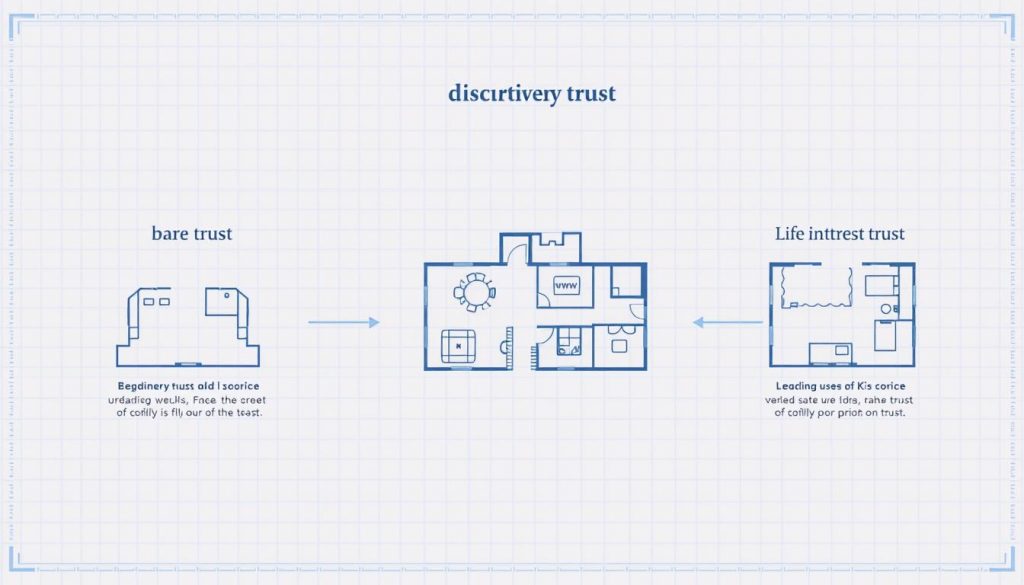
Choosing the right type of trust depends on your specific circumstances and goals. As Mike Pugh says, “The law, like medicine, is broad. You wouldn’t want your GP doing surgery.” The same applies here: trust law is a specialism, and working with a practitioner who focuses specifically on trusts and estate planning is essential for getting it right.
The Process of Placing Your Home in Trust
When considering placing a home in trust, it’s essential to understand the steps involved and why specialist advice matters. This is not a DIY process, it involves legal documentation, Land Registry procedures, HMRC registration, and careful consideration of tax implications. Getting it right from the start means you avoid costly mistakes and ensure your trust provides the protection you need.
Consulting with Legal Professionals
The first step in placing your home in trust is to consult with a specialist trust practitioner, not just any solicitor. General-practice solicitors may not have the in-depth knowledge of trust taxation, Land Registry procedures, and HMRC reporting that this area demands.
Finding a Specialist Trust Practitioner
To find the right specialist, look for someone with demonstrable experience in setting up property trusts specifically, including both mortgage-free and mortgaged properties. Ask how many property trusts they’ve established, what types they use, and whether they handle the Land Registry transfer and TRS registration as part of the service. For more information on how property trusts work and the different options available, you can visit our guide to Family Home Protection Trusts.
Drafting the Trust Deed
Once you have selected a suitable specialist, the next step is to draft the trust deed. This is the founding legal document of the trust, it sets out everything: who the trustees are, who the beneficiaries are, what powers the trustees have, how long the trust can last, and what happens in different scenarios. A well-drafted trust deed is the difference between a trust that protects your family and one that creates problems.
Essential Clauses and Provisions
The trust deed must include several essential clauses to ensure it is legally effective and provides the protection you need. Mike Pugh’s trusts include what are called “Standard and Overriding powers”, these give trustees clearly defined powers to manage and deal with the trust property without making the trust revocable (which would undermine the protection). A well-drafted deed will also include a clear process for removing and replacing trustees, ensuring the trust can adapt to changing circumstances over its lifetime (up to 125 years).
| Clause | Purpose | Benefit |
|---|---|---|
| Trustees’ Powers (Standard and Overriding) | Defines the authority of trustees, including power to sell, invest, and distribute | Ensures effective management without making the trust revocable |
| Beneficiary Details | Identifies the classes of people who may benefit from the trust | Gives trustees flexibility while ensuring your family is covered |
| Trustee Appointment and Removal | Sets out how trustees can be added, removed, or replaced | Ensures the trust continues to function properly even if circumstances change |
| Trust Duration | Specifies the maximum period of the trust (up to 125 years) | Provides long-term protection across multiple generations |
Alongside the trust deed, a letter of wishes is typically prepared. This is a non-binding document addressed to the trustees, explaining the settlor’s intentions and preferences for how the trust should be managed. While not legally binding, it provides valuable guidance to trustees about what the settlor would want in various situations.

Key Benefits of Putting Your House in Trust
Placing your house in trust can offer significant, concrete benefits, from protecting your family home against care fees that could otherwise consume your entire life’s savings, to ensuring a smoother and faster inheritance process. Let’s look at each major benefit with real UK figures.
Protection from Care Home Fees
This is often the number one reason families choose to put their home in trust, and for good reason. Between 40,000 and 70,000 homes are sold annually in the UK to fund residential care. With average care costs running at £1,100-£1,500 per week (and significantly more in London and the south, where costs can reach £1,700 or more per week), a homeowner can see their entire estate consumed in just a few years.
Local Authority Assessment Criteria
Under the current rules in England, if you have capital above £23,250, you are classed as a self-funder and must pay the full cost of your care. Between £14,250 and £23,250, you make a partial contribution. Only below £14,250 does the local authority fund your care. Your home is included in this assessment (with some exceptions, such as when a spouse or dependent still lives there).
If your property is held in a properly established irrevocable discretionary trust, you don’t own it, the trustees do. And because no beneficiary has a fixed right to the trust assets in a discretionary trust, the property may not be included in the local authority’s financial assessment. However, this is subject to the deprivation of assets rule: if a local authority can show that avoiding care fees was a “significant operative purpose” of the transfer, they may treat you as still owning the asset. There is no fixed time limit (unlike the 7-year IHT rule), but the longer the gap between the transfer and the need for care, the harder it is to prove intent. This is why planning must be done years in advance, while you’re healthy and there’s no foreseeable care need.
At MP Estate Planning, we document nine legitimate reasons for establishing the trust, none of which mention care fees. Care fee protection is an ancillary benefit, not the stated purpose.
| Assessment Criteria | Included in Assessment | Potentially Not Included |
|---|---|---|
| Asset Ownership | Assets held in individual’s name | Assets held in an irrevocable discretionary trust established well in advance |
| Trust Type | Revocable trusts and bare trusts (assets treated as belonging to the settlor or beneficiary) | Irrevocable discretionary trusts (no beneficiary has a fixed right) |
To put the cost in perspective: a trust typically costs from £850, that’s less than one week’s care home fees. It’s a one-time cost versus an ongoing liability that continues until death or until your estate is depleted to £14,250.
Inheritance Tax Planning
Putting your house in trust can also be a strategic move for inheritance tax planning. IHT is charged at 40% on the value of your estate above the nil rate band (NRB) of £325,000, a figure that has been frozen since 2009 and is confirmed frozen until at least April 2031. With the average home in England now worth around £290,000, many ordinary homeowners are now caught by IHT, especially when you add savings, pensions (which become liable for IHT from April 2027), and other assets.
Potential Tax Savings
The tax savings depend on the type of trust and property involved. For example, a Gifted Property Trust can remove 50% or more of the home’s value from your estate while avoiding Gift with Reservation of Benefit (GROB) rules, and it starts the 7-year clock ticking for IHT purposes. Meanwhile, a Family Home Protection Trust (Plus) can protect the home from care fees while retaining eligibility for the Residence Nil Rate Band (RNRB), currently £175,000 (gov.uk, RNRB) per person, available when a qualifying residential interest is passed to direct descendants.

Consider a married couple with a home worth £500,000 and additional assets. If left through their wills without proper planning, and assuming their combined NRB of £650,000 and RNRB of £350,000 are not fully utilised (for example, if the property doesn’t pass to direct descendants, or the estate exceeds the £2 million taper threshold), the estate could face an IHT bill of tens of thousands of pounds. With the right trust structure, this liability can be significantly reduced or even eliminated, meaning more of your wealth passes to your family rather than to HMRC. As Mike Pugh puts it, “Keeping families wealthy strengthens the country as a whole.”
Potential Drawbacks and Risks
While putting your house in trust can offer substantial benefits, it’s important to go in with your eyes open. Every planning decision involves trade-offs, and a good adviser will explain both the advantages and the limitations honestly.
Loss of Control Over the Property
Once you transfer your property into an irrevocable trust, you are no longer the legal owner, the trustees are. This is intentional (it’s what provides the protection), but it means that certain decisions about the property, such as selling, remortgaging, or making major changes, require the agreement of the trustees rather than being your sole decision.
However, this concern is often overstated. In practice, the settlor is usually appointed as one of the trustees, which means you remain involved in all decisions. The trust deed also contains defined trustee powers (Mike’s trusts include “Standard and Overriding powers”) that allow the trustees to manage the property effectively. A letter of wishes provides further guidance. In reality, for most families, day-to-day life doesn’t change at all, you continue living in your home just as before.
Potential Tax Considerations
Tax implications are an important consideration, but they are often less daunting than people assume. Discretionary trusts are subject to the relevant property regime, which means potential charges at the 10-year anniversary and when assets leave the trust. However, the maximum 10-year periodic charge is just 6% of the trust value above the available nil rate band, and for most family homes valued below the £325,000 NRB, this charge is zero. Exit charges are proportional to the last periodic charge, so if the periodic charge is nil, the exit charge is also nil.
Other tax considerations include trust income tax (charged at 45% on non-dividend income, 39.35% on dividends, with the first £1,000 at basic rate) and Capital Gains Tax (24% on residential property, 20% on other assets). Trustees must file an SA900 trust tax return annually if the trust has income or gains. Holdover relief is available when assets are transferred into or out of certain trusts, meaning no immediate CGT charge arises.
Prevention and Resolution Strategies
To mitigate these risks and ensure your trust works as intended, it’s essential to:
- Work with a specialist trust practitioner, not a general-practice solicitor who sets up one trust a year
- Ensure the trust deed is carefully drafted to reflect your specific circumstances, with appropriate trustee powers and provisions
- Keep the trust properly administered, TRS registration, tax returns, trustee meetings and records
- Review your letter of wishes periodically to ensure it still reflects your intentions as circumstances change
When you compare the cost of a trust (from £850) to the potential costs of care fees (£1,100-£1,500 per week), a 40% IHT bill, or a family dispute over your estate, it’s one of the most cost-effective forms of protection available. Plan, don’t panic.

Tax Implications of Property Trusts in the UK
Three rule changes you may need to consider (2026/27)
1. Pensions become subject to IHT from 6 April 2027. Most unused defined-contribution pension pots currently sit outside the estate for IHT, that ends on 6 April 2027 (gov.uk policy paper). HMRC estimates around 10,500 estates will face IHT for the first time as a result.
2. Business and agricultural property reliefs capped at £2.5m per person from 6 April 2026. Above the cap, only 50% relief applies, effective IHT of 20%. AIM shares dropped to 50% relief and do not use the £2.5m allowance (Saffery, APR/BPR reforms).
3. The NRB, RNRB and £2m taper threshold are frozen until 5 April 2031 following the 2024 and 2025 Budgets (gov.uk, NRB and RNRB freeze). With inflation, more estates will be pulled into IHT each year, a process commonly called “fiscal drag.”
The tax implications of property trusts in England and Wales are a critical aspect of estate planning, and also the area where the most confusion exists. Let’s cut through the noise and look at exactly how HMRC treats property held in trust.
Inheritance Tax Considerations
Inheritance tax (IHT) is charged at 40% on the taxable estate above the nil rate band (NRB) of £325,000 per person. A reduced rate of 36% applies if 10% or more of the net estate is left to charity. The NRB has been frozen since 6 April 2009, now confirmed frozen until at least April 2031. This freeze, combined with rising property values, is the number one reason ordinary homeowners are now caught by IHT.
When you transfer property into a discretionary trust, this is a Chargeable Lifetime Transfer (CLT), not a Potentially Exempt Transfer (PET). PETs only apply to gifts made directly to individuals. The immediate entry charge on a CLT is 20% on the value above your available NRB at the time of transfer. However, for most family homes valued below £325,000 (or £650,000 for a married couple using two trusts), the entry charge is zero.
Seven-Year Rule and Taper Relief
If the settlor dies within seven years of making a CLT into a discretionary trust, the transfer is reassessed at the full death rate of 40% (with credit for any 20% entry charge already paid). Taper relief may reduce the tax payable (not the value of the transfer) if death occurs between three and seven years after the transfer. However, taper relief (HMRC IHTM14612) only applies where the value of the transfer exceeds the NRB (£325,000), for smaller transfers, it has no practical effect because the NRB already covers the full amount.
- 0-3 years after transfer: full rate (40%)
- 3-4 years: effective rate 32% (taper relief reduces tax by 20%)
- 4-5 years: effective rate 24% (taper relief reduces tax by 40%)
- 5-6 years: effective rate 16% (taper relief reduces tax by 60%)
- 6-7 years: effective rate 8% (taper relief reduces tax by 80%)
- 7+ years: no IHT charge on the transfer
Nil-Rate Band and Residence Nil-Rate Band
The nil-rate band (NRB) is the amount that can be passed on free of IHT, currently £325,000 per person. Any unused NRB transfers to a surviving spouse or civil partner, giving a married couple a maximum combined NRB of £650,000.
The Residence Nil Rate Band (RNRB) provides an additional £175,000 per person, but only where a qualifying residential interest is passed to direct descendants (children, grandchildren, or step-children). It is not available for gifts to nephews, nieces, siblings, friends, or charities. The RNRB is also transferable between spouses, giving a maximum of £350,000 for a couple. However, it tapers away by £1 for every £2 that the estate exceeds £2,000,000.
The combined maximum outside the scope of IHT threshold for a married couple is therefore £1,000,000 (£650,000 NRB + £350,000 RNRB), but only if the property passes to direct descendants and the estate is below the £2m taper threshold.
| Band | Amount (per person) | Description |
|---|---|---|
| Nil-Rate Band (NRB) | £325,000 | Applies to all assets, frozen since 2009, confirmed frozen until at least April 2031 |
| Residence Nil-Rate Band (RNRB) | £175,000 | Only applies to qualifying residential property passed to direct descendants, frozen until April 2031 |
| Combined (married couple) | Up to £1,000,000 | Maximum of £650,000 NRB + £350,000 RNRB, subject to conditions |
Understanding these thresholds is vital for effective inheritance tax planning. The right trust structure, such as the Family Home Protection Trust (Plus), can help retain eligibility for the RNRB while still providing asset protection. We recommend consulting with a specialist trust practitioner to navigate these complexities and find the right solution for your family.
When to Consider Putting Your House in Trust
There are several key scenarios where placing your house in trust makes strong practical sense for UK homeowners. Not losing the family money provides the greatest peace of mind above all else, and these are the situations where that principle matters most.
Estate Planning for Families
Putting your house in trust is one of the most effective ways to protect your family’s inheritance. Without a trust, your home passes through probate on your death, your will becomes a public document once a Grant of Probate is issued, and all sole-name assets are frozen while the process runs its course (the full probate process typically takes 3-12 months, and longer if property needs to be sold, often 9-18 months in total). During this time, your family cannot access the property or its value. With a lifetime trust, the property bypasses probate entirely, the trustees can act immediately.
Protecting Assets for Future Generations
Beyond probate, trusts protect against a range of real-world threats. With a UK divorce rate of approximately 42%, the risk that a child’s inheritance could be lost in a divorce settlement is very real. A discretionary trust means the property is not owned by the beneficiary, so when a divorcing spouse’s solicitor asks “what assets do you have?”, the answer is truthfully: “What house? I don’t own a house.” The same logic applies to creditor claims, bankruptcy, and business failures. The trust holds the asset, not the individual.
Trusts also prevent sideways disinheritance, the risk that if your surviving spouse remarries, your share of the family home could end up passing to the new spouse’s family rather than to your children.
Vulnerable Beneficiary Situations
Trusts are particularly important when you have vulnerable beneficiaries, such as young children, adults with learning disabilities, mental health conditions, or addiction problems. A discretionary trust can provide financial support without giving the beneficiary direct control over a large asset, which could be lost through poor decisions, exploitation, or mismanagement. For beneficiaries receiving means-tested state benefits, a discretionary trust can provide additional support without jeopardising their entitlement, because the beneficiary has no fixed right to the trust assets.
| Beneficiary Type | Trust Benefits |
|---|---|
| Young Children | Protects inheritance until they are mature enough to manage it, unlike a bare trust (which must hand over assets at 18), a discretionary trust allows trustees to decide the right time |
| Adults with Disabilities or Vulnerabilities | Provides financial support while preserving state benefit entitlements and protecting against financial exploitation |
| Beneficiaries at Risk of Divorce | Property held in a discretionary trust is not owned by the beneficiary and is much harder for a former spouse to claim |
Business Asset Protection
For business owners, putting your family home in trust can separate your personal assets from your business risks. If your business faces legal action, insolvency, or creditor claims, your personal home could be at risk, unless it’s held in a trust. A Settlor Excluded Asset Protection Trust is designed specifically for buy-to-let and investment properties, while a Family Home Protection Trust covers your main residence. By ensuring your home is not in your personal name, you create a clear separation between business and personal assets.
From April 2026, Business Property Relief (BPR) and Agricultural Property Relief (APR) will be capped at 100% for the first £1 million of combined business and agricultural property, then 50% relief on the excess, making proper planning for business assets even more important.
By considering these scenarios honestly, care fees, divorce, probate delays, vulnerable beneficiaries, business risk, IHT, you can make an informed decision about whether putting your house in trust is the right choice for your family’s circumstances.
Conclusion: Is Putting Your House in Trust Right for You?
Deciding to put your house in trust is a significant decision, but for many families, it’s one of the smartest financial moves they’ll ever make. Throughout this article, we’ve explored how property trusts work under English and Welsh law, the different types available, and the process of transferring your home into trust. We’ve looked at the concrete benefits, protection from care fees that consume between 40,000 and 70,000 homes per year, inheritance tax savings in an era where the NRB has been frozen since 2009, bypassing probate delays, and protection against divorce, creditors, and sideways disinheritance.
We’ve also been honest about the considerations, the change in legal ownership, the tax regime for discretionary trusts, and the importance of proper administration. But as we’ve seen, for most family homes valued below the NRB, the periodic and exit charges under the relevant property regime are zero. And the cost of setting up a trust (from £850) is a fraction of one week’s care home fees.
As you consider your estate planning options, the key question isn’t whether you can afford to set up a trust, it’s whether you can afford not to. We strongly recommend working with a specialist trust practitioner who can assess your specific situation, run a full threat analysis, and recommend the right trust structure for your family. Not every family needs a trust, but every family deserves to make that decision with full, accurate information.
By seeking specialist advice and acting while you’re healthy and there’s no foreseeable care need, you can take a decisive step towards protecting your family’s most valuable asset and securing their financial future.
FAQ
What is a trust and how does it work?
A trust is a legal arrangement, not a separate legal entity, where the settlor transfers assets to trustees, who hold legal ownership and manage those assets for the benefit of the beneficiaries. In England and Wales, trust law has existed for over 800 years. The trustees are the legal owners of the trust property, but they must manage it according to the terms of the trust deed and in the best interests of the beneficiaries. Crucially, the settlor can also serve as a trustee, maintaining involvement in how the property is managed.
What are the different types of trusts available for UK property?
The main types are bare trusts (beneficiary has absolute right to assets at 18, no real protection), interest in possession trusts (a life tenant receives income or use of the property, with capital passing to other beneficiaries on their death), and discretionary trusts (trustees have absolute discretion, no beneficiary has a fixed right, providing the strongest protection). Trusts are also classified as either lifetime trusts (created during your life) or will trusts (created on death through your will). For asset protection, irrevocable discretionary lifetime trusts are the most commonly used, accounting for approximately 98-99% of family protection trusts.
How do I transfer my house into a trust?
The process depends on whether the property has a mortgage. For a mortgage-free property, a TR1 form transfers the legal title to the trustees, who are then registered at the Land Registry. A Form RX1 restriction is placed on the title as a safeguard. For a mortgaged property, a Declaration of Trust transfers the beneficial interest into the trust while legal title remains in your name until the mortgage is paid off. In both cases, a comprehensive trust deed is drafted, and the trust must be registered with HMRC’s Trust Registration Service within 90 days. This requires specialist guidance, it’s not a DIY process.
What are the benefits of putting my house in trust?
The key benefits include: protection from care home fees (which currently average £1,100-£1,500 per week and consume 40,000-70,000 homes per year); bypassing probate delays (trust assets don’t freeze when you die, trustees can act immediately); IHT planning opportunities (potentially reducing the 40% IHT charge); protection against divorce (with a ~42% UK divorce rate, this is a real risk); protection against creditors and bankruptcy; preventing sideways disinheritance; and providing for vulnerable beneficiaries without jeopardising their state benefits.
Are there any potential drawbacks to putting my house in trust?
The main considerations are: you transfer legal ownership to the trustees (though you typically remain a trustee yourself); discretionary trusts are subject to the relevant property regime, which includes potential 10-year periodic charges and exit charges (though for most family homes below the £325,000 NRB, these are zero); and ongoing administration is required including TRS registration and annual trust tax returns if the trust has income or gains. These are manageable considerations, not dealbreakers, especially when weighed against the cost of care fees, IHT, or losing your home in a family dispute.
How does putting a house in trust affect inheritance tax?
Transferring property into a discretionary trust is a Chargeable Lifetime Transfer (CLT). If the value is within your available nil rate band (£325,000), there is no entry charge. The relevant property regime applies, with a maximum 10-year periodic charge of 6% of the trust value above the NRB, for most family homes, this is zero. If the settlor survives seven years, the value used for the CLT falls out of their cumulative total. The right trust structure (such as a Family Home Protection Trust Plus) can also preserve eligibility for the £175,000 Residence Nil Rate Band. From April 2027, inherited pensions will also become liable for IHT, making trust planning even more important.
Can I still live in my house if I put it in trust?
Yes, in many trust structures, you continue living in your home exactly as before. However, you need to be aware of the Gift with Reservation of Benefit (GROB) rules: if you give away your home but continue to live in it rent-free, HMRC may treat it as still being in your estate for IHT purposes, even if you survive seven years. Different trust structures handle this differently, for example, the Family Home Protection Trust (Plus) is specifically designed to allow continued occupation while retaining IHT reliefs, and the Gifted Property Trust addresses GROB through a different mechanism. This is exactly why specialist advice is essential, the right trust structure makes all the difference.
What happens if I need to sell the property held in trust?
If the property needs to be sold, the trustees have the power to do so, provided the trust deed includes the appropriate trustee powers (as Mike Pugh’s trust deeds do, through “Standard and Overriding powers”). The sale proceeds remain within the trust and can be reinvested or distributed according to the trustees’ discretion. The trustees must comply with the terms of the trust deed and their fiduciary duties. If the property was the settlor’s main residence, holdover relief and other CGT provisions may apply, your trust specialist will advise on the specific tax treatment.
How do I choose the right trust for my situation?
Choosing the right trust depends on your specific goals: Are you primarily concerned about care fees? IHT? Divorce protection? Protecting a vulnerable beneficiary? Each goal may point to a different trust structure. At MP Estate Planning, we use a proprietary 13-point threat analysis (Estate Pro AI) to assess your situation and recommend the most suitable trust. For most families protecting their main residence, the choice is typically between a Family Home Protection Trust (Plus), a Gifted Property Trust, or a combination. The key is working with a specialist who focuses specifically on trusts, not a general-practice solicitor.
What is the role of the settlor, trustee, and beneficiary in a trust?
The settlor is the person who creates the trust and transfers assets into it, for a property trust, this is the homeowner. The trustee holds legal ownership and manages the trust property according to the trust deed and the law, a minimum of two trustees is required, and the settlor can be one of them. The beneficiary is a person who may benefit from the trust, but in a discretionary trust, no beneficiary has a fixed right, distributions are entirely at the trustees’ discretion. This separation of roles is the foundation of trust law and is what provides the protection.
Can I put my business assets in trust as well as my house?
Yes, and for business owners, this can be an important part of a comprehensive estate plan. A Settlor Excluded Asset Protection Trust is designed specifically for buy-to-let and investment properties, while other trust structures can accommodate different business assets. From April 2026, Business Property Relief (BPR) and Agricultural Property Relief (APR) are being capped at 100% for the first £1 million of combined business and agricultural property, then 50% on the excess, making trust planning for business assets more important than ever. A specialist assessment will determine the most suitable structure for your specific business and personal circumstances.
If you’re considering putting your house in trust, now is the time to take action, while you’re healthy and there’s no foreseeable care need. This proven estate planning strategy can help protect your property from care fees that average £1,100-£1,500 per week, reduce or eliminate inheritance tax, bypass probate delays, and ensure your home is passed on to your family according to your wishes, not consumed by avoidable costs.
At MP Estate Planning, we’ve helped hundreds of families across the UK secure their futures through specialist trust planning. As Mike Pugh says, “Trusts are not just for the rich, they’re for the smart.” Book a free consultation today to discover whether a property trust is right for you and get a clear, honest assessment of your options. Visit mpestateplanning.uk/book-a-consultation to get started.
What Happens to a House in Trust After the Settlor Dies
One of the most practical, and most misunderstood, aspects of property trusts is what actually happens when the person who created the trust passes away. Understanding this is essential before deciding whether a trust is the right structure for your circumstances.
Does a Property in Trust Go Through Probate?
In most cases, a property held in a properly constituted trust does not form part of the deceased’s probate estate. Because legal ownership transferred to the trustees at the point the trust was created, the property typically passes according to the terms of the trust deed rather than the will, or intestacy rules if no will exists. This can simplify and accelerate distribution to beneficiaries, since trustees may generally continue to administer the trust without waiting for a grant of probate. However, this probate bypass only applies where the trust was validly constituted during the settlor’s lifetime; a property simply named in a will does not achieve the same outcome. For further detail on the probate process in England and Wales, the GOV.UK guidance on wills, probate and inheritance provides a useful starting point.
Trustee Succession, Who Takes Over?
The trust deed should name successor trustees or set out a mechanism for appointing them. In our experience, this is one of the areas clients most frequently overlook. If the original trustees include the settlor, which is permissible in certain trust structures, their death triggers the need for a replacement trustee. The Trustee Act 1925 governs the appointment and retirement of trustees in England and Wales, and it is important that the trust deed aligns with these statutory provisions. Where no successor trustee mechanism exists, the remaining trustees (or the beneficiaries in some circumstances) may need to apply to the court, which can be costly and time-consuming. We would generally recommend naming at least two trustees and one or more successors at the outset.
Revocable vs Irrevocable Trusts, What Control Does the Settlor Retain?
This distinction matters enormously in practice, yet it is often glossed over in general guidance. A revocable trust allows the settlor to amend or dissolve the trust during their lifetime, retaining a degree of control. However, because the settlor retains that control, HMRC and local authorities are likely to treat the property as still belonging to the settlor for inheritance tax and means-testing purposes respectively. An irrevocable trust, by contrast, involves a genuine and permanent transfer of the asset. This may offer stronger planning benefits in theory, but it also means the settlor typically cannot reclaim the property or change the terms without trustee and potentially beneficiary consent. In our experience, many clients are surprised to learn that a trust which preserves their control may provide little or no protection against care home fee means-testing. Local authorities in England apply deliberate deprivation rules under the Care and Support Statutory Guidance (DHSC) and may disregard the trust entirely if they conclude it was created to avoid care costs. The timing of the transfer, the settlor’s health at the time, and the stated purpose of the trust are all factors a local authority may examine.
Common Questions About Putting a House in Trust in the UK
Who owns the property in a trust in the UK?
When a property is placed in trust, legal ownership passes to the trustees, who hold it on behalf of the beneficiaries. The beneficiaries hold what is known as the beneficial or equitable interest, meaning they are entitled to the economic benefit of the property in accordance with the trust deed. This separation of legal and beneficial ownership is a fundamental principle of trust law in England and Wales. It means neither the trustees (in most structures) nor the beneficiaries have the full, unrestricted rights of an outright owner, which can create practical complications if, for example, the property needs to be sold or remortgaged.
Is a living trust legal in the UK?
Yes, trusts created during a person’s lifetime, often called inter vivos or living trusts, are a recognised and well-established legal structure under English law. They are not, however, as commonly used in the UK as they are in the United States, where they are frequently promoted as a probate-avoidance tool. In England and Wales, a trust must generally be evidenced in writing (for property) and, since 2022, most trusts must be registered with HMRC’s Trust Registration Service. Failure to register within the required deadlines can result in penalties.
What are the disadvantages of a UK living trust?
There are several material disadvantages that our team believes should be weighed carefully. First, there is loss of direct control: once an irrevocable trust is created, the settlor cannot simply take the property back. Second, there are ongoing administrative obligations, including trustee duties, potential annual trust tax returns, and TRS registration. Third, the residence nil-rate band, worth up to £175,000 per individual where a main residence passes to direct descendants, may not apply in the same way if the property is held in certain trust structures, potentially increasing rather than reducing an inheritance tax liability. Fourth, mortgage lenders must typically consent before a mortgaged property can be placed in trust, and many lenders refuse. Costs of legal drafting should also be factored in from the outset.
Can I put my house in trust to avoid Inheritance Tax in the UK?
This is one of the most common questions we encounter, and the honest answer is: it depends on the structure, timing, and your individual circumstances, and in many cases a trust will not achieve what the client hopes. The UK inheritance tax nil-rate band is currently £325,000 per individual, frozen until 2030. Transferring a property into most types of trust is treated as a chargeable lifetime transfer or a potentially exempt transfer, meaning IHT may still be payable if you die within seven years. Discretionary trusts are subject to entry charges, ten-year anniversary charges, and exit charges. A trust is generally not a straightforward way to place a property outside the scope of IHT, and strategies marketed as such should be approached with significant caution. We would always recommend taking advice from a regulated professional before proceeding.
Is it worth putting your house in trust in the UK?
For some people, yes, but this depends heavily on individual goals. With care home fees in England averaging over £1,000 per week as of 2024, it is understandable that protecting the family home is a priority. However, as noted above, trusts created with the intention of avoiding care costs may be unwound by local authorities under deliberate deprivation rules. Where the primary goal is probate efficiency, ensuring smooth succession, or managing how a property passes to blended family beneficiaries, a trust may offer genuine value. In our experience, the answer is rarely straightforward, and the right structure depends on factors including the property’s value, the settlor’s age and health, existing mortgage arrangements, and wider estate composition. A conversation with our team is a sensible starting point before any decisions are made.