


Dealing with the estate of a loved one is one of the most challenging experiences a family can face. Probate — the legal process of obtaining authority to administer a deceased person’s estate — has become increasingly slow and frustrating in England and Wales. What used to take a matter of weeks can now drag on for months, with the entire estate frozen while families wait. During this time, bank accounts are locked, property cannot be sold, and beneficiaries receive nothing.
We understand that the probate process can feel overwhelming, especially when you’re grieving and need access to funds. The probate timeline in the UK varies enormously depending on the estate’s complexity, but understanding why delays happen — and what you can do about them — puts you in a far stronger position. More importantly, there are planning steps you can take right now to ensure your own family never has to endure these delays.
Key Takeaways
- Understanding the probate process helps you prepare for the challenges ahead and avoid common mistakes that cause delays.
- Delays in probate are caused by complex estates, missing documentation, beneficiary disputes, and HMRC processing times for Inheritance Tax (IHT).
- During probate, all sole-name assets are frozen — bank accounts, property, and investments cannot be accessed by the family.
- There are practical steps executors can take to speed up the process, including organising documentation early and instructing a specialist solicitor.
- Lifetime trusts can bypass probate delays entirely — trustees can act immediately on the settlor’s death, with no need to wait for a Grant of Probate.
What is Probate?
When someone passes away in England or Wales, their estate typically needs to go through probate before assets can be distributed. Probate is the legal process by which the Probate Registry confirms who has the authority to deal with the deceased person’s estate — and it’s this authority (the “Grant”) that banks, building societies, Land Registry, and other institutions require before they’ll release assets.
Definition of Probate
Probate involves the Probate Registry issuing either a Grant of Probate (where the deceased left a valid will and named executors) or Letters of Administration (where there is no will — known as dying intestate, meaning the rules of intestacy determine who inherits). The executor or administrator then uses this Grant to gather in the estate’s assets, pay off all debts and taxes (including any Inheritance Tax liability), and distribute what remains to the beneficiaries. Without the Grant, virtually all institutions will refuse to release funds or transfer assets — which is precisely why delays in probate cause so much difficulty for families.

Importance of Probate in Estate Administration
Probate plays a crucial role in estate administration because it provides the legal authority needed to deal with the deceased’s assets. It ensures that assets are distributed according to the will — or, where there is no will, according to the statutory intestacy rules. It also protects executors and administrators by giving them legal authority to act, and it protects beneficiaries by creating a framework of accountability. For detailed information on how long the probate process takes, you can visit our page on probate processing times.
One important point many people don’t realise: once a Grant of Probate is issued, the will becomes a public document. Anyone can obtain a copy for a small fee. This means the details of what you owned and who you left it to are available for all to see — something that concerns many families. Assets held in trust, by contrast, remain entirely private. The Trust Registration Service (TRS) register is not publicly accessible, unlike Companies House — so a trust offers a level of confidentiality that a will simply cannot match.
The Probate Process Explained
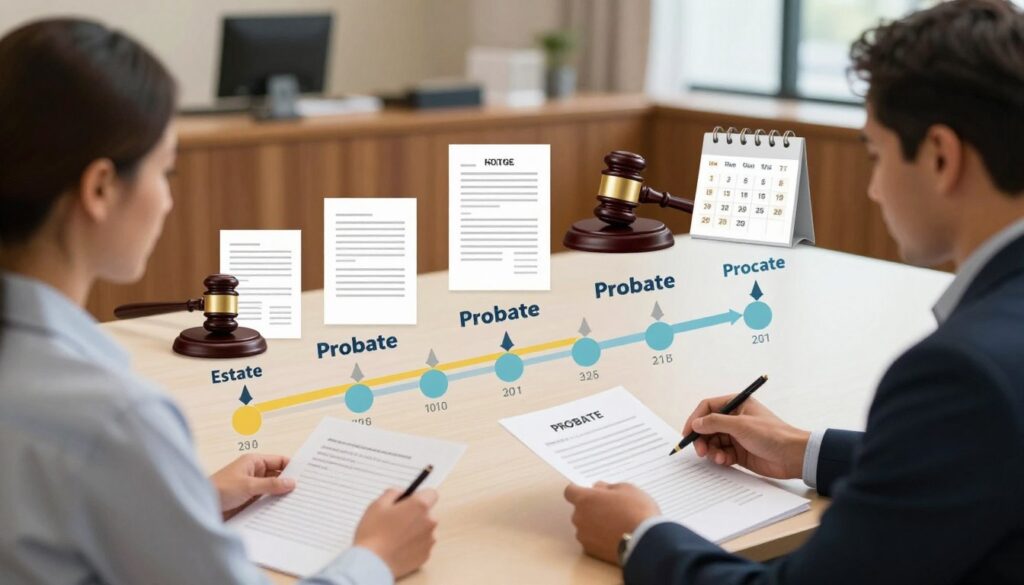
Navigating the probate process can feel daunting, but breaking it down into stages makes it far more manageable. The full process involves several distinct phases: gathering information and valuing the estate, dealing with HMRC, applying for the Grant, administering the estate (paying debts and selling assets if necessary), and finally distributing to beneficiaries.
Initial Steps in Applying for Probate
Before you can apply for a Grant, there is considerable groundwork to do. Not all estates require probate — very small estates, or estates where all assets were held jointly and pass by survivorship, may not need a Grant at all. But for most estates that include property, significant savings, or investments held in the deceased’s sole name, probate will be necessary. The executor named in the will (or an administrator if there is no will) must apply for the Grant of Probate through the Probate Registry.
The key initial steps include:
- Registering the death and obtaining the death certificate.
- Locating the original will and identifying the named executors.
- Writing to all asset holders (banks, building societies, pension providers, insurance companies) to ascertain values as at the date of death.
- Valuing any property — typically by obtaining at least two estate agent valuations or a formal RICS valuation.
- Completing the relevant HMRC Inheritance Tax forms (even if no IHT is due, HMRC must be notified).
- Submitting the probate application online (via the gov.uk portal) or by post, and paying a nominal court fee.
For more detailed guidance on the probate application process, you can refer to resources like Irwin Mitchell’s Probate Guide, which provides comprehensive information on navigating the probate process.
Gathering Necessary Documentation
Gathering the necessary documentation is often the most time-consuming part of the entire probate process — and where many of the delays originate. The key documents include:
- The original will and any codicils (amendments to the will).
- The death certificate (you’ll need several certified copies, as multiple institutions will require them simultaneously).
- Full details of the deceased’s assets and liabilities — bank statements, building society passbooks, share certificates, property deeds, pension statements, life insurance policies, and any outstanding loans or debts.
- Information about any gifts made by the deceased in the seven years before death, as these are relevant to the Inheritance Tax calculation. Outright gifts to individuals are potentially exempt transfers (PETs) — if the donor survived seven years, they fall outside the estate completely. If not, they use up the nil rate band first, with any excess taxed at 40%. Transfers into discretionary trusts, by contrast, are chargeable lifetime transfers (CLTs) with different rules.
- Details of any trusts the deceased was connected to, either as settlor, trustee, or beneficiary.
The accuracy and completeness of this documentation directly determines how quickly the probate process moves forward. Incomplete information is the single most common cause of avoidable delays — especially when it comes to the HMRC forms.
The Role of the Executor
The executor bears enormous responsibility. They are personally liable for the proper administration of the estate — meaning that if they distribute assets before all debts and taxes are paid, they can be held personally liable to creditors or HMRC. Their core responsibilities include:
- Applying for the Grant of Probate.
- Securing and managing the estate’s assets from the date of death — including insuring property, redirecting post, and notifying relevant organisations.
- Paying off all debts and liabilities, including any Inheritance Tax due (IHT on property must typically be paid before the Grant is issued, which can create a serious cash-flow challenge).
- Placing statutory notices in The Gazette and local newspapers to protect against unknown creditors (executors who skip this step risk personal liability).
- Distributing the remaining assets to beneficiaries according to the will, keeping detailed records of every transaction.
The executor must act in the best interests of the estate and its beneficiaries at all times, ensuring that they fulfil their legal duties as executor and comply with all requirements governing estate administration. Being an executor is not a token honour — it’s a serious legal obligation, and many people underestimate the workload involved. If you’ve been named as an executor and feel out of your depth, instructing a specialist probate solicitor early on is one of the smartest decisions you can make.
Common Reasons for Delays in Probate
Understanding the common reasons for probate delays helps both executors and beneficiaries set realistic expectations. In our experience, most delays fall into a handful of recurring categories — and many are avoidable with proper planning.
Complex Estates and Assets
Estates with complex assets significantly prolong the probate process. The more complex the estate, the longer it takes to value and administer. Common complications include:
- Multiple properties, especially if any need to be sold (property sales during probate can take 9 to 18 months from death to completion).
- Business interests requiring professional valuation — especially relevant now that Business Property Relief (BPR) is being capped from April 2026 (100% relief on the first £1 million of combined business and agricultural property, then 50% on the excess).
- Foreign assets, which may require separate probate proceedings in each jurisdiction.
- Investments held across multiple platforms, each with their own paperwork requirements.
- Assets where ownership is unclear or disputed.

Lack of Proper Documentation
Missing or incomplete documentation is one of the most frustrating — and most avoidable — causes of probate delays. The executor needs to provide accurate information to HMRC and the Probate Registry, and gaps in the paperwork inevitably slow everything down. Common documentation problems include:
- Missing or unsigned will (or a will that cannot be found, leading to intestacy proceedings — and the intestacy rules may distribute the estate very differently from what the deceased intended)
- Unclear beneficiary information — for example, beneficiaries named by description rather than full legal name
- Incomplete financial records — the deceased may not have kept organised records of their bank accounts, investments, or debts
- Missing property deeds or unclear title issues at Land Registry
Disputes Among Beneficiaries
Disputes among beneficiaries can cause the most severe delays of all — sometimes adding years to the process. Common disputes include challenges to the validity of the will, claims under the Inheritance (Provision for Family and Dependants) Act 1975 (where someone feels they were not adequately provided for), and disagreements about how assets should be distributed or whether the executor is acting properly. When a caveat is lodged at the Probate Registry, the Grant cannot be issued until the dispute is resolved — which can mean lengthy negotiations or even court proceedings.
This is another area where forward planning makes a real difference. A properly structured discretionary lifetime trust removes assets from the probate estate entirely, which means they cannot be subject to a claim under the 1975 Act. The trust deed governs distribution, not the will — and because no beneficiary of a discretionary trust has a legal right to any specific share of the trust fund, there is far less scope for dispute.
By understanding these common causes of delay, executors and beneficiaries can take proactive steps to prepare properly and, where possible, prevent problems before they arise.
The Role of HMRC in the Process
HMRC’s involvement in the probate process is one of the biggest sources of delay — and one that catches many executors off guard. Before the Probate Registry will issue a Grant, HMRC must be satisfied that the correct Inheritance Tax position has been declared. This means that the IHT forms must be completed and submitted before you can even apply for probate.
Tax Implications and Inheritance Tax
Inheritance Tax (IHT) is charged at 40% on the value of the taxable estate above the nil rate band (NRB) of £325,000 per person. This NRB has been frozen since 6 April 2009 and is confirmed frozen until at least April 2031 — which means inflation and rising property prices have dragged hundreds of thousands of ordinary families into the IHT net. With the average home in England now worth around £290,000, it doesn’t take much in savings, pensions, or life insurance to push an estate over the threshold.
There is also the Residence Nil Rate Band (RNRB) of £175,000 per person, available when a qualifying residential property is passed to direct descendants (children, grandchildren, or step-children). For a married couple who can transfer both their unused NRB and RNRB allowances, the combined threshold can reach up to £1,000,000 (£650,000 combined NRB plus £350,000 combined RNRB) — but only if the conditions are met. The RNRB tapers away by £1 for every £2 the estate value exceeds £2,000,000, and it is not available at all if the property is left to siblings, nieces, nephews, or friends.
A reduced rate of 36% applies where at least 10% of the net estate is left to charity. And from April 2027, inherited pension funds will become liable for IHT — a significant change that will bring many more estates above the threshold.

The Impact of HMRC Delays
Here’s where it gets particularly frustrating for families: IHT on property and certain other assets must normally be paid before the Grant of Probate is issued. But without the Grant, the executor can’t sell the property or access the estate’s funds to pay the tax. This creates a catch-22 situation that often requires executors to arrange bridging loans, use the Direct Payment Scheme (where HMRC takes payment directly from the deceased’s bank accounts), or pay from their own funds temporarily.
If HMRC queries any of the valuations or raises an enquiry into the estate, the entire probate process is held up until the matter is resolved. HMRC investigations into estate valuations — particularly property valuations — can add months to the timeline.
To minimise the risk of HMRC-related delays, we recommend:
- Obtaining professional property valuations (ideally RICS-qualified) rather than relying solely on estate agent estimates — HMRC are more likely to challenge informal valuations.
- Ensuring all IHT forms are completed accurately and comprehensively first time — errors and omissions trigger HMRC queries.
- Declaring all assets, including those that are easy to overlook (jointly-held assets, death-in-service benefits, gifts made in the last seven years, and from April 2027, pension funds).
- Responding promptly and thoroughly to any HMRC queries — delays in responding to HMRC simply extend the delay at the other end.
Timeframes for Different Types of Estates
The duration of probate varies enormously depending on the estate’s complexity. Setting realistic expectations from the outset is essential — it prevents frustration and helps families plan their finances during what can be a long wait.
Simple Estates vs. Complex Estates
A straightforward estate — one with a clear, professionally-drafted will, a single property (or no property), standard bank accounts and savings, no IHT liability, and no disputes — can often be completed within 6 to 9 months from death to final distribution. The Grant itself may be issued within 4 to 8 weeks of application (faster for online applications), but gathering asset information beforehand and administering the estate afterwards adds considerably to the total timeline.
Complex estates are a different matter entirely. Where the estate includes multiple properties, business interests, assets in different countries, or where there are disputes among beneficiaries or claims against the estate, the process can stretch well beyond two years. If a property needs to be sold (which is common when the estate needs to raise funds for IHT or to divide the value between beneficiaries), expect the total process to take 9 to 18 months at a minimum.

Changes in Timeframes Based on Circumstances
Several specific factors can significantly influence the probate timeline beyond the basic complexity of the estate. These include the efficiency and availability of the executor (executors who are slow to respond to correspondence or who don’t understand their duties can add months), disputes among beneficiaries (a single caveat can halt the entire process), and HMRC enquiries into the Inheritance Tax position.
Additionally, the role of HMRC in assessing Inheritance Tax is a critical factor. Estates that are close to or above the nil rate band, or that claim reliefs such as BPR or APR, face greater scrutiny and longer processing times.
| Estate Type | Typical Timeframe | Influencing Factors |
|---|---|---|
| Simple Estate | 6-9 months | Few assets, clear will, no IHT liability, no disputes |
| Complex Estate | 12 months to 2+ years | Multiple assets, property sales, business interests, disputes, HMRC enquiries |
Understanding these factors helps executors and beneficiaries manage their expectations. The key takeaway is this: the best time to reduce probate delays is before death — through proper estate planning, clear documentation, and, where appropriate, placing assets into a lifetime trust so they bypass probate entirely.
Legal Requirements for Probate In the UK
Understanding the legal requirements for probate in England and Wales is crucial for executors to navigate the process effectively and avoid personal liability. The role of executor carries serious legal obligations, and getting it wrong can have significant consequences.
Eligibility Criteria for Executors
To act as an executor, an individual must meet certain criteria under UK law. They must be at least 18 years old and have mental capacity to make decisions. A person who is currently bankrupt cannot act as executor (though they can be named in the will — they simply cannot take up the role until discharged from bankruptcy). There is no legal requirement for an executor to have any legal or financial expertise, which is precisely why many executors struggle with the role and why professional guidance is so important.
- Must be aged 18 or over
- Must have mental capacity to carry out the role
- Must not be currently bankrupt (an undischarged bankrupt cannot obtain a Grant)
- Up to four executors can apply for the Grant, though in practice two is the most common number
Legal Obligations for Estate Settlements
Executors owe a fiduciary duty to the estate and its beneficiaries. This means they must act honestly, in good faith, and in the best interests of the beneficiaries — not in their own interests. They can be held personally liable if they distribute the estate incorrectly, fail to pay legitimate debts, or breach their duties in any way.
The key legal obligations for executors include:
- Securing and safeguarding the estate’s assets from the date of death (including insuring property and maintaining it).
- Obtaining accurate valuations of all assets as at the date of death for IHT purposes.
- Completing and submitting the appropriate IHT forms to HMRC — even where no tax is due.
- Applying for the Grant of Probate (or Letters of Administration).
- Placing statutory notices for creditors in The Gazette and a local newspaper (the executor has a duty to wait at least two months after the notice before distributing, to protect against unknown claims).
- Paying all debts, taxes, and liabilities from the estate before any distributions to beneficiaries.
- Distributing the remaining assets strictly according to the will (or the intestacy rules if there is no will).
- Preparing estate accounts showing all income, expenditure, and distributions.
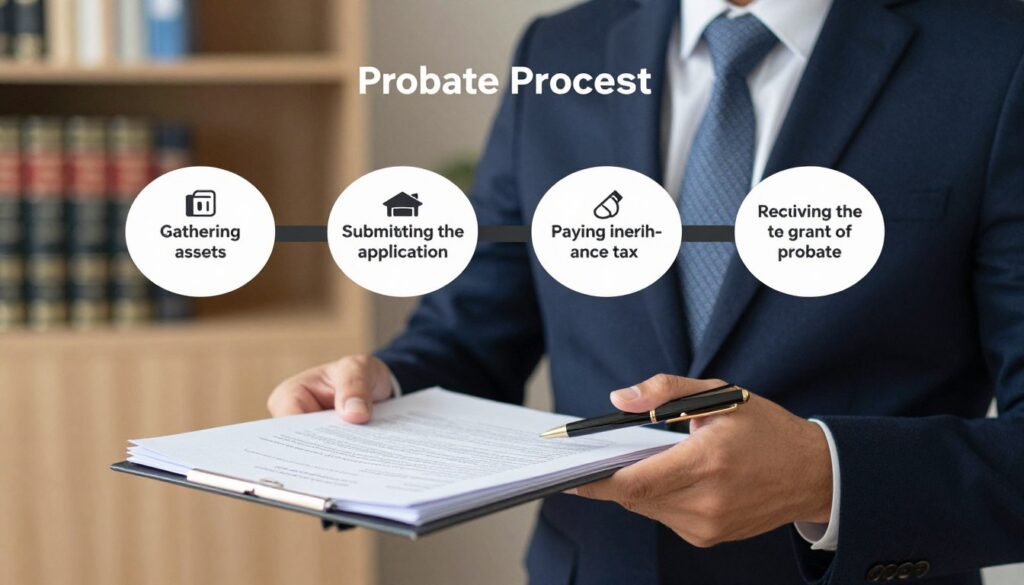
By understanding and adhering to these legal requirements, executors can protect themselves from personal liability and ensure the probate process runs as smoothly as possible.
The Impact of COVID-19 on Probate Times
The pandemic created unprecedented backlogs in the probate system that are still being felt today. While the Probate Registry has largely returned to normal operations, the legacy of COVID-19 continues to affect processing times and the way probate applications are handled.
Delays Due to Pandemic Measures
During the pandemic, Probate Registries were closed or operating with significantly reduced staff. Face-to-face appointments were suspended, and the postal system experienced disruptions that affected the processing of paper applications. The result was a substantial backlog that took years to clear. At the worst point, families were waiting months just for the Grant to be issued — before the actual estate administration could even begin.
The pandemic also made it harder for executors to carry out their duties. Valuing properties, accessing the deceased’s home to locate documents, and obtaining face-to-face professional advice all became significantly more difficult during lockdown periods.
Changes in Court Operations
One positive legacy of the pandemic has been the accelerated rollout of online probate applications. The gov.uk probate service now allows executors (or their solicitors) to submit applications digitally, which has improved processing times for straightforward cases. Online applications are generally processed faster than postal applications.
However, not all cases can be handled online — contested cases, applications involving foreign elements, and certain unusual circumstances still require paper applications or direct engagement with the Probate Registry. The shift to digital processes has also created challenges for elderly executors or those unfamiliar with online systems.
For more information on how the pandemic has affected probate and estate administration, you can visit KC Trust’s blog on the topic.
How to Speed Up the Probate Process
The single most effective way to reduce probate delays is thorough preparation — ideally done before death, as part of proper estate planning. But even after death, there are practical steps executors can take to keep the process moving as quickly as possible.
Organising Documentation Ahead of Time
The most common cause of avoidable probate delays is missing or disorganised paperwork. The more information the executor has ready at the outset, the faster the process moves. Essential documents include:
- The original will and any codicils (not copies — the Probate Registry requires the original)
- A comprehensive list of all assets, including property, bank accounts, savings accounts, ISAs, investments, premium bonds, and any other holdings — with account numbers and contact details for each institution
- Details of all debts and liabilities, including mortgages, credit cards, loans, and any outstanding bills
- Records of any gifts made in the seven years before death (outright gifts to individuals are potentially exempt transfers; gifts into discretionary trusts are chargeable lifetime transfers — both need to be declared)
- Pension details and any death-in-service benefits — especially important given that from April 2027, inherited pensions will be liable for IHT
- Life insurance policy documents, including details of whether policies are written in trust (life insurance written in trust pays out directly to trustees, bypassing both probate and IHT — and it’s typically free to set up)
If you’re reading this and thinking about your own estate, the best thing you can do for your executors is create a clear, organised file containing all of this information and tell them where to find it. It sounds simple, but it can save months.
Using Professional Help
Instructing a specialist probate solicitor can significantly reduce both the time and the stress involved in estate administration. As Mike Pugh often says, “The law — like medicine — is broad. You wouldn’t want your GP doing surgery.” Probate is a specialist area, and a solicitor experienced in estate administration will:
- Know exactly which IHT forms are needed and how to complete them correctly — avoiding HMRC queries that cause delays.
- Understand which reliefs and exemptions apply to the estate (NRB, RNRB, spouse exemption, charity relief) and ensure they are properly claimed.
- Handle correspondence with asset holders efficiently, often using established relationships to speed up the process.
- Manage any disputes or claims against the estate with appropriate legal expertise.
Professional advice costs money, of course — but when you weigh it against the risk of personal liability, costly mistakes, and months of additional delay, it is almost always money well spent. For complex estates, it’s not just advisable — it’s essential.
The most effective step of all, however, is forward planning. Many of the assets that cause the biggest probate headaches — particularly the family home — can be placed into a lifetime trust, which means they bypass probate entirely. Trustees can act immediately on the settlor’s death with no need to wait for any court authority. Trust assets are legally owned by the trustees, not by the settlor — so when the settlor dies, those assets simply don’t form part of the probate estate. England invented trust law over 800 years ago, and this distinction between legal and beneficial ownership remains the foundation of how trusts work today.
Understanding Probate Costs
Understanding the financial implications of probate is essential for executors and beneficiaries alike. Probate costs can range from modest to substantial, and being caught off guard by unexpected expenses adds stress to an already difficult time.
Typical Expenses Involved
The main costs involved in the probate process include:
- Probate Registry fee: A nominal court fee to obtain the Grant (this is relatively small and subject to periodic change).
- Solicitor’s fees: These vary widely. Some solicitors charge a fixed fee, others charge hourly rates, and some charge a percentage of the estate value (typically 1-2% plus VAT). Always ask for a clear fee estimate in writing before instructing a solicitor.
- Valuation fees: Professional property valuations (RICS) and business valuations can cost several hundred pounds, but they reduce the risk of HMRC challenges.
- IHT costs: If the estate exceeds the available nil rate band, IHT at 40% must be paid. For many families, this is by far the largest single cost — and it must typically be paid before the Grant is issued. On an estate worth £500,000 with a single person’s NRB of £325,000, the IHT bill would be £70,000 — due before the family can even access the assets.
- Administrative costs: These include statutory notice fees, property insurance, maintenance of property during probate, and postage/communication costs.
It’s important for executors to understand these costs so they can manage the estate’s finances effectively and ensure beneficiaries have realistic expectations about what they will ultimately receive.
Budgeting for Unexpected Costs
Beyond the predictable expenses, executors should budget for costs that may arise unexpectedly during the process:
- Beneficiary disputes: If a claim is made against the estate under the Inheritance (Provision for Family and Dependants) Act 1975, legal costs can escalate rapidly — potentially running into tens of thousands of pounds.
- HMRC enquiries: If HMRC challenges asset valuations (particularly property), you may need to pay for a formal valuation from the Valuation Office Agency or instruct a specialist to negotiate on the estate’s behalf.
- Property maintenance and insurance: An empty property during probate still needs to be insured (many standard policies have empty property exclusions after 30 to 60 days), heated in winter to prevent pipe damage, and maintained. These costs add up over months.
- Capital Gains Tax: If assets have increased in value between the date of death and the date they are sold during administration, CGT may be payable by the estate.
Effective budgeting for these potential costs protects both the executor (from personal liability) and the beneficiaries (from unpleasant surprises). The more thorough the planning, the smoother the process. When you compare the cost of a properly structured lifetime trust — from around £850 for a straightforward trust — to the potential costs of probate delays, IHT, and family disputes, it puts the investment in proper estate planning into sharp perspective.
Alternatives to Traditional Probate
Not all assets need to go through probate, and understanding the alternatives can save your family significant time, stress, and expense. Proper estate planning — done while you’re alive and well — can ensure that the bulk of your estate bypasses probate delays entirely, while still protecting your beneficiaries’ interests.
When families are struggling with a lengthy probate process, they often say: “I wish we’d known about this beforehand.” The truth is, the time to plan is now — not after someone has died.
Are There Different Routes for Estate Settlement?
Yes, several mechanisms can either reduce or eliminate the need for probate:
- Lifetime trusts: Assets placed into a properly structured lifetime trust during your lifetime are legally owned by the trustees, not by you personally. When you die, there is nothing for probate to deal with — the trustees can act immediately. This is the most comprehensive way to bypass probate delays. A discretionary lifetime trust, such as MP Estate Planning’s Family Home Protection Trust, also provides protection against care fees, sideways disinheritance, and can be structured to remain IHT-efficient. No beneficiary of a discretionary trust has a legal right to any specific share of the trust fund — and that is precisely the mechanism that provides the protection. Discretionary trusts can last up to 125 years, meaning they can protect the family home across multiple generations.
- Joint ownership (joint tenants): Assets held as joint tenants pass automatically to the surviving owner by right of survivorship, outside the will and outside probate. However, this provides no protection against care fees (the local authority can still assess the surviving owner’s share), divorce (if the surviving owner’s marriage breaks down, the property could be claimed), or the surviving owner changing their will to disinherit your chosen beneficiaries. It also means the first person to die has no control over where the asset ultimately ends up.
- Life insurance written in trust: A life insurance policy written in trust pays out directly to the named trustees — it never forms part of the estate, so it bypasses both probate and IHT. This is often a straightforward and cost-effective planning step. MP Estate Planning typically sets up Life Insurance Trusts at no additional cost.
- Pension death benefits: Pension funds are typically paid at the discretion of the scheme trustees and do not form part of the probate estate (though from April 2027, they will be subject to IHT). A completed expression of wishes form guides the pension trustees on who should receive the funds — it’s essential to keep this up to date.
- Mediation: Where disputes arise during probate, mediation offers a faster and less expensive route to resolution than court proceedings.
Benefits of Alternative Approaches
The benefits of planning ahead and using these alternative approaches are significant:
| Alternative Approach | Benefits |
|---|---|
| Lifetime Trusts (Discretionary) | Bypasses probate entirely, protects against care fees and family disputes, can retain IHT reliefs (including RNRB with the Family Home Protection Trust Plus), maintains complete privacy, trustees can act immediately on death |
| Joint Ownership | Automatic transfer to surviving owner, no probate needed for that asset — but offers no protection against care fees, divorce, or the survivor changing their will |
| Life Insurance in Trust | Immediate payout to beneficiaries, bypasses probate and IHT — often free to set up |
As Mike Pugh says, “Plan, don’t panic.” The families who have the smoothest experience after a bereavement are invariably those who planned ahead. When you compare the cost of a lifetime trust to the potential costs it protects against — care fees averaging £1,200 to £1,500 per week, an IHT bill of 40% on everything above the nil rate band, or years of family disputes — it’s one of the most cost-effective forms of protection available. Trusts are not just for the rich — they’re for the smart.
Frequently Asked Questions about Probate
The probate process raises many questions, particularly for executors dealing with it for the first time. Below we address the most common queries and clear up widespread misconceptions.
Common Misconceptions
One of the biggest misconceptions about probate is that it’s always a lengthy process. While probate can take a long time — especially for complex estates — a straightforward estate with good preparation can be completed within 6 to 9 months. Another misconception is that probate is only necessary for large or wealthy estates. In reality, most estates that include property or significant financial assets in the deceased’s sole name will require a Grant, regardless of whether the estate is above the IHT threshold.
A third common misconception is that a will avoids probate. It does not. A will tells the executors and the Probate Registry who should inherit — but the estate still goes through probate before anything is distributed. The only way to genuinely bypass probate for an asset is to ensure it is not owned by the deceased at the point of death — which is exactly what a lifetime trust achieves. Trust assets are legally owned by the trustees, so they simply don’t form part of the probate estate.
Key Considerations for Executors
Executors play a critical role in the probate process, and there are several key considerations they must keep in mind. First and foremost, executors are personally liable for the proper administration of the estate. This means they must act carefully, keep meticulous records, and take professional advice where needed. Key responsibilities include:
- Locating and securing all of the deceased’s assets from the date of death
- Obtaining accurate valuations for IHT purposes
- Completing HMRC forms and paying any IHT due (often before the Grant is issued)
- Placing statutory notices to protect against unknown creditor claims
- Distributing the remaining assets strictly according to the will (or intestacy rules)
- Maintaining accurate records of every transaction and decision
Executors should be aware that they can be held liable for mistakes — including distributing too early (before the creditor notice period expires), undervaluing assets for IHT, or failing to identify all beneficiaries. For detailed guidance on executor duties, visiting our guide to executor duties can provide valuable insights.
By understanding these responsibilities and the probate process, executors can better navigate their role and ensure the estate is administered correctly and efficiently.
Conclusion: Navigating Probate More Efficiently
The probate process in England and Wales can be time-consuming, stressful, and expensive — but understanding how it works gives you the power to prepare properly and minimise delays. The families who experience the smoothest estate administration are those who planned ahead.
Key Takeaways
Probate involves multiple stages — from gathering documentation and dealing with HMRC, to obtaining the Grant, administering the estate, and distributing to beneficiaries. Delays are most commonly caused by complex estates, missing documentation, disputes among beneficiaries, and HMRC processing times. During probate, all sole-name assets are frozen, which can cause real financial hardship for families who need access to funds. The most effective way to protect your family from probate delays is to plan ahead — and for many families, a lifetime trust is the single most powerful tool available. As Mike Pugh puts it, “Not losing the family money provides the greatest peace of mind above all else.”
Seeking Professional Help
Whether you’re currently dealing with probate as an executor or thinking about your own estate planning, professional guidance makes an enormous difference. A specialist in inheritance tax planning can help you understand your options, structure your estate to minimise delays and tax, and ensure your family is protected. As Mike Pugh says, “Keeping families wealthy strengthens the country as a whole.” The time to act is now — not when your family is grieving and the assets are already frozen.
By understanding the probate process, taking practical steps to prepare, and considering whether a lifetime trust could protect your family’s most valuable assets, you can ensure that when the time comes, your loved ones aren’t left waiting, worrying, and unable to access what’s rightfully theirs.