


Quick answer
In England and Wales, there is no formal ‘reading of the will’ like the dramatic scenes from films. A will becomes a public document only after the executor obtains the grant of probate from HM Courts & Tribunals Service, typically 8, 16 weeks after death, sometimes longer. Until then, only the executor (and a solicitor or estate planner helping them) sees the will. After probate, anyone can request a copy of the will from the Probate Registry for a small fee. Beneficiaries are usually informed by the executor in the weeks after death, there’s no legal duty to ‘read the will’ to the family in person. This guide explains when and how beneficiaries actually find out what they’ve inherited, how to request a will copy after probate, and what to do if you suspect a will is being concealed.
Last reviewed: 24 May 2026 by the MP Estate Planning editorial team. Jurisdiction: England and Wales. Scotland and Northern Ireland have different probate and intestacy rules; the IHT thresholds are UK-wide.
By the MP Estate Planning UK editorial team · Estate planning information for England & Wales · Updated June 8, 2026
Three rule changes you may need to consider (2026/27)
1. Pensions become subject to IHT from 6 April 2027. Most unused defined-contribution pension pots currently sit outside the estate for IHT, that ends on 6 April 2027 (gov.uk policy paper). HMRC estimates around 10,500 estates will face IHT for the first time as a result.
2. Business and agricultural property reliefs capped at £2.5m per person from 6 April 2026. Above the cap, only 50% relief applies, effective IHT of 20%. AIM shares dropped to 50% relief and do not use the £2.5m allowance (Saffery, APR/BPR reforms).
3. The NRB, RNRB and £2m taper threshold are frozen until 5 April 2031 following the 2024 and 2025 Budgets (gov.uk, NRB and RNRB freeze). With inflation, more estates will be pulled into IHT each year, a process commonly called “fiscal drag.”
Making a will is one of the most important things you can do to protect your family after you pass away. Yet despite this, it’s estimated that around 60% of UK adults still don’t have a valid will in place. If you already have one, reviewing and updating it regularly, ideally every 3 to 5 years or after any major life event, ensures it still reflects your current wishes and circumstances.
Understanding when a will gets read is an important part of effective estate planning in the UK. A will is a legal document that sets out how you want your assets to be distributed after your death, who should look after any minor children, and who you trust to carry out those instructions. In this guide, we’ll walk you through what actually happens after someone dies, the role of executors, the legal requirements for a valid will, and how the probate process works in England and Wales.
Having a properly drafted will in place can make an enormous difference to your loved ones, not just in terms of who inherits what, but in reducing delays, disputes, and unnecessary costs during what is already a difficult time. And if you want to go further than a will alone, placing assets into a lifetime trust can bypass probate delays entirely, giving your family immediate access to those assets. As Mike Pugh of MP Estate Planning often says: “Trusts are not just for the rich, they’re for the smart.”
Key Takeaways
- Review and update your will every 3 to 5 years, or after major life events such as marriage, divorce, or the birth of a child.
- A will is a legal document that directs the distribution of your assets, appoints guardians for children, and names executors.
- Contrary to popular belief, wills are not formally “read aloud”, the executor shares the contents with beneficiaries after death.
- Executors play a vital role in applying for probate, settling debts, paying any inheritance tax (IHT) due, and distributing the estate.
- Assets held in a properly structured lifetime trust bypass the probate process entirely, meaning trustees can act immediately without waiting for a Grant of Probate.
Understanding the Timing of Will Reading
The “reading of the will” is one of the most misunderstood aspects of estate planning. Thanks to Hollywood and period dramas, many people picture a formal gathering in a solicitor’s wood-panelled office where the will is dramatically read aloud. In reality, that’s not how it works in England and Wales. So what actually happens, and when?
What Triggers the Reading of a Will?
The process is triggered by the death of the person who made the will (the testator). After death, the named executor locates the original will and begins the process of applying for a Grant of Probate from the Probate Registry. This is the legal authority that allows the executor to deal with the deceased’s estate, accessing bank accounts, selling property, and distributing assets.
There is no formal “reading” ceremony. Instead, the executor reviews the will, identifies the beneficiaries, and shares the relevant details with them. It’s worth noting that once a Grant of Probate is issued, the will becomes a public document, anyone can obtain a copy from the Probate Registry for a small fee. This is one reason why some families choose to hold assets in a lifetime trust, which remains entirely private. The trust deed is never published or available for public inspection.
The Role of Executors in the Process
The executor is the person (or people) named in the will to carry out the testator’s wishes. Their responsibilities include applying for the Grant of Probate, gathering in all the assets of the estate, valuing those assets for inheritance tax purposes, paying off any debts and taxes, and ultimately distributing what remains to the beneficiaries.
This is a significant responsibility, and it can take considerable time, the full probate process typically takes between 3 and 12 months, and where property needs to be sold, it can stretch to 9 to 18 months. During this entire period, all sole-name assets are frozen: bank accounts cannot be accessed, property cannot be sold, and investments cannot be cashed in. For guidance on whether you need to update your estate plan, you can refer to our guide on updating your estate plan. Many executors seek professional advice from a solicitor, particularly for larger or more complex estates, to ensure they fulfil their duties correctly and avoid personal liability.
Legal Requirements for Will Execution
Understanding the legal requirements for making a valid will is essential. In England and Wales, the rules are set out in the Wills Act 1837, and while the Act is nearly 200 years old, the core requirements remain straightforward. Getting any of them wrong can invalidate your entire will, meaning your estate would be distributed under the intestacy rules instead, which may not reflect your wishes at all.
Importance of Valid Signatures
For a will to be legally valid in England and Wales, the testator must:
- Be aged 18 or over (with limited exceptions for members of the armed forces on active service).
- Have mental capacity, meaning they understand what a will is, the extent of their estate, and the claims of those who might expect to benefit.
- Sign the will (or direct someone to sign on their behalf) in the presence of two independent witnesses, both present at the same time.
Both witnesses must then sign the will in the presence of the testator. This process of attestation confirms that the witnesses saw the testator sign and that the testator appeared to be acting freely and with understanding.
Witnessing Rules in the UK
The witnessing rules exist to prevent fraud and undue influence. Critically, neither witness, nor their spouse or civil partner, should be a beneficiary under the will. If a witness (or their spouse/civil partner) is named as a beneficiary, they will lose their inheritance under that will, though the will itself remains valid.
Witnesses must be adults and should ideally be people who are likely to be traceable in the future, in case the will is ever challenged. There is no requirement for witnesses to read the will or even know its contents, they simply need to witness the testator’s signature.

To summarise, the key elements for valid will execution in England and Wales are:
- The testator must be 18 or over and have mental capacity.
- The will must be signed by the testator in the presence of two independent witnesses, both present at the same time.
- Both witnesses must sign the will in the testator’s presence.
- Witnesses (and their spouses or civil partners) must not be beneficiaries under the will.
By meeting these legal requirements, you can ensure that your will is valid and that your estate will be distributed as you intended, not according to the default intestacy rules.
The Process Following Death
When someone passes away, a clear sequence of events is set in motion. The executor named in the will has a legal duty to administer the estate, and this process involves far more than simply handing out assets. Here’s what actually happens.
Initial Steps by the Executor
The executor’s first task is to locate the original will and register the death. They should then notify relevant organisations, banks, building societies, pension providers, HMRC, the local council, of the death. Before any assets can be distributed, the executor must apply for a Grant of Probate from the Probate Registry.
As part of the probate application, the executor must identify and value all of the deceased’s assets (property, bank accounts, investments, personal belongings) and liabilities (mortgages, loans, credit cards, outstanding bills). If the estate’s value exceeds the available inheritance tax (IHT) nil rate band, currently £325,000 (gov.uk, Inheritance Tax) per person, frozen since 2009 and confirmed frozen until at least April 2031, then an IHT return must be filed with HMRC, and any tax due must typically be paid before the Grant is issued. IHT is charged at 40% on the taxable estate above the nil rate band, reduced to 36% if 10% or more of the net estate is left to charity.
During this entire period, all assets held in the deceased’s sole name are frozen. Banks will not release funds, property cannot be sold, and investments cannot be accessed. This is one of the most stressful aspects for families, particularly if the deceased was the primary income earner or if bills and mortgage payments need to continue. It’s worth noting that assets held in a properly structured lifetime trust are not subject to these delays, as the trustees can act immediately without waiting for probate.

Notification of Beneficiaries
Once the executor has located the will and begun the probate process, they have a duty to notify all named beneficiaries. There is no legal requirement for this to happen in a specific format, it can be done by letter, email, or in person. The key point is that beneficiaries should be made aware of their entitlement and given a realistic timeline for when they can expect to receive their inheritance.
Good executors maintain open and honest communication throughout the process. This means providing regular updates on progress, explaining any delays (which are common, particularly where property is involved or HMRC queries arise), and being transparent about costs and fees being deducted from the estate. Many disputes between executors and beneficiaries arise not from the substance of the will, but from poor communication and a lack of updates during what can feel like an agonisingly slow process.
It’s also worth knowing that executors are personally liable for the correct administration of the estate. If they distribute assets before settling debts or tax liabilities, they can be held personally responsible. This is why many executors, particularly those dealing with estates involving property, business interests, or complex family situations, seek professional support from a solicitor or specialist estate administration service.
When and Where Wills Are Typically Read
Let’s address the elephant in the room: in England and Wales, there is no legal requirement for a will to be formally “read aloud” at any point. The dramatic will reading scene beloved of films and television simply doesn’t happen in practice. So what does happen instead?
Common Venues for Will Readings
In practice, the executor, often with the help of a solicitor, reviews the will privately after the testator’s death. Beneficiaries are then contacted individually and informed of their entitlement. If a meeting is held at all, it’s typically at the solicitor’s office or the executor’s home, and it’s an informal discussion rather than a ceremonial reading.
There’s no legal obligation for all beneficiaries to be in the same room. In fact, for families with complex dynamics or potential disagreements, separate conversations are often more practical and less confrontational. The solicitor or executor will provide each beneficiary with the information relevant to them.
Timing: After Funeral vs. Later
The timing of when beneficiaries learn about the will’s contents depends on when probate is applied for and granted. In straightforward cases, the Grant of Probate can be issued within 4 to 8 weeks of the application (online applications tend to be processed faster). However, the full estate administration process, including valuing assets, paying debts and IHT, and distributing inheritances, typically takes 3 to 12 months, and longer where property needs to be sold.
Here are some key points to consider regarding the timing:
- Beneficiaries are typically informed of the will’s contents within a few weeks of the death, but the actual distribution of assets takes much longer.
- Where IHT is due, it must usually be paid within 6 months of the end of the month in which the death occurred, and interest is charged on late payments.
- If the estate includes property, the process can take 9 to 18 months or more, especially in a slow property market.
- Beneficiaries should stay in regular contact with the executor or the solicitor handling the estate, but should also be patient, as the executor is dealing with numerous legal and financial obligations.
It’s important to understand that the timing is driven by the legal and administrative requirements of probate, not by tradition or ceremony.
The Role of the Probate Registry
Understanding how the Probate Registry works is essential for anyone involved in estate administration in England and Wales. The Probate Registry is the branch of HM Courts & Tribunals Service responsible for issuing Grants of Probate and Letters of Administration.
What is Probate?
Probate is the legal process by which the Probate Registry validates the will and grants the executor the authority to deal with the deceased’s estate. This authority comes in the form of a Grant of Probate. If there is no will (intestacy), the next of kin can apply for Letters of Administration, which serve a similar function but are governed by the intestacy rules rather than the deceased’s wishes.
Without a Grant, most financial institutions will not release funds, and property cannot be transferred or sold. Probate essentially proves to the world that the executor has the legal right to act on behalf of the estate. It also confirms that the will is the testator’s last valid will, an important safeguard against fraud or earlier, superseded documents.
How Does it Impact Will Reading?
The probate process directly affects when and how beneficiaries learn about their inheritance. While there’s nothing stopping an executor from sharing the will’s contents before probate is granted, the actual distribution of assets cannot happen until the Grant is in place. In practice, most executors will inform beneficiaries promptly but manage expectations about the timeline for receiving assets.
One important consequence of probate is that the will becomes a public document once the Grant is issued. Anyone can search the Probate Registry records and obtain a copy of the will for a nominal fee. This lack of privacy is another reason why some families prefer to use a lifetime trust for their most valuable assets, a trust deed is a private document and is never published or available for public inspection. Unlike a company registered at Companies House, a trust registered on the Trust Registration Service (TRS) is not publicly accessible.
It’s also worth noting that not all assets require probate. Assets held as joint tenants pass automatically to the surviving owner by right of survivorship. Assets held in a lifetime trust bypass probate entirely, as the trust is a legal arrangement where the trustees, not the deceased, are the legal owners of the assets. Death-in-service benefits and life insurance policies written in trust are also dealt with outside of probate. Pension funds are typically dealt with separately too, as the scheme trustees have discretion over who receives the death benefit (based on a nomination or expression of wish form). It’s worth noting that from April 2027, inherited pensions will become liable for IHT, making pension nomination forms even more important to keep up to date.
In summary, probate is the administrative gateway to estate distribution. Understanding how it works, and its limitations, can help you make more informed decisions about your own estate planning. As Mike Pugh of MP Estate Planning often says: “Plan, don’t panic.”
Clarity in Wills: Avoiding Disputes
A clearly drafted will is one of the best gifts you can leave your family. Contentious probate claims, where family members dispute a will through the courts, have risen significantly in recent years, driven by higher property values (the average home in England is now worth around £290,000), blended families, and the emotional pressures that follow a bereavement. Preventing these disputes starts with getting your will right in the first place.
Importance of Clear Language
Using clear and unambiguous language in your will is absolutely essential. Vague phrases like “I leave my personal effects to my family” or “I want my estate shared fairly” are recipes for disagreement. What counts as “personal effects”? Who exactly is “my family”? What does “fairly” mean?
A well-drafted will should:
- Clearly identify each beneficiary by their full name and relationship to you.
- Specify exact shares or amounts, “I leave 50% of my residuary estate to my son, James Robert Smith” is far better than “I leave half to James.”
- Address specific assets explicitly where necessary, particularly the family home, business interests, or valuable personal items.
- Include clear substitutional provisions (what happens if a named beneficiary dies before you).
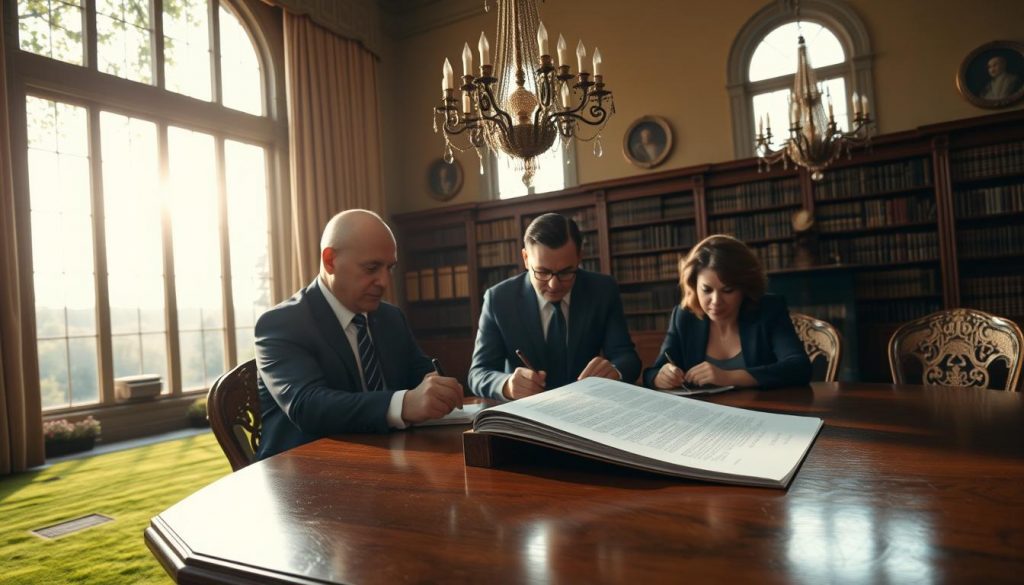
Handling Ambiguities in a Will
Despite the best efforts, ambiguities can sometimes arise, particularly in older wills, homemade wills, or wills that haven’t been updated after significant life changes. When an ambiguity is discovered after the testator’s death, the executor faces a difficult position: they must try to interpret the will according to what the testator intended, without being able to ask them.
If the ambiguity cannot be resolved through a reasonable interpretation of the will’s wording, the executor or affected beneficiaries can apply to the court for a construction summons, essentially asking a judge to interpret the disputed clause. This process is costly, time-consuming, and emotionally draining for everyone involved.
It’s far better to prevent ambiguities in the first place. This means having your will professionally drafted by a solicitor or specialist estate planner, rather than relying on DIY will kits or online templates. As Mike Pugh puts it: “The law, like medicine, is broad. You wouldn’t want your GP doing surgery.” A will might cost a few hundred pounds to prepare properly, but a contested will can cost tens of thousands in legal fees, and tear families apart in the process.
The Executor’s Responsibilities
Being named as an executor is a significant responsibility, and one that many people accept without fully understanding what’s involved. The executor is the person tasked with ensuring the testator’s wishes are carried out, the estate’s debts are paid, any tax due is settled, and the remaining assets are distributed to the right people in the right proportions. Get it wrong, and the executor can be held personally liable.
Duties of the Executor
The executor’s duties in England and Wales are extensive and include:
- Locating and securing the original will.
- Registering the death and arranging the funeral (where the deceased hasn’t left specific instructions with someone else).
- Identifying, valuing, and safeguarding all of the deceased’s assets, including property, bank accounts, investments, personal possessions, and digital assets.
- Applying to the Probate Registry for a Grant of Probate.
- Completing and submitting the inheritance tax return to HMRC, and paying any IHT due (currently 40% on the taxable estate above the nil rate band of £325,000, or 36% if 10% or more of the net estate is left to charity).
- Placing statutory notices for creditors (giving unknown creditors the opportunity to make claims against the estate).
- Paying off all debts and liabilities from the estate.
- Distributing the remaining assets to beneficiaries as specified in the will.
- Preparing estate accounts and obtaining sign-off from beneficiaries.
Executors must act impartially and in the best interests of the estate and its beneficiaries. They cannot favour one beneficiary over another, and they must keep proper records of all financial transactions.
Communication with Beneficiaries
One of the most common sources of friction during estate administration is poor communication between executors and beneficiaries. Beneficiaries have a right to be kept informed about how the estate is being managed and when they can expect to receive their inheritance. Transparency and timely updates can significantly reduce the likelihood of disputes.
Good practice for executors includes:
| Communication Method | Benefits |
|---|---|
| Email Updates | Quick, cost-effective, and creates a clear written record of what was communicated and when. |
| Postal Mail Updates | More formal, suitable for complex estates or where beneficiaries are elderly or prefer physical correspondence. |
| Meetings | Allow for direct discussion, particularly helpful for addressing concerns or explaining complex aspects of the estate. |
If you’ve been named as an executor and feel overwhelmed by the responsibility, you’re not alone. Many executors choose to instruct a solicitor or professional executor service to handle the administration on their behalf, though this comes at a cost to the estate. Alternatively, you can renounce your role as executor before you take any steps in administering the estate, allowing a substitute executor (if named) or an administrator to take over.
Factors Influencing the Timing of Readings
Several factors can influence how quickly beneficiaries learn the details of a will and receive their inheritance. Understanding these factors helps manage expectations and reduces frustration during what is already a difficult time.
Size and Complexity of the Estate
The size and complexity of the estate is the single biggest factor affecting the timeline. A straightforward estate, one bank account, no property, no IHT liability, can be wrapped up relatively quickly, sometimes within a few months. But estates involving multiple properties, business interests, overseas assets, or inheritance tax obligations can take significantly longer.
Where IHT is due, the executor must file an IHT return with HMRC and typically pay the tax before the Grant of Probate is issued. For estates with property, this creates a catch-22: the executor may need to sell the property to pay the IHT, but cannot sell the property without the Grant. In some cases, executors can arrange to pay the IHT in instalments over 10 years on property and certain other assets, or can borrow against the estate to pay the initial liability, but this adds complexity and cost. It’s worth noting that the nil rate band of £325,000 has been frozen since 2009 and is confirmed frozen until at least April 2031, meaning that with the average home in England now worth around £290,000, even modest estates can be caught by IHT once other assets like savings, pensions, and life insurance are added.
Family Dynamics and Relationships
Family dynamics play an enormous role. Where all beneficiaries are in agreement and relationships are straightforward, the process can move smoothly. But blended families, estranged relatives, disputes over specific items, and allegations of undue influence can all cause significant delays.
Claims under the Inheritance (Provision for Family and Dependants) Act 1975, where someone believes they have not been adequately provided for in the will, must generally be brought within 6 months of the Grant of Probate being issued. Executors will often wait until this 6-month period has passed before making final distributions, to protect themselves from personal liability if a claim is subsequently brought.
The best way to reduce the risk of family disputes is to have your will professionally drafted, discuss your wishes with your family where appropriate, and consider whether a lifetime trust might offer additional protection, particularly for the family home. A discretionary lifetime trust, for example, can protect assets from sideways disinheritance in blended families, from a beneficiary’s divorce (with the UK divorce rate sitting at around 42%, this is a real concern), and from potential care fee claims. As Mike Pugh puts it: “Not losing the family money provides the greatest peace of mind above all else.”
Probate Process Timeline
Understanding the probate timeline helps executors and beneficiaries plan realistically. The process involves several distinct stages, each with its own timeframe.
Overview of the Steps Involved
The probate process in England and Wales follows these main steps:
- Locating the will and registering the death, typically completed within the first week or two.
- Valuing the estate, identifying all assets and liabilities, obtaining professional valuations for property and investments. This can take several weeks, particularly if the estate is complex.
- Completing the IHT return, even if no IHT is due, a return is usually required for estates above a certain value. Where IHT is payable, it must generally be paid within 6 months of the end of the month of death.
- Applying for the Grant of Probate, the application is made to the Probate Registry. Online applications are now available and tend to be processed faster.
- Receiving the Grant, currently taking around 4 to 8 weeks for straightforward cases.
- Collecting in assets, paying debts and taxes, this can take several months, particularly where property needs to be sold or investments liquidated.
- Distributing assets to beneficiaries, often the final step, once all debts, taxes, and expenses have been settled. Many executors also wait until the 6-month window for Inheritance Act claims has passed before making final distributions.
How Long Does Probate Usually Take?
For straightforward estates with no property and no IHT liability, the entire process might be completed within 3 to 6 months. For estates involving property, the realistic timeline is 9 to 18 months. Complex estates involving business interests, overseas assets, or family disputes can take even longer.
It’s worth comparing this to what happens with assets held in a lifetime trust. Because a trust is a legal arrangement where the trustees, not the deceased, are the legal owners of those assets, they don’t form part of the probate estate. This means the trustees can continue managing those assets without interruption. There’s no frozen period, no waiting for a Grant, and no public record. For the family home in particular, this can be enormously reassuring, the surviving family can continue living in the property without any uncertainty about their position. England invented trust law over 800 years ago, and this is precisely the kind of problem it was designed to solve.
If you’re concerned about the delays and complications that probate can cause for your family, it’s worth exploring whether a Family Home Protection Trust or other lifetime trust arrangement might be appropriate for your circumstances. A straightforward trust can be set up from as little as £850, roughly equivalent to just one week’s care home fees. When you consider that the full probate process can freeze your family’s access to assets for months or even over a year, that’s a remarkably cost-effective form of protection. You can find more information at MP Estate Planning.
Common Misconceptions About Wills
There are several persistent myths about wills that can lead to confusion and poor planning decisions. Let’s address the most common ones.
Do All Wills Need to be Read?
No, and in fact, no will in England and Wales is formally “read” in the theatrical sense. There is no legal requirement for a gathering of beneficiaries around a table while a solicitor reads the will aloud. The executor reviews the will, contacts beneficiaries to inform them of their entitlements, and then proceeds with the administration of the estate.
Beneficiaries are entitled to see the will, and as noted earlier, once the Grant of Probate is issued, the will becomes a public document available from the Probate Registry. But the process is administrative rather than ceremonial.
What Happens if a Will Cannot be Found?
If a will cannot be found after death, the legal presumption in England and Wales is that the testator destroyed it with the intention of revoking it. This means the estate would be distributed according to the intestacy rules, and these rules may not reflect the deceased’s actual wishes at all.
Under intestacy, the estate passes in a fixed order: first to the spouse or civil partner (who receives the first £322,000 plus personal chattels, with the remainder split between spouse and children), then to children, then to parents, then to siblings, and so on. Unmarried partners receive nothing. Close friends receive nothing. Charities receive nothing. If there are no traceable relatives, the entire estate passes to the Crown (known as bona vacantia).
To avoid this outcome, it’s crucial to store your will securely, with your solicitor, at the Probate Registry’s storage service, or in a fireproof safe, and to tell your executor and close family where it is. Keeping a copy at home while the original is stored professionally is good practice.
It’s also another reason why placing your most important assets, particularly the family home, into a lifetime trust is worth considering. Trust assets are not dependent on a will being found or probate being granted. The trust deed sets out exactly what happens, and the trustees can act immediately. England invented trust law over 800 years ago precisely to solve problems like these, and the principles remain just as powerful today.
Preparing for Will Readings
If you’ve been named as a beneficiary in someone’s will, or you’re thinking about your own estate planning, preparation is key. Knowing what to expect, and what questions to ask, can help reduce stress and ensure the process runs as smoothly as possible.
Understanding Executor Responsibilities
As a beneficiary, it helps to understand what the executor is dealing with. They are managing multiple responsibilities simultaneously, from HMRC tax returns to creditor notifications to property valuations, and much of this work happens behind the scenes. Patience and understanding go a long way, though you are absolutely within your rights to request regular updates.
If you believe the executor is not fulfilling their duties properly, for example, if they are causing unreasonable delays, failing to communicate, or not acting impartially, you can raise your concerns with a solicitor. In serious cases, beneficiaries can apply to the court to have an executor removed and replaced.
For more information on executor responsibilities and the probate process, you can visit MP Estate Planning for expert guidance on protecting your family’s interests.
Key Questions for Beneficiaries
Whether you’re a beneficiary waiting for information or someone planning your own estate, these are the key questions worth considering:
- What is the realistic timeline for the estate to be fully administered?
- Is inheritance tax due, and if so, how will it be funded? (Remember: IHT is charged at 40% on the taxable estate above £325,000, and the nil rate band has been frozen since 2009.)
- Are there any debts or liabilities that need to be settled before distributions can be made?
- Will any assets need to be sold (such as property) before distributions can happen?
- Is there a risk of any claims being made against the estate (for example, under the Inheritance Act 1975)?
- Could any of this have been simplified by putting assets into a lifetime trust during the deceased’s lifetime?
- Has a Lasting Power of Attorney (LPA) been put in place alongside the will, so that someone can manage affairs if the person loses capacity before death?
If you’re planning your own estate and want to ensure your family isn’t left navigating a complex and drawn-out probate process, it’s worth speaking to a specialist estate planner, not just a general solicitor. As Mike Pugh often says: “The law, like medicine, is broad. You wouldn’t want your GP doing surgery.” Trusts are not just for the rich, they’re for the smart.
FAQ
When does a will typically get read?
In England and Wales, there is no formal “reading” of a will. The executor reviews the will after death and informs beneficiaries of their entitlements. This usually happens within a few weeks of the death, though the actual distribution of assets depends on when the Grant of Probate is issued, typically 4 to 8 weeks after application, with full estate administration taking 3 to 12 months.
What is the role of the executor in the will reading process?
The executor is responsible for locating the will, applying for the Grant of Probate from the Probate Registry, valuing the estate, completing any inheritance tax returns for HMRC, paying debts and taxes, communicating with beneficiaries, and distributing the remaining assets according to the will’s instructions.
What are the legal requirements for a will to be valid?
Under English and Welsh law, the testator must be aged 18 or over and have mental capacity. The will must be signed by the testator in the presence of two independent witnesses, both present at the same time. Both witnesses must then sign the will in the testator’s presence. Witnesses and their spouses or civil partners must not be beneficiaries under the will.
How long does the probate process usually take?
The Grant of Probate itself currently takes around 4 to 8 weeks to be issued. However, the full estate administration process, including valuing assets, paying debts and inheritance tax, and distributing the estate, typically takes 3 to 12 months. Where property needs to be sold, the total process can take 9 to 18 months or longer.
What happens if a will cannot be found?
If a will cannot be found after death, the legal presumption is that the testator destroyed it with the intention of revoking it. The estate would then be distributed under the intestacy rules, which follow a fixed legal order and may not reflect the deceased’s wishes. Unmarried partners, friends, and charities receive nothing under intestacy. This is why storing your will securely and telling your executor where to find it is so important, and why placing key assets into a lifetime trust provides an additional layer of certainty, since trust assets bypass probate entirely.
What should beneficiaries expect during the will reading process?
Beneficiaries should expect to be informed of their entitlement within a few weeks of the death. However, they should be prepared for the actual distribution of assets to take considerably longer, typically several months. The executor should provide regular updates on progress, and beneficiaries are entitled to ask questions about the timeline, any inheritance tax due, outstanding debts, and when distributions are likely to be made.
Can a will be disputed?
Yes. A will can be challenged on grounds including lack of testamentary capacity, undue influence, fraud, or failure to meet the formal requirements for valid execution. Additionally, under the Inheritance (Provision for Family and Dependants) Act 1975, certain categories of people, including spouses, children, and dependants, can apply to the court if they believe the will does not make reasonable financial provision for them. Such claims must generally be brought within 6 months of the Grant of Probate being issued.
How can disputes among beneficiaries be avoided?
The best way to prevent disputes is to have your will professionally drafted using clear, unambiguous language. Clearly identifying beneficiaries, specifying exact shares, and including substitutional provisions all help. Discussing your wishes with family members during your lifetime, while sometimes uncomfortable, can also reduce the risk of surprise and resentment. For additional protection, placing key assets such as the family home into a discretionary lifetime trust can remove them from the probate process entirely, reducing the opportunity for challenge and protecting against threats such as sideways disinheritance, a beneficiary’s divorce, or care fee claims.
What is the importance of having a clear and well-written will?
A clear, professionally drafted will is essential for ensuring your wishes are carried out, minimising the risk of disputes, and making the executor’s job as straightforward as possible. Poorly drafted wills, particularly DIY or template wills, are a leading cause of contentious probate claims. The cost of having a proper will prepared is minimal compared to the legal costs and family heartache that can result from an ambiguous or invalid will. And for those who want to go further, combining a will with a lifetime trust offers the most comprehensive protection, your will deals with assets outside the trust, while the trust protects your most valuable assets from probate delays, public disclosure, and external threats.
What are the executor’s responsibilities in terms of communication with beneficiaries?
Executors have a duty to keep beneficiaries reasonably informed about the administration of the estate. This includes notifying them of their entitlement, providing updates on progress, explaining any delays, and being transparent about costs and deductions. Beneficiaries are entitled to see the estate accounts before signing off on the final distribution. If an executor fails to communicate adequately or acts improperly, beneficiaries can seek legal advice and, in serious cases, apply to the court for the executor’s removal.
Is Will Reading Still a Thing in Modern UK Estate Practice?
The formal will reading, a scene familiar from period dramas, where family members gather in a solicitor’s office to hear the deceased’s wishes announced aloud, is, in our experience, largely a thing of the past in England and Wales. While nothing legally prevents such a gathering from taking place, there is no requirement under English law for a will to be read aloud to beneficiaries at any point. What has replaced it is a more practical, document-led process driven by the executor and, where instructed, a solicitor or estate planning consultancy.
What Actually Happens Instead
In most cases, once a death has been registered and the original will located, the executor reviews the document privately, often with professional guidance, and begins the process of applying for a grant of probate. It is typically at this stage, or shortly before, that beneficiaries are notified in writing of their interest in the estate. There is no prescribed script or ceremony; a straightforward letter or email identifying the beneficiary and summarising their entitlement is the norm. Our team generally recommends that executors communicate early and clearly, even before probate is granted, to manage expectations and reduce the risk of family tension.
Who Is Legally Allowed to Read a Will?
Before probate is granted, access to a will is generally limited to the executor or executors named in the document, and any solicitor instructed to assist with the estate. Beneficiaries do not have an automatic legal right to inspect the original will at this stage, although in practice executors often share a copy voluntarily. Once probate has been granted, however, the position changes significantly. Under the Senior Courts Act 1981, a will becomes a public document and can be accessed by anyone, including members of the public, through the HM Courts and Tribunals Service probate search. This is an aspect of estate administration that surprises many families and underlines why careful, considered drafting matters: the contents of a will may ultimately be visible to far more people than the deceased may have anticipated.
How Good Drafting Changes the Experience
One practical difference our team observes between well-planned estates and those that reach us at a difficult moment is the presence, or absence, of a letter of wishes alongside the will. A clearly drafted will, supported by an up-to-date letter of wishes that the executor has been briefed on, typically means beneficiaries are contacted sooner, disputes are less likely, and the administration process proceeds with fewer delays. Competitors in the information space can describe what happens during estate administration; what we can offer is guidance on the specific drafting choices that make the process measurably smoother for everyone involved.
Common Questions About Will Readings and Beneficiary Notification
Is will reading still a thing?
As described above, the formal will reading ceremony is not a legal requirement and is generally no longer standard practice in England and Wales. In most cases, the executor simply notifies beneficiaries in writing once the will has been reviewed and probate is being arranged. Some families do choose to gather together when a will is shared, but this is a personal choice rather than a legal or procedural obligation.
How long does the executor have to read the will after death?
There is no statutory deadline by which an executor must read or act upon a will, but executors are expected to begin administering the estate within a reasonable timeframe. In practice, the probate application itself is often the first formal step, and the average probate timeline in England and Wales is currently 16 to 20 weeks from the date of application to grant. Beneficiaries should generally expect notification of their interest sometime during this window, though complex estates or those involving disputes may take considerably longer.
What is the 28-day rule in wills?
The 28-day rule refers to a survivorship clause, which is a standard provision in most carefully drafted UK wills. It states that a beneficiary must survive the testator by at least 28 days in order to inherit. The purpose is to prevent assets passing to a beneficiary who dies shortly after the testator, potentially causing the same assets to go through two estates and two rounds of probate in quick succession. In our experience, this clause is straightforward when explained in advance but can cause confusion for families who encounter it unexpectedly during administration.
How do I know if I am a beneficiary of a will?
There is no central register of wills in England and Wales that beneficiaries can search while the testator is alive. After death, if you believe you may have been named in a will, the executor is typically the first point of contact. Once probate has been granted, you can search for the will yourself using the government’s probate search service. If you are a named beneficiary, the executor has a general duty to notify you, though the precise timing will depend on how far the administration has progressed. If you have reason to believe a will exists but are receiving no communication, seeking independent legal advice from a solicitor is generally the appropriate next step.
Who is legally allowed to read a will?
Before probate, the executor named in the will and any professional adviser they instruct may typically access and review the document. After the grant of probate, a will becomes a matter of public record under the Senior Courts Act 1981, meaning anyone may request a copy through the Probate Registry. This public accessibility is often overlooked during the drafting stage, and it is one reason why some clients choose to keep certain sensitive wishes, such as guidance on specific personal items or family sensitivities, in a private letter of wishes rather than in the will itself.