


When it comes to protecting assets and ensuring the financial security of your loved ones, understanding the role of a trustee is crucial. A trustee is an individual or organisation appointed to hold and manage assets on behalf of beneficiaries, following the instructions set out in a trust deed. Under English law, the trustee becomes the legal owner of the trust assets — but they hold those assets for the benefit of the beneficiaries, not for themselves.
We, as experienced professionals at MP Estate Planning, recognise the importance of clarifying the responsibilities and obligations associated with being a trustee. England invented trust law over 800 years ago, and the distinction between legal ownership (held by the trustee) and beneficial ownership (enjoyed by the beneficiaries) remains the foundation of how trusts work today. A trustee is entrusted with the duty to act in the best interests of the beneficiaries, making informed decisions regarding the management and distribution of trust assets.
For British homeowners, comprehending the duties of a trustee is vital for effective estate planning. Whether you are setting up a trust to protect the family home, planning for inheritance tax (IHT), or safeguarding assets against care fees, the trustee you appoint will be the person responsible for carrying out your wishes. By grasping the concept of a trustee and their role in a trust, you can make informed decisions about your assets and ensure a secure financial future for your family.
Key Takeaways
- A trustee is appointed to hold legal ownership of trust assets and manage them on behalf of beneficiaries.
- The trustee’s primary duty is to act in the best interests of the beneficiaries — this is a fiduciary obligation enforceable by law.
- Understanding the role of a trustee is essential for effective estate planning, particularly for protecting the family home.
- A trustee must make informed, prudent decisions regarding trust assets and keep proper records.
- The trustee’s responsibilities, powers, and limitations are outlined in the trust deed — this is the founding document of the trust.
Understanding the Role of a Trustee
A trustee’s role is not just about managing assets; it’s about making decisions that protect and benefit the trust’s beneficiaries. A trust is a legal arrangement — not a separate legal entity — where the trustees hold legal title to the assets while the beneficiaries enjoy the beneficial interest. As we explore the intricacies of trust management, it’s essential to understand the different facets of a trustee’s responsibilities under English and Welsh law.

Definition of a Trustee
A trustee is an individual or organisation appointed to hold legal ownership of a trust’s assets and manage them for the benefit of the beneficiaries. Under English and Welsh law, the trustee is the legal owner — but they cannot use the assets for their own benefit. They must administer the trust in accordance with the terms set out in the trust deed and in compliance with the Trustee Act 2000. A minimum of two trustees is generally required when the trust holds land or property, and up to four trustees can be named on a property title at the Land Registry. For more detailed information, you can refer to the UK government’s publication on trustees.
Types of Trustees
There are various types of trustees, including individual trustees, corporate trustees, and professional trustees. Individual trustees are typically family members, friends, or trusted individuals chosen by the settlor — and indeed the settlor themselves can serve as a trustee, which is common in family trusts as it allows the settlor to remain involved in decision-making. Corporate trustees are professional entities, such as trust companies or solicitors’ firms, that specialise in trust administration. Professional trustees — often solicitors or accountants — bring specialist expertise but will charge fees for their services. The choice between individual and corporate trustees depends on the specific needs of the trust, its complexity, and the wishes of the settlor. It’s worth noting that a trustee can also be a beneficiary in certain circumstances, as discussed in our estate planning resources.
Importance of the Trustee’s Role
The trustee’s role is crucial in ensuring that the trust is administered effectively and that the beneficiaries’ interests are protected. A trustee must act with a fiduciary duty, meaning they must always prioritise the beneficiaries’ interests above their own. This involves managing the trust’s assets prudently, avoiding conflicts of interest, maintaining accurate records, and registering the trust with the Trust Registration Service (TRS) within 90 days of creation — a mandatory requirement for all UK express trusts under anti-money laundering regulations.
In a discretionary trust — by far the most common type used in UK estate planning, accounting for around 98–99% of family trusts — the trustees have the power to decide how and when to distribute assets among the beneficiaries. No single beneficiary has a fixed right to the assets. This discretion is what makes discretionary trusts so effective for protecting assets against care fees, divorce, and inheritance tax. The importance of the trustee’s role cannot be overstated, as their decisions have a direct impact on whether the trust achieves the protection the settlor intended.
Legal Responsibilities of a Trustee
Trustees shoulder significant legal responsibilities that are crucial to the well-being of the trust and its beneficiaries. Under the Trustee Act 2000, trustees are held to a statutory duty of care and must act as a reasonably prudent person would when managing the trust. As we explore these responsibilities, it becomes clear that being a trustee is not just a matter of managing assets, but also involves a deep understanding of the legal framework that governs trusts in England and Wales.
Fiduciary Duties
A trustee’s fiduciary duties are at the heart of their role. This means they must act in the best interests of the beneficiaries, putting those interests ahead of their own in every decision they make. Under English law, fiduciary duties are among the strictest obligations the law imposes — a trustee who breaches them can be personally liable for any losses suffered by the trust. Fiduciary duties require a high level of integrity, trustworthiness, and accountability.
To fulfil their fiduciary duties, trustees must:
- Act with honesty and transparency in all their dealings related to the trust, keeping proper accounts and records.
- Make informed decisions, taking into account all relevant information and seeking professional advice when necessary — the Trustee Act 2000 specifically permits and encourages this.
- Avoid conflicts of interest and not profit from their position as trustee — the “no-profit” and “no-conflict” rules are fundamental principles of English trust law dating back centuries.
Duty of Prudence
The duty of prudence requires trustees to be cautious and wise in their management of the trust’s assets. Under the Trustee Act 2000, this is codified as the “statutory duty of care” — trustees must exercise the care that a reasonably prudent person would exercise, and professional trustees are held to an even higher standard reflecting their specialist knowledge. Trustees must consider the potential risks and rewards of different investment strategies and make decisions that are likely to benefit the beneficiaries over the long term.
Key aspects of the duty of prudence include:
- Investing trust assets in a diversified portfolio to minimise risk — the Trustee Act 2000 grants broad investment powers but requires trustees to obtain and consider proper advice before making investment decisions.
- Regularly reviewing the trust’s investments to ensure they remain appropriate for the trust’s objectives and the beneficiaries’ needs — this is an ongoing obligation, not a one-off exercise.
- Seeking professional advice from qualified financial advisers or solicitors when making significant investment or administrative decisions. Failing to take advice when it was reasonable to do so can itself be a breach of duty.
Duty of Loyalty
A trustee’s duty of loyalty means they must act in the best interests of the beneficiaries, avoiding any actions that could benefit themselves at the expense of the beneficiaries. In a discretionary trust, where trustees have wide powers over distributions, the duty of loyalty is particularly important — trustees must exercise their discretion fairly, impartially, and in good faith, considering the interests of all potential beneficiaries rather than favouring just one.
To demonstrate loyalty, trustees should:
- Keep the beneficiaries reasonably informed about the trust’s administration, although in a discretionary trust, beneficiaries have no automatic right to see trust accounts — they have a right to know the trust exists and that they are potential beneficiaries, but trustees have discretion over what further information to disclose.
- Be transparent and honest in their dealings and document the reasoning behind significant decisions — this creates a clear audit trail if decisions are later questioned.
- Act fairly and consistently in their treatment of beneficiaries, not favouring one over another without a valid reason supported by the terms of the trust deed or the settlor’s letter of wishes.
The Different Types of Trusts
Trusts come in several forms, each designed to serve different purposes and offer unique benefits. In the UK, the primary classification is between lifetime trusts (created during the settlor’s lifetime by executing a trust deed) and will trusts (created on death through a will). Within those categories, trusts operate in different ways — as discretionary trusts, bare trusts, or interest in possession trusts. Understanding these differences is essential for effective estate planning and for trustees who need to know the scope of their powers and the nature of their obligations.
Lifetime Trusts
A lifetime trust is created during the settlor’s lifetime by executing a trust deed. It allows the settlor to transfer assets — such as the family home — into the trust while they are still alive. The primary advantage of a lifetime trust is that trust assets bypass probate delays entirely — because the assets are legally owned by the trustees, there is no need to wait for a Grant of Probate before they can be managed or distributed. This means beneficiaries are not left waiting months (sometimes over a year when property is involved) for assets to be released, and the trust assets remain private rather than becoming part of the public probate record.
The most common type of lifetime trust used in UK estate planning is the discretionary trust, where the trustees have complete discretion over how and when to distribute income and capital to beneficiaries. This is what gives discretionary trusts their powerful protection — no single beneficiary has a fixed right to the assets, meaning the trust fund cannot be claimed by a beneficiary’s creditors, an ex-spouse in a divorce (as Mike Pugh puts it: “What house? I don’t own a house”), or a local authority assessing care fee liability. Discretionary trusts can last up to 125 years under current law.
It’s important to understand that whether a lifetime trust is revocable or irrevocable is a feature of the trust, not its defining classification. For asset protection and inheritance tax planning, irrevocable trusts are the standard — a revocable trust provides no IHT benefit because HMRC treats the assets as still belonging to the settlor. The trusts used by MP Estate Planning are irrevocable but include “standard and overriding powers” that give trustees clearly defined flexibility without compromising the irrevocable nature of the trust.
Testamentary Trusts
A testamentary trust (or will trust) is established through your will and comes into effect after your death. It is commonly used to manage and distribute assets to beneficiaries such as minor children, vulnerable dependants, or a surviving spouse, according to your wishes. This type of trust provides a way to ensure your assets are used for the benefit of your loved ones, even if they are not yet ready to manage the assets themselves — or to prevent sideways disinheritance if a surviving spouse remarries.
A common example is an interest in possession trust created in a will, giving a surviving spouse the right to live in the family home (as life tenant) while ensuring the capital ultimately passes to the children (as remaindermen). This protects the children’s inheritance even if the surviving spouse enters a new relationship. Will trusts only take effect after probate has been granted, but once established they offer ongoing protection for the trust assets for future generations.
By contrast, a bare trust gives the beneficiary an absolute right to the capital and income once they reach age 18 in England and Wales (16 in Scotland). Bare trusts offer no protection against care fees, divorce, or creditors, and are not IHT-efficient — which is why discretionary trusts are far more commonly used in family estate planning.
Charitable Trusts
Charitable trusts are designed to benefit charitable causes and can offer significant tax advantages. By establishing a charitable trust, you can support causes you care about while potentially reducing your inheritance tax liability — if you leave 10% or more of your net estate to charity, the IHT rate on the remaining taxable estate reduces from 40% to 36%. Charitable trusts can be an effective way to leave a lasting legacy while also providing tangible benefits for your estate and reducing the overall tax burden on your beneficiaries.
These trusts can be structured in various ways to meet your philanthropic goals and are regulated by the Charity Commission in England and Wales.
Appointment of a Trustee
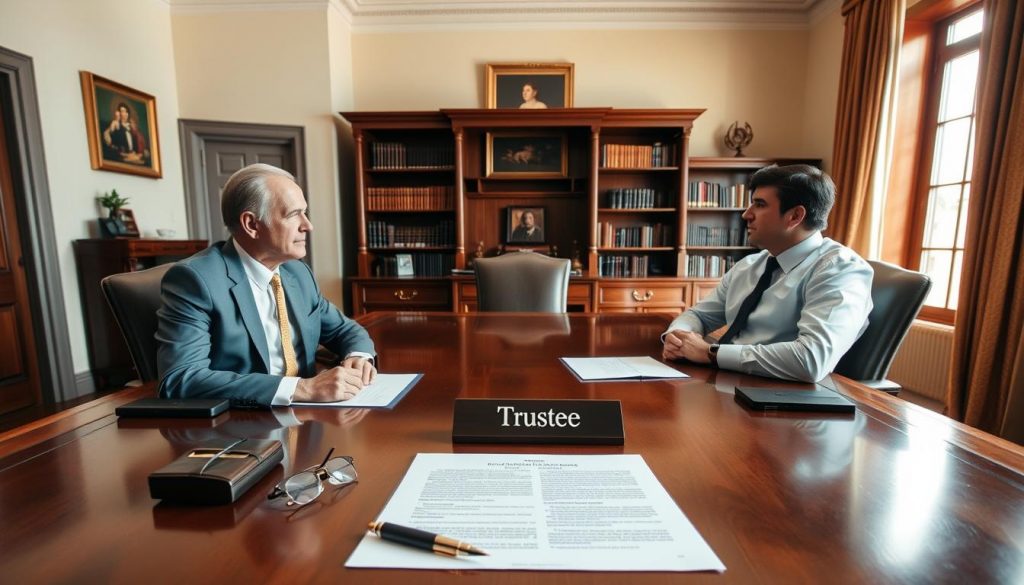
The process of appointing a trustee involves several key considerations that can determine how effectively the trust operates for years — or even decades — to come. When establishing a trust, it’s crucial to select trustees who can manage the trust assets effectively and in the best interests of the beneficiaries. Under English law, a minimum of two trustees is generally required when the trust holds land or property, and up to four trustees can be named on a property title at the Land Registry.
Ways to Appoint a Trustee
A trustee can be appointed in various ways, depending on the type of trust and the settlor’s preferences. The most common methods of appointment are:
- By the settlor directly in the trust deed at the time the trust is created — this is the most common approach.
- By an appointor or the existing trustees, if the trust deed includes a power to appoint new or replacement trustees.
- By the court, in cases where the trust deed does not provide an adequate appointment mechanism and no suitable trustee is available — the court can appoint trustees under the Trustee Act 1925.
It is important that the trust deed includes a clear process for removing and replacing trustees, so that if a trustee becomes unable or unwilling to act, the remaining trustees or a named appointor can step in without needing to involve the court. This is far simpler, faster, and less expensive than a court application.
Considerations for Choosing a Trustee
When choosing a trustee, several factors should be considered to ensure the effective administration of the trust. These include:
- Skills and Experience: The trustee should have the necessary skills and understanding to manage the trust assets — or be willing to seek professional advice when needed. They do not need to be financial experts, but they do need to be competent and diligent.
- Integrity and Trustworthiness: It’s essential to appoint a trustee with high integrity who will act in the best interests of the beneficiaries. Remember, the trustee will become the legal owner of the trust assets — you need to trust them completely.
- Availability and Willingness: The chosen trustee should have the time and willingness to carry out their duties, which may continue for many years. Being a trustee is a long-term commitment, not a one-off task.
- Age and Health: Consider the trustee’s age and health. Appointing someone significantly older than the beneficiaries may create succession issues sooner than expected. A well-drafted trust deed will include provisions for appointing successor trustees to ensure continuity.
- Relationship Dynamics: Think carefully about family dynamics. Appointing one sibling as trustee over another can create tension. In some cases, appointing a trusted friend or professional trustee alongside a family member provides a useful balance.
The settlor can also appoint themselves as one of the trustees — this is common practice in family trusts, such as a Family Home Protection Trust, as it allows the settlor to remain involved in decisions about the trust assets during their lifetime. By carefully considering these factors and understanding the ways to appoint a trustee, you can ensure that your trust is managed effectively and that the interests of the beneficiaries are protected for the long term.
Trustee’s Obligations to Beneficiaries
The role of a trustee involves significant obligations towards the beneficiaries of the trust. As a fiduciary, a trustee must act in the best interests of the beneficiaries, ensuring that the trust is managed according to its terms and for their benefit. The nature and extent of these obligations depend in part on the type of trust — in a discretionary trust, for example, the trustees have wide powers but must still exercise their discretion properly and in good faith.
Communicating with Beneficiaries
Effective communication is an important part of fulfilling a trustee’s duties, though the extent of the obligation varies depending on the trust type. In a discretionary trust, beneficiaries do not have an automatic right to see the trust accounts or be consulted on every decision — the trustees have discretion over what information to share. However, beneficiaries do have a right to know that the trust exists and that they are potential beneficiaries.
Trustees should maintain a balance between keeping beneficiaries reasonably informed and protecting the trustees’ ability to exercise their discretion freely. Many settlors prepare a letter of wishes — a non-binding document that gives the trustees guidance on the settlor’s intentions regarding how the trust should be managed and how assets should ultimately be distributed. While not legally binding, a letter of wishes can be invaluable in helping trustees understand what the settlor wanted and provides a reference point for future decisions, particularly after the settlor has died or lost capacity.
Distributing Trust Assets
One of the primary responsibilities of a trustee is to distribute the trust assets in accordance with the trust deed. In a discretionary trust, the trustees decide when and how much to distribute — no beneficiary has an automatic right to income or capital. This is precisely what provides the protection: if a beneficiary is going through a divorce, facing bankruptcy, or being assessed for local authority care funding, the trust assets are not theirs to claim. In a bare trust, by contrast, the beneficiary has an absolute right to the capital and income once they reach age 18 (the principle established in Saunders v Vautier), which is why bare trusts offer no meaningful asset protection.
For example, in an interest in possession trust created by a will, the life tenant (typically a surviving spouse) has the right to income or use of the trust assets during their lifetime, and the remainderman (typically the children) receives the capital when the life interest ends. This structure prevents sideways disinheritance — the surviving spouse is provided for, but the children’s inheritance is secured.
| Distribution Criteria | Trustee’s Action | Beneficiary’s Benefit |
|---|---|---|
| Discretionary distribution | Trustees exercise discretion on timing, amount, and which beneficiaries to benefit | Flexible protection — assets released according to need and circumstances |
| Conditional distribution | Distribute assets based on specific conditions outlined in the trust deed being met | Beneficiary receives assets if conditions are fulfilled (e.g., reaching a certain age or milestone) |
Accounting for Trust Expenses
Trustees are also responsible for managing the trust’s expenses and accounting for them properly. This includes keeping accurate records of all transactions, income, and outgoings, and ensuring that expenses are reasonable and in line with the trust’s purposes. Trustees must also file an annual SA900 trust tax return with HMRC if the trust has taxable income or gains, and ensure the trust remains registered on the Trust Registration Service (TRS). Good record-keeping is not just good practice — it protects the trustees personally if their decisions are ever questioned by beneficiaries or HMRC.
For more information on the role of trusts in estate planning, you can visit our page on what is a one-family trust fund.
Trustee’s Powers and Rights
A trustee’s ability to make informed decisions is rooted in the powers and rights granted by the trust deed and by UK legislation such as the Trustee Act 2000. These powers are designed to enable trustees to administer the trust effectively and protect the interests of the beneficiaries. Understanding what powers a trustee has — and what they cannot do — is crucial for effective trust management.
Decision-Making Authority
The trustee has the authority to make decisions regarding the trust’s assets, provided those decisions fall within the powers granted by the trust deed and are exercised in the beneficiaries’ best interests. In a discretionary trust, this decision-making authority is particularly broad — trustees can decide which beneficiaries to benefit, when to make distributions, and how to manage the trust fund. Well-drafted trust deeds, such as those used by MP Estate Planning, include “standard and overriding powers” that give trustees clearly defined authority without compromising the irrevocable nature of the trust.
Some key aspects of a trustee’s decision-making authority include:
- Managing, maintaining, and if necessary selling trust assets — including property held in the trust.
- Making distributions to beneficiaries in accordance with the trust deed and exercising discretion appropriately.
- Resolving conflicts or disagreements that may arise among beneficiaries, acting fairly and impartially.
- Deciding whether to allow a beneficiary to occupy trust property, and on what terms.
Investing Trust Assets
The Trustee Act 2000 grants trustees a general power of investment, equivalent to that of an absolute owner. However, this power must be exercised within the statutory duty of care. Trustees must have regard to the standard investment criteria — the suitability of the proposed investment and the need for diversification — and must obtain and consider proper advice unless it would be unreasonable to do so. Key considerations include:
- Assessing the trust’s investment objectives and the needs of the beneficiaries, including whether income or capital growth is the priority.
- Diversifying investments to minimise risk and protect the trust fund over the long term.
- Monitoring and reviewing the investment portfolio regularly, making adjustments as market conditions or the beneficiaries’ circumstances change.

Hiring Professionals
Trustees have the right — and in many cases, the duty — to hire professionals to assist with the management of the trust. The Trustee Act 2000 expressly permits trustees to delegate certain functions to agents and to appoint nominees and custodians. This can include engaging investment advisers, solicitors, accountants, and tax professionals. As Mike Pugh often says, “the law — like medicine — is broad. You wouldn’t want your GP doing surgery” — and similarly, trustees should not hesitate to seek specialist advice when matters go beyond their own expertise. The cost of professional advice is a legitimate trust expense that can be paid from the trust fund.
By understanding and exercising their powers and rights, trustees can effectively manage the trust and protect the interests of its beneficiaries for the long term.
The Duration of a Trustee’s Role
Understanding the duration of a trustee’s role is crucial for effective trust management. A discretionary trust in England and Wales can last up to 125 years under the Perpetuities and Accumulations Act 2009, and throughout that period, the trustees are responsible for the trust’s administration. However, no individual trustee is expected to serve for the entire life of the trust — which is why having proper provisions for succession is so important.
Length of Service
The length of service for a trustee can vary significantly depending on the type of trust and the specific terms outlined in the trust deed. Some trustees may serve for decades, while others may serve for a shorter period before being replaced by successor trustees. There is no fixed retirement age for trustees, though practical considerations — such as mental capacity and the ability to fulfil their duties — are relevant.
When considering the length of service, it’s important to understand that a trustee’s role is not necessarily lifelong. There are several factors that can influence how long a trustee serves, including:
- The specific terms and provisions of the trust deed, including any age limits or review periods
- The needs and changing circumstances of the beneficiaries
- Any changes in the trustee’s own circumstances, health, or capacity to act
- Whether the trustee wishes to resign — which they are generally free to do, provided the minimum number of trustees is maintained and proper procedures are followed
Termination of Trusteeship
A trustee’s role can be terminated in various ways, and a well-drafted trust deed will include clear provisions for this process. Understanding these mechanisms is vital for both the trustee and the beneficiaries, as it ensures continuity of the trust’s administration without disruption.
The termination of a trustee’s appointment can occur due to several reasons, such as:
- Resignation: A trustee may choose to resign, typically by providing formal written notice to the other trustees. Under the Trustee Act 1925, a trustee can retire provided that after retirement there will be at least two trustees (where the trust holds land) or a trust corporation. The retiring trustee must also ensure that the trust property is properly vested in the continuing trustees.
- Removal: The trust deed may specify conditions under which a trustee can be removed — for example, by a named appointor or by the remaining trustees. In the absence of such a provision, the court has the power to remove a trustee who is unfit, incapable, or who has been absent from the UK for a continuous period of more than 12 months.
- Death or Loss of Mental Capacity: If a trustee dies or loses mental capacity, the remaining trustees (or the appointor named in the trust deed) should appoint a replacement promptly. It’s important to note that a Lasting Power of Attorney (LPA) does not allow an attorney to act as a trustee on behalf of the incapacitated person — the trusteeship must be formally transferred to a new individual.
- Completion of Trust Purpose: If the trust’s purpose is fulfilled — for example, all assets have been properly distributed to the beneficiaries — the trust comes to an end and the trustee’s role concludes.
It’s crucial for all parties involved to be aware of these processes to ensure a smooth transition and continued effective management of the trust. This is why we always recommend that the trust deed includes a clear mechanism for removing and replacing trustees without the need for court involvement — it saves time, cost, and uncertainty.
Challenges Faced by Trustees
Trustees are tasked with a wide range of responsibilities, and they must navigate several challenges to fulfil their duties effectively. Managing a trust — whether it holds the family home, investments, or other assets — involves making important decisions that impact the beneficiaries and the trust fund, sometimes over many years or even generations.
Conflicts of Interest
One of the most significant challenges trustees face is conflicts of interest. Under English trust law, the “no-conflict” and “no-profit” rules mean that a trustee must not place themselves in a position where their personal interests conflict with their duties to the beneficiaries. For instance, if a trustee is also a beneficiary of the trust, they must be especially cautious not to favour their own interests over others — ideally, a co-trustee who is not a beneficiary should take the lead on decisions that directly affect the trustee-beneficiary. This is a well-established principle of equity, and a trustee who breaches it can be held personally liable for any resulting losses. Proper drafting of the trust deed can anticipate and manage these situations — for example, by authorising specific types of self-dealing or requiring an independent co-trustee to make certain decisions.
Legal Disputes
Trustees may also encounter legal disputes, either among beneficiaries or with external parties such as HMRC or local authorities. These disputes can arise from disagreements about the trust’s terms, challenges to trustee decisions, claims from creditors, or disputes about whether a transfer into trust constituted a deprivation of assets for care fee purposes. Trustees must be prepared to address these issues, often requiring specialist legal guidance to navigate complex situations. It’s worth noting that trusts can be contested in certain circumstances, as discussed in our article on whether a trust can be contested in the UK. A well-drafted trust deed with clear terms and documented reasons for establishing the trust significantly reduces the risk of successful challenges.
Emotional Strain
Furthermore, being a trustee can be emotionally demanding. The responsibility of managing someone’s assets — often the family home that carries deep sentimental value — or making decisions that affect their loved ones can be stressful, particularly during family disagreements or when a beneficiary faces financial difficulties and requests an early distribution. Trustees must manage this emotional strain while remaining impartial and focused on their fiduciary duties. This is one reason why having more than one trustee is valuable — it shares the burden, provides a check on decision-making, and means no single person bears the full weight of responsibility alone.
Understanding these challenges in advance helps trustees prepare themselves to handle the complexities of their role. Seeking professional guidance when needed is not a sign of weakness — it’s a sign of diligence and good trusteeship. As we say at MP Estate Planning: plan, don’t panic.
Trust Fund Management and Investment
Trustees play a vital role in managing trust funds and making strategic investment decisions. As a trustee, managing the trust fund effectively is crucial for the financial security and well-being of the beneficiaries — whether the trust holds a family home, savings, investments, or a combination of assets.
Strategies for Investment
When it comes to investing trust assets, trustees must adopt a thoughtful and well-informed approach that complies with the statutory duty of care under the Trustee Act 2000. This involves considering the investment objectives of the trust as set out in the trust deed, the needs of the beneficiaries (including whether income or capital growth is the priority), and the time horizon for the investments.
- Assessing the trust’s financial goals and the beneficiaries’ current and future requirements.
- Evaluating various asset classes, such as equities, bonds, property, and cash deposits — considering the standard investment criteria of suitability and diversification.
- Diversifying the portfolio to minimise risk and protect the trust fund against market volatility.
- Regularly reviewing and adjusting the investment strategy as needed, and obtaining proper advice from a qualified financial adviser — this is a legal requirement under the Trustee Act 2000 unless it would be unreasonable in the circumstances.
For more information on what a trust fund is and how it operates, you can visit our page on what is a trust fund.
Risk Management
Effective risk management is a critical component of trust fund management. Trustees must be aware of the potential risks associated with different investments and take steps to mitigate them — bearing in mind that being overly cautious can also be a breach of duty if it results in the trust fund losing value in real terms through inflation. Not losing the family money provides the greatest peace of mind above all else — and that requires a balanced, informed approach.
- Identifying potential risks, such as market volatility, economic downturns, interest rate changes, or property market fluctuations.
- Assessing the likelihood and potential impact of these risks on the trust fund and the beneficiaries’ interests.
- Implementing strategies to manage or mitigate these risks, such as diversification across asset classes, regular portfolio reviews, and maintaining appropriate liquidity for any anticipated distributions.
By adopting a prudent and informed approach to investment and risk management, trustees can help ensure the long-term success and sustainability of the trust fund — ultimately protecting the wealth that the settlor worked hard to build. Keeping families wealthy strengthens the country as a whole.
Tax Implications for Trustees
Tax implications are a critical consideration for trustees, affecting both the trust’s administration and its beneficiaries. Every decision a trustee makes — from investing assets to making distributions — can have tax consequences. Trustees who fail to comply with their tax obligations can be held personally liable, which is why understanding the tax landscape is essential.
Inheritance Tax Considerations
One of the key tax implications for trustees relates to inheritance tax (IHT). The way IHT applies depends on the type of trust. Discretionary trusts fall under the “relevant property regime,” which involves three potential charges:
- Entry charge: When assets are transferred into a discretionary trust, there is a potential lifetime charge of 20% on any value exceeding the available nil rate band (currently £325,000 per person, frozen since April 2009 and confirmed frozen until at least April 2031). For most families transferring the family home into trust, the value falls within the nil rate band, meaning the entry charge is zero.
- 10-year periodic charge: Every 10 years, the trust is assessed for a periodic charge of up to a maximum of 6% on the value above the nil rate band. Again, for family homes below the nil rate band, this is typically zero.
- Exit charge: When assets leave the trust (distributions to beneficiaries), a proportional exit charge may apply. This is calculated by reference to the most recent periodic charge — if the periodic charge was nil, the exit charge will also be nil. Even at its maximum, the exit charge works out at less than 1% of the trust value.
It’s worth noting that the nil rate band has been frozen at £325,000 since April 2009 — over 15 years without any increase, despite significant house price inflation. With the average home in England now worth around £290,000, more and more ordinary homeowners are potentially within the scope of IHT. This is one reason trusts are increasingly important as a planning tool. As Mike Pugh says, “trusts are not just for the rich — they’re for the smart.”
For married couples or civil partners, each person has their own nil rate band (£325,000) and residence nil rate band (£175,000 — available when a qualifying residential property passes to direct descendants). The unused nil rate band can transfer to the surviving spouse, giving a combined maximum of £1,000,000 before IHT applies. However, the residence nil rate band tapers for estates over £2,000,000 and is only available for direct descendants — not nephews, nieces, siblings, or friends.
Tax Reporting Requirements
Trustees are also responsible for complying with tax reporting requirements. This includes filing the SA900 trust tax return with HMRC each year if the trust has taxable income or capital gains. Trustees should be aware of the following:
- Trust Registration Service (TRS): All UK express trusts, including bare trusts, must be registered on the TRS within 90 days of creation. This is a mandatory requirement under anti-money laundering regulations. Importantly, the TRS register is not publicly accessible (unlike Companies House), so registering a trust does not make its details available to the public.
- Income tax: Trust income is taxed at 45% for non-dividend income (the trust rate) and 39.35% for dividend income, although the first £1,000 of income is taxed at the basic rate.
- Capital gains tax (CGT): Trustees pay CGT at 24% on residential property gains and 20% on other gains. The annual exempt amount for trusts is currently half the individual level. It’s worth noting that transferring a main residence into trust normally does not trigger CGT at the point of transfer because principal private residence relief applies. Holdover relief may also be available when assets are transferred into or out of certain trusts, deferring any immediate CGT charge.
- Reporting deadlines: Trustees must ensure they meet all filing deadlines and pay any tax due on time to avoid penalties and interest charges from HMRC. Missing deadlines can result in automatic penalties even where no tax is due.
By understanding and complying with these tax obligations, trustees can ensure that the trust is managed in a tax-efficient manner, protecting the interests of the beneficiaries and avoiding personal liability. This is an area where seeking specialist tax advice is particularly important — and is a legitimate expense that can be paid from the trust fund.
Seeking Professional Guidance
Effective trust management often requires seeking professional guidance to ensure that the trustee’s decisions are informed, compliant, and in the best interests of the beneficiaries. The Trustee Act 2000 specifically recognises the importance of professional advice — in fact, trustees are required to obtain and consider proper advice when exercising their investment powers unless it would be unreasonable to do so.
Trustees may benefit from consulting a solicitor who specialises in trust law in situations such as disputes among beneficiaries, complex tax implications, questions about the scope of their powers, or when making significant decisions about trust property. It’s important to choose a specialist — as Mike Pugh puts it, “the law — like medicine — is broad. You wouldn’t want your GP doing surgery.” A general high-street solicitor may not have the depth of knowledge in trust law that the situation requires.
Expert Advice for Trustees
Financial advisers regulated by the FCA can also play a crucial role in trust management by providing expert advice on investment strategies, tax planning, and asset management. Accountants can assist with the annual SA900 trust tax return and ensure compliance with HMRC requirements. By working with the right professionals, trustees can make informed decisions that align with the trust’s objectives and the beneficiaries’ needs.
At MP Estate Planning, we support trustees throughout the lifetime of the trust — not just at the point of creation. When you compare the cost of professional guidance to the potential costs of getting things wrong — whether that’s care fees averaging £1,200–£1,500 per week, an unexpected IHT bill of 40%, or a family dispute that tears relationships apart — it’s one of the most cost-effective forms of protection available. By seeking professional guidance when needed, trustees can ensure that the trust is managed efficiently, that they are fulfilling their legal obligations, and that the beneficiaries’ interests are fully protected. Plan, don’t panic — and when in doubt, ask a specialist.