


As we navigate the complexities of social care in the UK, one crucial aspect that has garnered significant attention is the care fees cap. This measure is designed to protect British homeowners, particularly those aged 45-75, from the potentially crippling costs associated with social care.
The introduction of a care fees cap represents a significant shift in how social care is funded in the UK. By setting a financial threshold, individuals can better plan for their future care needs, safeguarding their assets and ensuring they are not overwhelmed by care costs.
We will explore the commencement date of this cap, what it covers, and its implications for families. Understanding these elements is crucial for those looking to protect their assets and plan effectively for the future.
Key Takeaways
- The care fees cap is a significant development in UK social care funding.
- It aims to protect individuals from high social care costs.
- A financial threshold will be introduced to cap care fees.
- Understanding the commencement date is crucial for planning.
- The cap’s coverage and implications will be explored in detail.
What is the Care Fees Cap in the UK?
Understanding the care fees cap is crucial for those navigating the complexities of elderly care funding in the UK. The care fees cap is a significant reform designed to limit the amount individuals pay for their care.
Definition and Purpose
The care fees cap is defined as the maximum amount an individual will have to pay for their social care over their lifetime. Its primary purpose is to provide financial protection to those requiring care, ensuring they are not overwhelmed by the costs. This cap is part of a broader effort to make social care more sustainable and equitable.
By capping care costs, the government aims to reduce the financial burden on individuals and their families. This is particularly relevant for those with significant care needs, who might otherwise face catastrophic costs. The cap will help ensure that individuals are not forced to sell their assets to pay for care, allowing them to maintain a level of financial security.
How It Differs from Previous Funding Models
Unlike previous funding models, the care fees cap introduces a clear limit on personal care expenditures. Previously, individuals might have faced unlimited care costs, depending on their needs and the funding available from local authorities. The new cap provides a level of predictability and protection.
To illustrate the differences, let’s consider the following comparison:
| Feature | Previous Funding Models | Care Fees Cap |
|---|---|---|
| Cost Limit | No upper limit; costs varied based on needs and local authority funding | A set lifetime cap on care costs |
| Financial Protection | Limited protection; individuals might have to pay a significant portion of their care costs | Enhanced protection; individuals are shielded from excessive care costs |
| Predictability | Lack of predictability; costs could vary significantly over time | Increased predictability; individuals know their maximum lifetime costs |

The care fees cap represents a significant shift in the UK’s approach to elderly care funding. By drawing inspiration from successful models in other countries, such as Canada’s CWELCC system, the UK aims to create a more equitable and sustainable care funding system.
As we move forward, it’s essential to understand the implications of the care fees cap on individuals, families, and the broader social care system. This includes considering how the cap will be funded, who will benefit, and the potential impact on care providers.
When Will the Care Fees Cap Come into Effect?
The introduction of the care fees cap has been highly anticipated, and we’re starting to see a clearer timeline for its implementation. As we move forward, it’s essential to understand the key dates and preparations being made for this significant change.
Timeline of Implementation
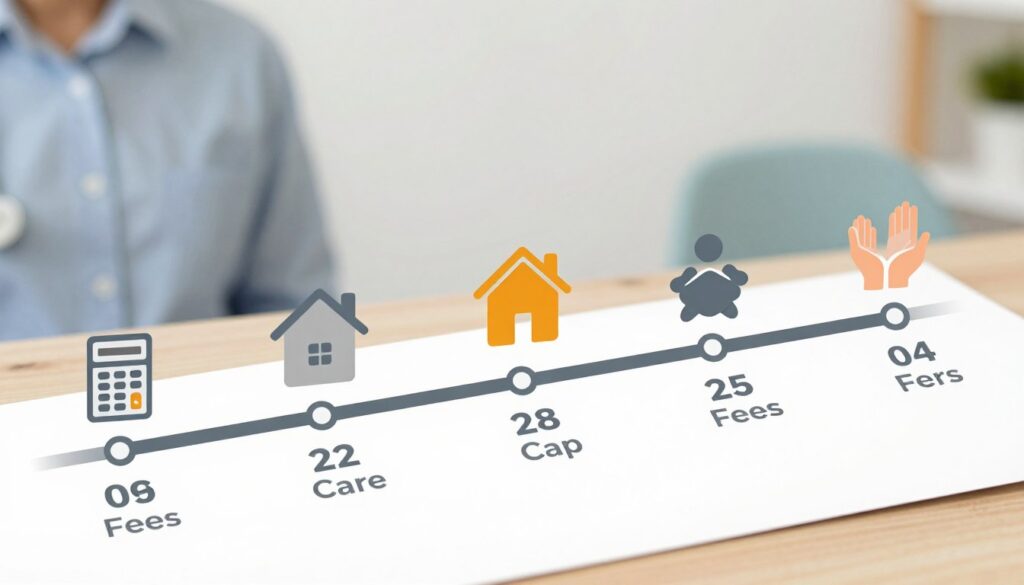
The care fees cap is expected to be rolled out in phases, ensuring a smooth transition for all stakeholders. Initially, the government will begin by setting up the necessary infrastructure to support the cap, including updating assessment processes and informing local authorities of their roles.
Key milestones in the implementation timeline include:
- Notification to local authorities about their responsibilities under the new cap
- Training for social care professionals on the new assessment criteria
- Public awareness campaigns to inform individuals and families about the changes
Key Dates for Stakeholders
Stakeholders, including individuals requiring care, their families, and care providers, need to be aware of the following key dates:
| Date | Event |
|---|---|
| April 2025 | Expected commencement date for the care fees cap |
| January 2025 | Start of public awareness campaigns |
| October 2024 | Local authorities begin preparations |
As we approach the commencement date, it’s crucial for stakeholders to stay informed about the progress and any adjustments to the timeline. We recommend regularly checking official government updates for the latest information on the care fees cap.
Who Will Benefit from the Care Fees Cap?
Understanding who benefits from the care fees cap is crucial for those navigating the complexities of social care. As we explore the eligibility criteria and the impact on different age groups, it becomes clear that this policy change has far-reaching implications.
Eligibility Criteria
The care fees cap is designed to protect individuals from excessive social care costs. To be eligible, individuals must meet certain criteria, including needing care and support due to illness, disability, or frailty. The cap will apply to personal care costs, including help with daily living activities such as bathing, dressing, and eating.
As stated by the UK Government, “The care fees cap is a key part of our reforms to create a more sustainable and fair social care system.” This statement underscores the significance of understanding the eligibility criteria to benefit from the cap.
“The care fees cap will provide much-needed financial protection for individuals and families facing high social care costs.”
Impact on Different Age Groups
The care fees cap will have varying impacts across different age groups. For instance, older adults who require extensive care will benefit significantly from the cap, as it will limit their out-of-pocket expenses. Younger individuals with disabilities will also benefit, as the cap will help reduce the financial burden on their families.
To illustrate the impact, let’s consider the following:
- Individuals aged 65 and above who require residential care will see a reduction in their care costs once the cap is reached.
- Younger adults with disabilities may benefit from the cap by having more resources available for their care and support needs.

As the care fees cap comes into effect, it’s essential for individuals and families to understand how it applies to their specific circumstances. By doing so, they can better navigate the social care system and make informed decisions about their care.
What Costs Does the Care Fees Cap Cover?
The care fees cap is designed to limit the amount individuals pay for their social care, but what exactly does it cover? The cap is intended to provide financial protection to individuals who require social care, ensuring that they do not face excessive costs.
Personal Care vs. Accommodation Costs
It’s essential to understand that the care fees cap differentiates between personal care costs and accommodation costs. Personal care costs include expenses related to the care and support an individual receives, such as help with daily activities, medication management, and personal hygiene. On the other hand, accommodation costs refer to the expenses associated with the individual’s living arrangements in a care home, including food, utilities, and other living expenses.
The care fees cap primarily covers personal care costs. This means that individuals will have their care expenses capped, providing them with financial predictability and protection. However, accommodation costs are not included in the cap, and individuals will still be responsible for paying these expenses.

Additional Services Included
In addition to personal care costs, the care fees cap may also cover other services that are deemed necessary for an individual’s care. These may include:
- Care planning and assessment services
- Support for daily living activities
- Medical care and therapy services
It’s crucial to note that the specific services included may vary depending on the individual’s needs and the local authority’s policies. We recommend consulting with local authorities or care professionals to understand the specific services covered under the care fees cap.
By understanding what costs are covered by the care fees cap, individuals and their families can better plan for their social care needs and make informed decisions about their care.
How Will the Care Fees Cap Be Funded?
The financial backbone of the care fees cap involves a combination of government contributions and local authority funding. This dual-funding approach aims to ensure that the cap is sustainable and effective in protecting individuals from high care costs.
Government Contributions
The government will play a significant role in funding the care fees cap. According to recent announcements, the government will contribute a substantial amount to support the cap, ensuring that it is adequately financed. As stated by the Minister for Social Care, “The care fees cap is a crucial step towards making social care more sustainable and fair.”
“We are committed to ensuring that the cap is properly funded, so individuals can receive the care they need without facing financial ruin.”
Government contributions will be allocated based on specific guidelines, taking into account the needs of different regions and the overall budget allocated for social care. This will involve a detailed assessment of the costs associated with implementing the cap and ensuring that sufficient funds are available.

Local Authority Role in Funding
Local authorities will also be crucial in the funding process, as they will be responsible for managing the care fees cap at a local level. This includes assessing eligibility, managing budgets, and ensuring that the cap is implemented fairly and effectively. Local authorities will need to work closely with healthcare providers and other stakeholders to ensure a seamless delivery of care services.
As part of their role, local authorities will be required to provide detailed reports on their funding allocations and how they are implementing the care fees cap. This will help in monitoring the effectiveness of the cap and making necessary adjustments.
By combining government contributions with local authority funding and management, the care fees cap aims to create a more equitable and sustainable social care system. As we move forward, it’s essential to monitor the implementation and make adjustments as needed to ensure the cap achieves its intended goals.
The Process of Assessment Under the Care Fees Cap
Understanding the assessment process for the care fees cap is crucial for those navigating the UK’s social care system. The assessment determines how much an individual will contribute towards their care costs and how much will be covered by the cap.
Eligibility Assessments Explained
Eligibility for the care fees cap is determined through a comprehensive assessment process. This process involves evaluating an individual’s care needs and financial situation.
- A care needs assessment to determine the level of care required.
- A financial assessment to evaluate the individual’s financial resources.
- An evaluation of the individual’s assets and income to determine their contribution towards care costs.
Appeal Process for Denied Claims
If an individual’s claim is denied, they have the right to appeal. The appeal process involves requesting a review of the decision, providing additional information or evidence, and having their case reviewed by a different assessor or panel.
| Assessment Component | Description | Outcome |
|---|---|---|
| Care Needs Assessment | Evaluates the level of care required. | Determines the type and level of care services needed. |
| Financial Assessment | Evaluates the individual’s financial resources. | Determines the individual’s contribution towards care costs. |
| Asset and Income Evaluation | Assesses the individual’s assets and income. | Calculates the individual’s financial contribution. |
For more detailed information on the care fees cap and its implementation, please refer to the UK Government’s publication on adult social care charging reform. Additionally, you can visit MP Estate Planning for insights into how the cap affects care home fees.

Common Concerns and Misconceptions
Understanding the care fees cap is crucial, but so is separating fact from fiction. As we approach the implementation of this significant change in social care funding, various concerns and misconceptions have surfaced.
Myths about the Care Fees Cap
One common myth is that the care fees cap will cover all social care costs. However, the reality is more nuanced. The cap specifically targets personal care costs, which include help with daily living activities such as bathing, dressing, and eating. It’s essential to understand that accommodation costs are treated differently.
Another misconception is that everyone will automatically qualify for the care fees cap. In reality, eligibility will be determined through a thorough assessment process, considering factors such as the level of care needed and the individual’s financial situation.
Clarifying Misunderstandings
Let’s clarify some of the misunderstandings surrounding the care fees cap:
- The care fees cap is not a universal solution; it will be applied based on individual needs and circumstances.
- It’s not just about capping costs; it’s also about ensuring that individuals receive the care they need without facing financial ruin.
- The cap is part of a broader reform aimed at making social care more sustainable and equitable.
By understanding the realities of the care fees cap, we can better navigate the changes coming to social care funding in the UK. It’s a step towards creating a more compassionate and sustainable system, ensuring that those in need receive the support they deserve without undue financial burden.
Impact on Individuals and Families
Understanding the impact of the care fees cap on individuals and families is crucial for effective financial planning. As we navigate the changes brought about by this new policy, it’s essential to consider how it will affect family budgets and care decisions.
Financial Implications for Families
The care fees cap is designed to limit the amount individuals pay for social care, potentially leading to significant financial savings for families. To illustrate this, let’s consider a comparison of care costs with and without the cap:
| Care Costs | Without Cap | With Cap |
|---|---|---|
| Total Care Costs | £60,000 | £60,000 |
| Maximum Contribution | £60,000 | £86,000 (cap limit) |
| Actual Cost to Family | £60,000 | £86,000 (but capped at £86,000) |
| Potential Savings | £0 | Potential savings if costs exceed £86,000 |
As shown in the table, families could see substantial savings if their care costs exceed the cap limit. For more detailed information on protecting your family’s assets, visit our page on care fees planning.
Personal Stories and Case Studies
Real-life examples can provide valuable insights into how the care fees cap will affect individuals and families. For instance, drawing from similar funding models like the CWELCC system, we’ve seen significant savings for parents. In one case, a family saved over £10,400, while another saved over £12,500. These examples demonstrate the potential financial relief the care fees cap could offer.
By understanding the care fees cap and its implications, families can better plan for the future and make informed decisions about their care needs. It’s crucial to stay informed about the latest developments in care funding to maximize the benefits available.
Future of Social Care Funding in the UK
As we look ahead, the introduction of the care fees cap marks a significant shift in elderly care funding rules in the UK. We are moving towards a more structured system, but there are still questions about the long-term sustainability of social care funding.
Potential Reforms
Reforms beyond the care cost limit UK are likely to focus on creating a more integrated care system. This could involve better coordination between healthcare and social care services, potentially leading to more efficient use of resources.
For more information on protecting your assets, including your home, from care fees, you can visit our page on how to protect your home from care.
Long-Term Vision
The long-term vision for care funding in the UK involves creating a fairer system that balances individual responsibility with state support. As the care fees cap comes into effect, we can expect further discussions on how to ensure the sustainability of social care funding.