


Dealing with inheritance disputes or probate conflicts can be a challenging experience for British homeowners. We understand the emotional toll it takes on families. That’s why alternative dispute resolution methods like mediation have gained popularity.
Estate mediation in the UK offers a flexible, voluntary, and confidential process to settle disputes between parties involved in probate matters. As an alternative to litigation, it can be more cost-effective and quicker, helping families resolve issues amicably.
Key Takeaways
- Mediation is a voluntary and confidential process for resolving probate disputes.
- It offers a cost-effective alternative to traditional litigation.
- Estate mediation helps families resolve issues amicably.
- The process is flexible and can be adapted to suit the needs of the parties involved.
- It can significantly reduce the time taken to resolve disputes.
Understanding Probate Mediation: A Brief Overview
Probate mediation has emerged as a crucial process for families dealing with estate disputes in the UK. It offers a less confrontational and more cost-effective alternative to traditional litigation.
What is Probate Mediation?
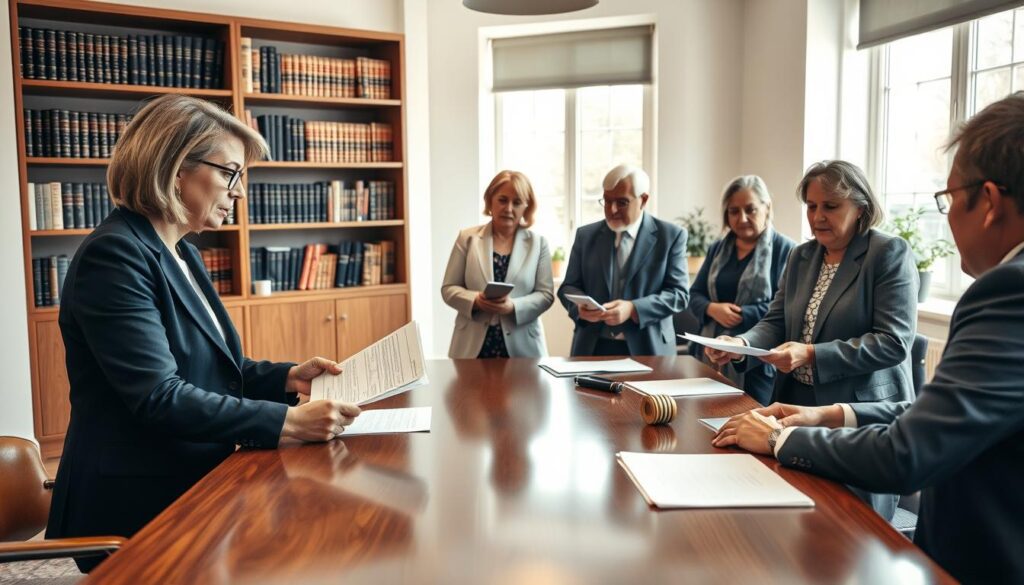
Probate mediation is a process where an independent third party, known as a mediator, facilitates discussions between disputing parties to reach a mutually agreeable solution. This process is particularly useful in mediation for inheritance disputes, allowing families to resolve issues without the need for court intervention.
As noted by a legal expert, “Mediation is a flexible and informal process that can be tailored to the needs of the parties involved.” (Learn more about probate mediation).
Key Benefits of Mediation
The benefits of mediation are numerous, including cost-effectiveness, speed, and the preservation of family relationships. Mediation allows parties to stay in control of the dispute resolution process, unlike in court where a judge makes the decisions.
- Cost savings compared to lengthy legal battles
- Faster resolution, reducing prolonged stress
- Preservation of family relationships through constructive dialogue
How Mediation Differs from Litigation
Mediation differs significantly from litigation in that it is a non-adversarial process. It provides a safe and supportive environment for negotiations, facilitated by an expert probate mediator. Unlike litigation, which can be adversarial and divisive, mediation fosters cooperation.
For those considering their options, it’s worth noting that mediation can be a part of the probate resolution service, offering a comprehensive approach to resolving estate disputes.
“Mediation allows parties to have control over the outcome, which is not always possible in litigation.”
This control, combined with the guidance of a skilled mediator, can lead to more satisfactory outcomes for all parties involved.
| Aspect | Mediation | Litigation |
|---|---|---|
| Control Over Outcome | Parties retain control | Judge makes the decision |
| Cost | Generally more cost-effective | Can be very costly |
| Nature of Process | Non-adversarial, cooperative | Adversarial |
The Probate Process in the UK
Understanding the probate process is essential for those dealing with the estate of a loved one in the UK, as it involves several legal and administrative steps. The probate process is a crucial aspect of estate administration, ensuring that the deceased’s assets are distributed according to their will or the rules of intestacy.
Understanding the Steps in Probate
The probate process involves several key steps. First, the executors or personal representatives of the estate must obtain a grant of probate, which is a legal document that authorizes them to manage the estate. This involves:
- Identifying and gathering the deceased’s assets
- Valuing the assets
- Paying any debts and taxes owed by the estate
- Distributing the remaining assets according to the will or intestacy rules
Each of these steps can be complex and may require professional guidance to ensure they are carried out correctly. For instance, valuing the assets can be particularly challenging if the estate includes unique or high-value items such as property or artwork.
Common Disputes in Probate Matters
Disputes can arise during the probate process for various reasons. Common issues include:
- Contested wills, where the validity of the will is disputed
- Disagreements among beneficiaries regarding the distribution of assets
- Claims against the estate by creditors or others
These disputes can lead to significant delays and increased costs, making it essential to consider alternative dispute resolution methods such as probate mediation UK or estate mediation in the UK. By understanding the potential for disputes, individuals can better prepare for the probate process and seek appropriate advice when needed.
When to Consider Mediation for Probate Disputes
In the UK, mediation has become increasingly recognised as an effective method for resolving probate disputes without going to court. Mediation for inheritance disputes can be particularly beneficial when families are struggling to agree on the distribution of assets.
Signs Mediation May Be Beneficial
There are several signs that mediation may be beneficial in probate conflict resolution. These include:
- When disagreements arise over the interpretation of a will.
- If there are disputes over the distribution of assets among beneficiaries.
- When there’s a challenge to the validity of a will.
- In cases where family members feel their concerns are not being heard.
Expert probate mediators can facilitate discussions, helping parties to reach a mutually acceptable agreement. Mediation can be considered at any stage of a dispute, and it’s often recommended before proceeding to court.
| Signs Mediation is Beneficial | Description |
|---|---|
| Disagreements over will interpretation | When beneficiaries disagree on what the will means. |
| Disputes over asset distribution | When there’s disagreement on how assets should be divided. |
| Challenges to will validity | When someone questions whether the will is genuine. |
Legal Requirements for Mediation
The legal requirements for mediation include the willingness of parties to participate and the appointment of a mediator. Unlike litigation, mediation is a voluntary process, meaning all parties must agree to participate.
Key Legal Requirements:
- The parties must agree to mediate.
- A qualified mediator must be appointed.
- The process should be conducted in a fair and impartial manner.

By understanding when to consider mediation for probate disputes, individuals can make informed decisions about how to resolve conflicts in a constructive and less adversarial manner.
The Role of a Mediator in Probate Cases
Expert probate mediators in the UK are trained to handle sensitive family conflicts that arise during probate disputes. A mediator is an independent and impartial third party who facilitates discussions between disputing parties, helping them find a mutually acceptable resolution.

Qualifications of a Probate Mediator
To be effective, a probate mediator must possess specific qualifications and skills. These include:
- Training in mediation techniques
- Knowledge of probate law and procedures
- Excellent communication and interpersonal skills
- The ability to remain impartial and manage complex family dynamics
UK probate mediation specialists typically undergo rigorous training and may be affiliated with professional mediation bodies. This ensures they are equipped to handle the intricacies of probate disputes.
How a Mediator Facilitates Discussions
A mediator facilitates discussions by creating a structured environment where parties can express their concerns and work towards a resolution. The mediator’s role involves:
- Identifying common goals and interests among the disputing parties
- Encouraging open and respectful communication
- Helping parties to understand each other’s perspectives
- Guiding the discussion towards a mutually beneficial outcome
Through probate mediation UK, parties can resolve disputes in a less adversarial and more cost-effective manner compared to traditional litigation.
The Mediation Process Explained
Understanding the mediation process is crucial for resolving probate disputes effectively. Mediation is a probate resolution service that helps parties in dispute reach a mutually acceptable agreement without going to court.

Preparing for Mediation
Preparation is key to a successful mediation. Parties should start by understanding the legal implications of their dispute and gathering all relevant documents. This includes wills, estate accounts, and any correspondence related to the dispute. It’s also beneficial to identify the key issues in contention and consider potential solutions before the mediation session.
As Law Society guidance suggests, being well-prepared can significantly enhance the chances of a successful mediation. We recommend that parties consult with their legal advisors to ensure they are adequately prepared.
The Mediation Session: What to Expect
The mediation session is typically conducted in a neutral venue. The parties may be in separate rooms, with the mediator facilitating communication between them. The mediator’s role is to help parties identify common goals and work towards a mutually acceptable resolution.
“Mediation is a flexible process, allowing parties to explore various solutions that might not be available through litigation.”
During the session, the mediator will guide the discussion, ensuring that all parties have the opportunity to express their concerns and needs. The goal is to reach a settlement that is acceptable to all parties involved.
Post-Mediation Outcomes
After the mediation session, there are several potential outcomes. If an agreement is reached, it can be formalized into a legally binding contract. Even if not all issues are resolved, mediation can still be beneficial in narrowing down the areas of dispute, making it easier to resolve the remaining issues through other means.
As noted by a leading mediation for inheritance disputes expert, “Mediation can significantly reduce the time and cost associated with resolving probate disputes, preserving family relationships in the process.”
In conclusion, the mediation process is a valuable tool for resolving probate disputes in the UK. By understanding what to expect and how to prepare, parties can make the most of this estate mediation in the UK process.
Advantages of Probate Mediation
Probate mediation offers numerous benefits, making it an attractive option for resolving disputes related to inheritance and estate distribution. By understanding these advantages, individuals can make informed decisions about how to navigate complex probate issues.
Cost-Effectiveness Compared to Litigation
One of the primary advantages of probate mediation is its cost-effectiveness. Unlike litigation, which can be prohibitively expensive due to court fees, lawyer charges, and other related costs, mediation provides a more economical solution. Mediation sessions are typically conducted in a single day or over a few sessions, significantly reducing the financial burden on the parties involved. For instance, a study on mediation in the UK highlighted that mediation can save parties up to 70% of the costs associated with traditional litigation. We recommend exploring mediation clauses to understand how they can be effectively used to resolve inheritance disputes.

The cost savings are not limited to the mediation process itself. By resolving disputes through mediation, parties can avoid the lengthy and costly process of going to court. This not only preserves the estate’s assets but also ensures that the beneficiaries receive their rightful inheritance without significant deductions.
Emotional Benefits of Mediation
Beyond the financial advantages, probate mediation also offers significant emotional benefits. The mediation process is designed to be less adversarial than litigation, fostering a more collaborative environment where parties can openly discuss their concerns and work towards a mutually acceptable resolution. This approach helps reduce the stress and anxiety associated with probate disputes, preserving family relationships and promoting a more peaceful resolution.
Mediation allows parties to maintain control over the outcome, rather than leaving the decision in the hands of a judge. This can lead to more satisfactory outcomes for all parties involved, as they are able to craft a solution that meets their specific needs and circumstances. By choosing mediation, individuals can navigate probate disputes in a more constructive and less emotionally draining manner.
Challenges of Probate Mediation
While probate mediation offers numerous benefits, it’s not without its challenges. As experienced professionals in probate conflict resolution, we understand that mediation can be an effective tool, but it’s crucial to acknowledge its limitations.

Situations Where Mediation May Fail
Mediation may fail in situations where there is a significant power imbalance between parties or when one party is unwilling to negotiate in good faith. For instance, if one beneficiary is significantly more assertive or better informed than the others, it can create an uneven playing field. Similarly, if a party is not willing to engage in genuine negotiation, mediation is unlikely to succeed.
To mitigate these risks, it’s essential to work with skilled UK probate mediation specialists who can manage the mediation process effectively. They can employ strategies such as:
- Ensuring all parties have equal access to information
- Using techniques to level the playing field, such as separate caucuses with each party
- Encouraging open and respectful communication
Dealing with Power Imbalances
Power imbalances can significantly impact the effectiveness of mediation for inheritance disputes. To address this, mediators use various techniques to ensure that all parties feel heard and respected. For example, they might:
- Conduct separate meetings with each party to understand their concerns and needs
- Use shuttle mediation, where the mediator acts as a go-between, facilitating communication between parties
- Employ active listening techniques to ensure all voices are heard
For more insights on avoiding family disputes during probate, you can visit our page on how to avoid family disputes during.
By understanding the challenges of probate mediation and working with experienced professionals, you can navigate these complexities and achieve a more harmonious resolution to inheritance disputes.
Legal Framework Governing Mediation in the UK
Understanding the legal landscape of mediation in the UK is crucial for navigating probate disputes effectively. The legal framework supporting mediation is comprehensive, involving various laws and regulations that facilitate its use as a dispute resolution method.
Relevant Laws and Regulations
The mediation process in the UK is supported by several key pieces of legislation. These include:
- The Alternative Dispute Resolution (ADR) Regulations, which promote the use of mediation as an alternative to litigation.
- The Civil Procedure Rules, which encourage courts to facilitate the use of ADR, including mediation, where appropriate.
- The Mediation Directive (2008/52/EC), implemented in the UK, which aims to promote the use of mediation in cross-border disputes.
These regulations collectively create an environment that supports and encourages the use of mediation for resolving disputes, including those related to probate.
| Legislation | Purpose | Impact on Mediation |
|---|---|---|
| Alternative Dispute Resolution (ADR) Regulations | Promote ADR methods | Encourages the use of mediation |
| Civil Procedure Rules | Facilitate ADR in legal proceedings | Supports courts in suggesting mediation |
| Mediation Directive (2008/52/EC) | Promote mediation in cross-border disputes | Enhances the use of mediation across different jurisdictions |
Role of Legal Advisors in Mediation
Legal advisors play a pivotal role in the mediation process. They advise clients on the implications of mediation, help prepare them for the process, and ensure that any agreement reached is legally binding and in the client’s best interest.
“Legal advisors are essential in guiding clients through the mediation process, ensuring that they are well-prepared and that their rights are protected.”
Legal advisors also facilitate communication between parties and help in drafting the mediation agreement. Their expertise is invaluable in navigating the legal aspects of mediation.
By understanding the legal framework and the role of legal advisors, individuals involved in probate disputes can make informed decisions about using mediation as a resolution method.
Success Rates of Probate Mediation in the UK
The effectiveness of probate mediation in the UK is a topic of significant interest, with a considerable body of evidence supporting its success. As we explore the success rates of probate mediation, it’s essential to understand the factors that contribute to its effectiveness.
Influential Factors
Several factors influence the success of probate mediation. These include:
- The willingness of parties to negotiate and come to a mutually acceptable agreement.
- The skill and experience of the mediator in facilitating discussions.
- The complexity of the dispute, with simpler issues being more likely to be resolved through mediation.
Our expert probate mediators play a crucial role in ensuring that mediation is successful. They create an environment conducive to open discussion, helping parties to focus on finding a resolution rather than escalating the conflict.
Case Studies and Statistics
Various studies and case studies have demonstrated the effectiveness of probate mediation in the UK. For instance, a significant proportion of disputes related to inheritance are resolved through mediation, avoiding the need for costly and time-consuming litigation.
Some key statistics highlighting the success of probate mediation include:
- A high settlement rate, with many cases being resolved in a single mediation session.
- Reduced legal costs, as mediation is generally less expensive than going to court.
- Improved relationships among parties, as mediation encourages constructive dialogue.
By utilising a probate resolution service, individuals can benefit from the expertise of mediators who are skilled in handling complex disputes. Mediation for inheritance disputes has become an increasingly popular option, offering a viable alternative to traditional litigation.
In conclusion, the success rates of probate mediation in the UK are influenced by a combination of factors, including the willingness of parties to negotiate and the expertise of the mediator. With its numerous benefits, including cost-effectiveness and improved relationships, probate mediation is an attractive option for resolving disputes related to inheritance and estate distribution.
Conclusion: Evaluating Mediation as a Solution
As we navigate the complexities of probate disputes in the UK, it’s clear that probate mediation UK offers a viable alternative to traditional litigation. Estate mediation in the UK has proven to be an effective tool in resolving conflicts amicably, reducing the emotional and financial strain on families.
Assessing Suitability for Mediation
To determine if mediation is right for your situation, consider the willingness of all parties to engage in discussions and the complexity of the dispute. Mediation can be particularly beneficial when there’s a desire to maintain family relationships and avoid the adversarial nature of court proceedings.
Navigating Probate Disputes Effectively
Probate conflict resolution through mediation requires a thoughtful approach. By understanding the benefits and potential challenges, individuals can make informed decisions about their dispute resolution strategy. Effective mediation can lead to a more satisfactory outcome for all parties involved, preserving family harmony and reducing costs.