


When a person is appointed as a deputy by the Court of Protection, they are entrusted with making important decisions on behalf of someone who lacks mental capacity. The Office of the Public Guardian (OPG) plays a crucial role in overseeing these deputies to ensure they act in the best interests of the individual.
The OPG’s supervision is not a one-size-fits-all approach; instead, it involves different levels of monitoring tailored to the specific circumstances of each case. Understanding these deputyship supervision levels is essential for deputies to comply with their legal obligations and for the individuals they support to receive the protection they need.
Key Takeaways
- The Office of the Public Guardian supervises deputies appointed by the Court of Protection.
- Different levels of supervision are applied based on the specific circumstances of each case.
- Understanding these levels is crucial for compliance and protection.
- The OPG’s role is to ensure deputies act in the best interests of the individual they support.
- Effective supervision helps in safeguarding the well-being of vulnerable individuals.
Understanding Deputyship in the UK
In the UK, deputyship is a legal arrangement that allows one person to make decisions on behalf of another who lacks mental capacity. This role is crucial in ensuring that the individual’s affairs are managed effectively and in their best interests.
What is a Deputy?
A deputy is appointed by the Court of Protection to make decisions for someone who lacks the mental capacity to make decisions for themselves. This could involve managing their financial affairs, making decisions about their health and welfare, or both. For instance, if a person has suffered a severe brain injury and can no longer manage their finances or make informed decisions about their medical care, a deputy might be appointed to oversee these aspects.
Who Needs a Deputy?
An individual may need a deputy if they have lost mental capacity due to conditions such as dementia, a severe head injury, or a stroke, and did not previously arrange a lasting power of attorney. In such cases, an application can be made to the Court of Protection to appoint a deputy. For example, an elderly person with advanced dementia might require a deputy to manage their financial affairs and make decisions about their care.
The Role of the Court of Protection
The Court of Protection plays a vital role in the deputyship process. It is responsible for making decisions about a person’s mental capacity and appointing a deputy if necessary. The court also oversees the deputy’s actions to ensure they act in the best interests of the individual they are representing. This includes requiring deputies to submit annual reports detailing their decisions and actions.
Understanding the role of the Court of Protection and the responsibilities of a deputy is essential for navigating the complexities of deputyship in the UK. By ensuring that the individual’s affairs are managed correctly, a deputy can provide invaluable support and protection.
Categories of Deputyship Supervision
The Office of the Public Guardian (OPG) categorises deputies into different supervision levels based on their performance and the needs of the individual they represent. This categorisation is crucial in ensuring that deputies are held accountable for their actions and that the individuals they represent receive the necessary protection.
Overview of Supervision Levels
The OPG has established different levels of supervision to cater to the diverse needs of deputies and the individuals they represent. These levels range from general supervision to more enhanced levels, depending on the complexity of the case and the deputy’s performance.
Here is an overview of the supervision levels:
| Supervision Level | Description |
|---|---|
| General Supervision | Minimal oversight for deputies who have demonstrated competence and reliability. |
| Intermediate Supervision | Moderate oversight for deputies who require some guidance and support. |
| Enhanced Supervision | Close monitoring for deputies who need significant guidance due to complex cases or performance issues. |

How Levels are Assigned
The level of supervision assigned to a deputy is determined by several factors, including their experience, the complexity of the case, and the financial capacity of the individual they represent. The OPG conducts a thorough assessment to determine the appropriate level of supervision, ensuring that it is proportionate to the needs of the individual and the deputy’s ability to manage their responsibilities.
Key factors influencing supervision levels include:
- The deputy’s level of experience and competence.
- The complexity of the financial and personal circumstances of the individual they represent.
- The risk of potential abuse or mismanagement.
By understanding these factors, the OPG can assign the appropriate supervision level, ensuring that deputies are held accountable while also being given the necessary support to carry out their duties effectively.
Level 1: General Supervision
When it comes to managing the affairs of individuals who lack the mental capacity to make decisions for themselves, the UK’s Court of Protection plays a vital role. One of the key decisions made by this court is the appointment of a deputy and determining the level of supervision required. Level 1, or General Supervision, is the standard level for most new deputies.
Responsibilities of a Level 1 Deputy
As a Level 1 deputy, your responsibilities are significant and include:
- Making decisions in the best interest of the individual lacking mental capacity
- Keeping detailed records of decisions made and actions taken
- Submitting annual reports to the Office of the Public Guardian
- Complying with any specific directions given by the Court of Protection
It’s essential to understand that as a deputy, you are acting under the court’s authority, and your actions are subject to oversight. For more detailed information on the role and responsibilities of a deputy, you can refer to the Office of the Public Guardian’s report.
Key Benefits of this Level
General Supervision offers several benefits, including:
- A balanced level of oversight, ensuring the deputy’s actions are in the individual’s best interest
- Flexibility in decision-making, allowing deputies to respond to changing circumstances
- A clear framework for accountability through annual reporting
This level of supervision is designed to provide a safeguard while also giving deputies the autonomy to make necessary decisions.
When is Level 1 Appropriate?
Level 1 supervision is generally appropriate for cases where the deputy’s role is straightforward, and there are no significant concerns regarding the deputy’s ability to act in the individual’s best interest. However, the court may decide to adjust the supervision level based on the deputy’s performance or changes in the individual’s circumstances.
| Supervision Level | Key Characteristics | Annual Reporting Requirement |
|---|---|---|
| Level 1: General Supervision | Standard level for most new deputies, balanced oversight, flexibility in decision-making | Yes |

Level 2: Intermediate Supervision
Understanding the differences between Level 1 and Level 2 supervision is essential for deputies to navigate their responsibilities effectively. As we explore Level 2: Intermediate Supervision, we’ll examine the additional responsibilities and situations that necessitate this level of oversight.
Key Responsibilities
Level 2 supervision is more intensive than Level 1, involving regular checks on the deputy’s decisions and actions. Deputies under Level 2 supervision are required to submit more detailed reports to the Office of the Public Guardian (OPG), ensuring transparency and accountability in their management of the individual’s affairs.
Some key responsibilities of a Level 2 deputy include:
- Maintaining detailed financial records
- Submitting annual reports to the OPG
- Seeking approval for significant financial decisions
Situations Requiring Level 2 Supervision
Level 2 supervision is typically required in situations where there are concerns about the deputy’s performance or the complexity of the individual’s financial affairs. For instance, if a deputy is managing a large estate or making complex investment decisions, the court may deem Level 2 supervision necessary to ensure that the individual’s best interests are protected.
As “The role of the Office of the Public Guardian is to protect the vulnerable and support those who make decisions on their behalf.” In line with this, Level 2 supervision provides an additional layer of protection for individuals under deputyship.
To illustrate the difference between Level 1 and Level 2 supervision, consider the following:
| Supervision Level | Reporting Requirements | Level of Oversight |
|---|---|---|
| Level 1 | Annual reports | General supervision |
| Level 2 | More frequent, detailed reports | Intermediate supervision with regular checks |

In conclusion, Level 2: Intermediate Supervision is a critical component of the deputyship monitoring stages, providing an additional layer of oversight for complex or high-risk cases. By understanding the responsibilities and situations that require Level 2 supervision, deputies can better navigate their roles and ensure the well-being of the individuals they represent.
Level 3: Enhanced Supervision
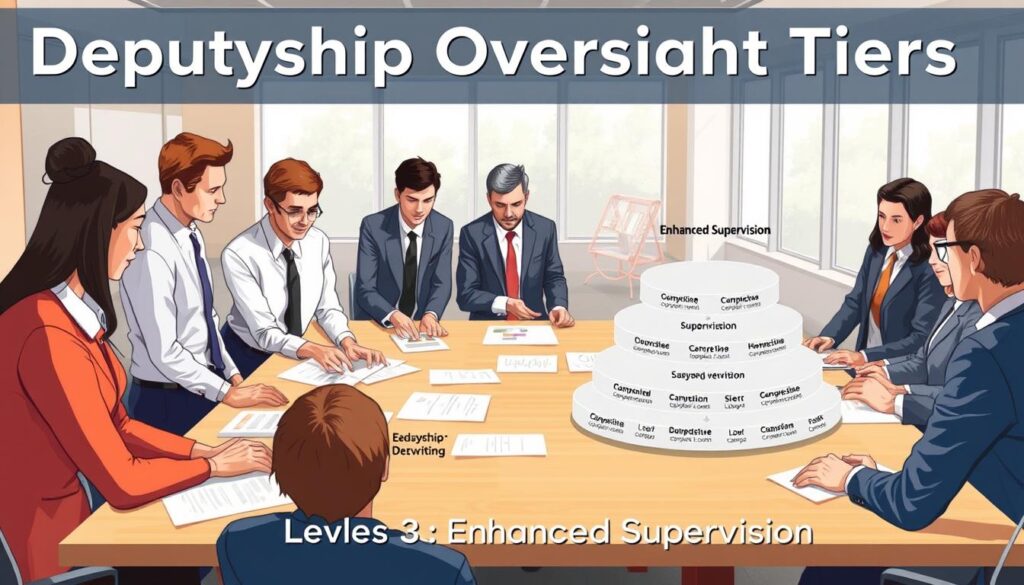
Level 3 deputyship supervision is reserved for the most complex and high-risk cases, where the Court of Protection needs to ensure that the deputy’s decisions are closely monitored. This level of supervision is typically applied when significant assets are involved or when the decisions required are particularly intricate.
Detailed Duties of a Level 3 Deputy
A Level 3 deputy has extensive responsibilities, including managing complex financial affairs, making significant decisions regarding the individual’s welfare, and potentially dealing with multiple assets or investments. The deputy’s role involves providing detailed reports to the Office of the Public Guardian (OPG) and potentially undergoing regular audits. For instance, a deputy might need to make decisions about selling a property, managing investments, or deciding on the appropriate care for the individual.
The duties of a Level 3 deputy can be illustrated through a real-life example: consider a case where an individual lacks mental capacity and has a substantial estate, including multiple properties and significant investments. In such a scenario, a Level 3 deputy would be appointed to oversee the management of these assets, ensuring that decisions are made in the best interest of the individual. The deputy would need to provide regular, detailed reports to the OPG, justifying their decisions and actions.
Circumstances for Enhanced Supervision
Enhanced supervision is warranted in several circumstances, including when the individual’s estate is large or complex, or when there are potential conflicts of interest. The Court of Protection may also impose Level 3 supervision if the deputy’s decisions have significant implications for the individual’s welfare or financial security. For example, if a deputy is managing a business on behalf of the individual, the court may require Level 3 supervision to ensure that the business is being managed appropriately and in the best interest of the individual.
In summary, Level 3: Enhanced Supervision is a critical tool used by the Court of Protection to ensure that the affairs of individuals who lack mental capacity are managed with the utmost care and diligence, particularly in complex or high-risk situations.
Factors Influencing Supervision Level
Understanding the factors that influence supervision levels is crucial for deputies in the UK. The Office of the Public Guardian (OPG) carefully considers several elements to determine the appropriate level of supervision.
Understanding Risk Assessments
The OPG conducts thorough risk assessments to determine the level of supervision required. This process involves evaluating the potential risks associated with the deputy’s actions and decisions. Risk assessments are a critical component in ensuring that the individual or organisation acting as a deputy is held to the appropriate standard of accountability.
The Role of Financial Capacity
Financial capacity plays a significant role in determining the supervision level. Deputies managing larger or more complex financial affairs are subject to closer scrutiny. The OPG assesses the financial situation to ensure that the deputy is capable of managing the individual’s assets effectively.
Judicial Discretion in Level Assignment
Judicial discretion is another crucial factor in assigning supervision levels. The Court of Protection has the authority to decide on the level of supervision based on the specific circumstances of each case. This discretion allows for flexibility and ensures that the supervision level is tailored to the individual’s needs.
Duration and Review of Supervision Levels
Understanding the duration and review process of deputyship supervision levels is crucial for those navigating the UK’s Court of Protection. The supervision levels assigned to deputies are designed to ensure that they act in the best interests of the individuals they represent.
Duration of Supervision Levels
The duration of each supervision level varies depending on the specific circumstances of the case and the decisions made by the Office of the Public Guardian (OPG). Generally, the OPG assesses the level of supervision required based on the complexity of the case and the deputy’s ability to manage the affairs of the individual they represent.
Here’s an overview of how long each supervision level typically lasts:
| Supervision Level | Typical Duration | Factors Influencing Duration |
|---|---|---|
| Level 1: General Supervision | 1-3 years | Complexity of the case, deputy’s experience |
| Level 2: Intermediate Supervision | 2-5 years | Risk assessment, financial capacity of the individual |
| Level 3: Enhanced Supervision | Ongoing, with regular reviews | High-risk cases, significant financial assets |
Regular Review Procedures
The OPG conducts regular reviews of deputies to ensure they are managing the affairs of those they represent appropriately. These reviews assess the deputy’s performance and the ongoing needs of the individual. The frequency of reviews depends on the supervision level and the specific circumstances of the case.
Key aspects reviewed include:
- Compliance with the deputyship order
- Management of financial affairs
- Decision-making processes
- Communication with the individual and other stakeholders
Deputies are expected to cooperate fully with the OPG during these reviews, providing any requested information or documentation. The outcome of the review may result in the supervision level being maintained, increased, or decreased, depending on the findings.
By understanding the duration and review process of deputyship supervision levels, deputies can better navigate their responsibilities and ensure they are acting in the best interests of those they represent.
Support and Resources for Deputies
The Office of the Public Guardian (OPG) provides a wealth of resources to support deputies in their critical role. As a deputy, it’s essential to have access to the right information and guidance to effectively manage the affairs of the person you’re representing.
Resources from the Office of the Public Guardian
The OPG offers various resources to help deputies understand their responsibilities and make informed decisions. These include:
- Guidance documents on managing the financial and personal affairs of the person you’re representing
- Templates for reporting to the OPG
- Online resources and webinars
One of the key resources provided by the OPG is the Deputy’s Handbook, which outlines the role and responsibilities of a deputy. This handbook is an invaluable resource for understanding the legal and ethical considerations involved in deputyship.
| Resource | Description |
|---|---|
| Deputy’s Handbook | A comprehensive guide to the role and responsibilities of a deputy |
| Annual Report Forms | Templates for deputies to report on their activities and the financial affairs of the person they represent |
| OPG Webinars | Regular online sessions providing updates on deputyship law and best practices |
Training and Continuing Education Opportunities
Continuing education is vital for deputies to stay updated on the latest legal requirements and best practices. The OPG and other organizations offer various training opportunities, including:
- Workshops on managing financial affairs
- Seminars on legal updates and changes in deputyship law
- Online courses on ethical considerations and decision-making
“The role of a deputy is not just about managing finances; it’s about making decisions that respect the rights and dignity of the person you’re representing.” –
By taking advantage of these resources and training opportunities, deputies can ensure they are well-equipped to perform their duties effectively and in the best interests of the person they represent.

Common Challenges Faced by Deputies
As deputies in the UK, we often encounter complex challenges that require careful navigation and effective communication. Managing the affairs of individuals who lack mental capacity can be a daunting task, especially when dealing with intricate financial or personal matters.
Navigating Complex Cases
Navigating complex cases is a significant challenge for deputies. These cases often involve multifaceted financial situations, family dynamics, or medical conditions that require careful consideration. For instance, managing the estate of someone with significant assets or complex family relationships can be particularly challenging.
To navigate these complex cases effectively, deputies must:
- Stay organised and maintain detailed records
- Seek professional advice when necessary
- Prioritise the well-being and best interests of the individual they are representing
For example, in cases involving significant financial assets, deputies may need to make informed decisions about investments, property management, and tax planning. This requires a deep understanding of financial management and the ability to make decisions that align with the individual’s best interests.
Communication with Stakeholders
Effective communication with stakeholders is another crucial aspect of a deputy’s role. This includes communicating with family members, healthcare professionals, financial institutions, and other relevant parties. Clear and concise communication helps ensure that all parties are informed and aligned with the decisions being made.
Some key strategies for effective communication include:
- Establishing clear channels of communication from the outset
- Providing regular updates to stakeholders
- Being transparent about decision-making processes
For more information on the role of a deputy and how to navigate these challenges, you can visit our page on protecting your family’s future with power of attorney or.
Conclusion: Choosing the Right Supervision Level
Selecting the appropriate deputyship oversight tier is crucial for effective decision-making and safeguarding the well-being of individuals who lack mental capacity. Understanding the different UK deputyship appraisal levels helps in determining the most suitable level of supervision.
Professional Guidance
Seeking professional advice is invaluable when navigating the complexities of deputyship supervision. Experienced professionals can provide guidance on the most appropriate supervision level, ensuring compliance with legal requirements and minimizing potential risks.
Key Considerations
When determining the suitable deputyship oversight tier, several factors come into play. These include the individual’s financial capacity, the level of risk involved, and the deputy’s responsibilities. Regular reviews and assessments are essential to ensure the chosen supervision level remains appropriate over time.
By understanding the different UK deputyship appraisal levels and seeking professional guidance, individuals can make informed decisions and ensure the well-being of those they are responsible for.