


Quick answer
If a UK executor is misbehaving — not communicating with beneficiaries, failing to administer the estate, mishandling funds, self-dealing, or actively against the will’s terms — affected beneficiaries can challenge or remove them through: (1) formal complaint to the executor first in writing; (2) citation to take grant or pass over at the Probate Registry; (3) application to remove or substitute the executor under s.50 Administration of Justice Act 1985; (4) High Court Chancery Division action for serious breaches of fiduciary duty — can result in personal liability against the executor for losses, removal, and (in fraud cases) referral to the police. Costs: simple removals typically £2,000–£5,000; contentious cases much more. The Probate Registry doesn’t actively supervise executors — the responsibility for challenge sits with beneficiaries. This guide explains how to challenge or remove a UK executor for misconduct in 2026, the realistic process, and the costs.
Last reviewed: 24 May 2026 by the MP Estate Planning editorial team. Jurisdiction: England and Wales. Scotland and Northern Ireland have different probate and intestacy rules; the IHT thresholds are UK-wide.
Three rule changes you may need to consider (2026/27)
1. Pensions become subject to IHT from 6 April 2027. Most unused defined-contribution pension pots currently sit outside the estate for IHT — that ends on 6 April 2027 (gov.uk policy paper). HMRC estimates around 10,500 estates will face IHT for the first time as a result.
2. Business and agricultural property reliefs capped at £2.5m per person from 6 April 2026. Above the cap, only 50% relief applies — effective IHT of 20%. AIM shares dropped to 50% relief and do not use the £2.5m allowance (Saffery — APR/BPR reforms).
3. The NRB, RNRB and £2m taper threshold are frozen until 5 April 2031 following the 2024 and 2025 Budgets (gov.uk — NRB and RNRB freeze). With inflation, more estates will be pulled into IHT each year — a process commonly called “fiscal drag.”
When a loved one passes away, their executor plays a crucial role in carrying out their wishes as stated in their Will. However, disputes can arise when executors fail to cooperate, causing delays and stress for families.
We understand the importance of resolving such disputes efficiently to ensure the deceased’s estate is distributed according to their wishes. In this article, we will explore the options available when executors don’t cooperate, including the process for removing or replacing an executor in the UK. For more information on challenging an executor, you can visit our related article on how to challenge an executor of a.
Key Takeaways
- Understand the grounds for challenging an executor, including breach of fiduciary duty.
- Recognise the signs of executor misconduct, such as lack of transparency and unexplained delays.
- Know the steps to challenge an executor, including gathering evidence and seeking legal advice.
- Be aware of the importance of acting quickly to challenge an executor.
- Understand the role of the court in removing or replacing an executor.
Understanding Executor Misconduct
Understanding executor misconduct is crucial for beneficiaries who want to protect their inheritance. Executor misconduct occurs when an executor fails to act in the best interests of the estate or its beneficiaries.
Definition of Executor Misconduct
Executor misconduct can take many forms, including mismanaging estate assets, failing to keep accurate accounts, or distributing assets inappropriately. It is essential to recognize the signs of misconduct to take appropriate action.
For instance, if an executor sells property at below market value or fails to pay debts, it can be considered misconduct. You can find more examples of executor misconduct on our detailed page: examples of executor misconduct.
Common Types of Misconduct
Some common types of executor misconduct include:
- Mismanaging estate assets, such as selling property without proper authorization.
- Failing to keep accurate and detailed accounts of estate transactions.
- Distributing assets contrary to the will’s instructions or in a biased manner.
- Failing to pay debts or taxes owed by the estate.
To illustrate the prevalence and impact of executor misconduct, let’s examine some data:
| Type of Misconduct | Frequency | Average Loss |
|---|---|---|
| Mismanagement of Assets | 35% | £20,000 |
| Incorrect Distribution | 25% | £15,000 |
| Failure to Pay Debts | 20% | £10,000 |
| Inaccurate Accounting | 20% | £5,000 |
Beneficiaries should be vigilant and monitor the executor’s actions to prevent or address any misconduct. By understanding the common types of misconduct, beneficiaries can take proactive steps to protect their interests.
Legal Responsibilities of Executors
Executors have a fiduciary duty to act in the best interests of the estate and its beneficiaries, which includes a range of legal and administrative tasks. This responsibility is not to be taken lightly, as executors are entrusted with managing the deceased’s estate, ensuring that debts are paid, and that the remaining assets are distributed according to the will.
Overview of an Executor’s Duties
The duties of an executor are multifaceted and include:
- Valuing the estate’s assets to determine its overall value.
- Paying off debts and taxes owed by the estate.
- Distributing the remaining assets to beneficiaries as specified in the will.
- Managing the estate’s assets until distribution.
As noted by the UK’s Ministry of Justice, “Executors have a legal duty to act in the best interests of the estate and its beneficiaries.” This duty requires executors to be impartial, transparent, and diligent in their responsibilities.

Consequences of Failing to Fulfil Duties
Failing to fulfill their duties can have significant consequences for executors. If an executor is found to be negligent or mismanaging the estate, they may be held personally liable for any losses incurred. This can include financial penalties and potential legal action from beneficiaries.
“The consequences of executor misconduct can be severe, not only financially but also in terms of the emotional distress caused to beneficiaries.” It is crucial for executors to understand their responsibilities and the potential consequences of not fulfilling them.
In summary, the role of an executor is complex and demanding. It requires a deep understanding of their legal responsibilities and the potential consequences of failing to meet these obligations. By being aware of their duties and the legal framework governing their actions, executors can ensure that they act in the best interests of the estate and its beneficiaries.
Signs of Executor Misconduct
Executor misconduct can have severe consequences, making it essential to identify the warning signs early. Beneficiaries should be aware of the potential red flags that may indicate improper behaviour by the executor.
Red Flags to Watch For
Several signs may indicate executor misconduct. We recommend watching for:
- Unexplained delays in estate administration
- Lack of transparency regarding estate assets and transactions
- Financial discrepancies or irregularities in accounting
- Failure to provide regular updates or respond to beneficiary inquiries
As stated by a legal expert,
“Beneficiaries have the right to request an inventory of the estate’s assets and transactions. Executors are legally obligated to provide this information.”
If you encounter resistance or evasion, it may be a sign of misconduct.
How to Spot Financial Irregularities
To identify financial irregularities, beneficiaries should carefully review the estate’s financial statements and transactions. Look for:
- Unusual or large transactions without clear justification
- Mismanagement of estate assets, such as failure to collect debts or maintain property
- Unauthorized use of estate funds for personal expenses
For more information on the duties of an executor, you can visit our guide on executor duties. Understanding these duties can help you identify potential misconduct.
Being vigilant and proactive can help prevent or mitigate the consequences of executor misconduct. If you suspect misconduct, it’s crucial to seek legal advice promptly.
The Legal Framework Governing Executors
The UK’s legal system provides a comprehensive framework for executors to manage estates. This framework is designed to ensure that executors carry out their duties in a fair and transparent manner, protecting the interests of beneficiaries.
Relevant Laws in the UK
The legal framework governing executors in the UK is primarily based on the Non-Contentious Probate Rules 1987 and the Administration of Justice Act 1985. These laws outline the responsibilities and powers of executors, providing a foundation for the administration of estates.
Executors must also comply with other relevant legislation, such as the Trustee Act 2000, which governs the investment powers of trustees, including executors. Understanding these laws is essential for executors to fulfil their duties effectively.
Key Legislation Governing Executors
| Legislation | Description |
|---|---|
| Non-Contentious Probate Rules 1987 | Governs the procedure for obtaining probate and the administration of estates. |
| Administration of Justice Act 1985 | Provides the framework for the administration of estates, including the powers and duties of executors. |
| Trustee Act 2000 | Regulates the investment powers of trustees, including executors. |
Role of the Probate Registry
The Probate Registry plays a crucial role in the administration of estates by overseeing the granting of probate. This involves verifying the validity of wills and ensuring that executors are appointed correctly.
The Probate Registry also provides guidance on the procedures for administering estates, helping executors to understand their responsibilities and obligations. By working closely with the Probate Registry, executors can ensure that they comply with all relevant laws and regulations.

In conclusion, the legal framework governing executors in the UK is designed to protect the interests of beneficiaries and ensure that estates are administered fairly and transparently. By understanding the relevant laws and the role of the Probate Registry, executors can carry out their duties effectively.
Challenges to Executor Decisions
When an executor’s decision is questionable, beneficiaries have the right to challenge it through legal means. This is particularly relevant in cases where there is suspicion of executor breach of duty or executor negligence.
Challenging an executor’s decision requires careful consideration and a thorough understanding of the legal process involved. Beneficiaries must be aware of their rights and the grounds on which they can contest a decision.
How to Successfully Challenge a Decision
To successfully challenge an executor’s decision, beneficiaries should first gather all relevant evidence supporting their claim. This may include financial records, correspondence with the executor, and any other documentation that may indicate executor negligence or breach of duty.
- Review the will and any trust documents to understand the deceased’s intentions.
- Gather financial records and accountings from the executor.
- Document any communications with the executor regarding concerns.
Once sufficient evidence is gathered, beneficiaries can proceed to file a claim with the court. It is advisable to seek legal counsel to navigate this complex process.
| Steps to Challenge | Description |
|---|---|
| Gather Evidence | Collect financial records and correspondence. |
| Consult Legal Counsel | Seek advice from a solicitor experienced in estate disputes. |
| File a Claim | Submit a claim to the court with the gathered evidence. |
Considerations Before Taking Action
Before challenging an executor’s decision, beneficiaries should consider the potential consequences and costs involved. Legal action can be lengthy and expensive, and it’s crucial to weigh the potential outcomes against the costs.
Beneficiaries should also consider alternative dispute resolution methods, such as mediation, which can be a less confrontational and costly way to resolve disputes.

In conclusion, challenging an executor’s decision is a serious step that requires careful consideration and a thorough understanding of the legal process. Beneficiaries should seek professional advice to ensure they follow the correct procedure and protect their interests.
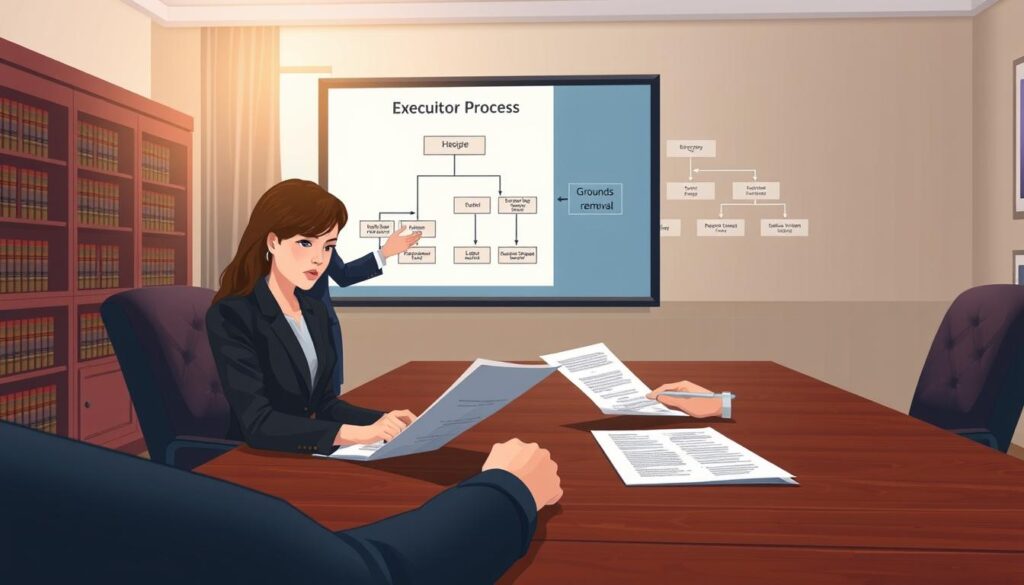
Grounds for Removal of an Executor
The removal of an executor is a significant step that requires careful consideration of the legal grounds. When an executor fails to perform their duties or acts in a manner detrimental to the estate, beneficiaries may need to take action to protect their interests.
Legal Reasons for Removal
There are several legal reasons that can lead to the removal of an executor. These include:
- Breach of Duty: Failure to act in the best interests of the estate or beneficiaries.
- Lack of Capacity: Mental or physical incapacity to perform executor duties.
- Conflict of Interest: Situations where the executor’s personal interests conflict with those of the estate.
Understanding these grounds is crucial for beneficiaries who suspect misconduct. The court’s decision to remove an executor is based on evidence of such grounds.
Process of Removal
The process of removing an executor involves petitioning the court. This is a complex process that requires careful preparation and often legal representation.
| Step | Description |
|---|---|
| 1. Gather Evidence | Collect documentation supporting the grounds for removal. |
| 2. File a Petition | Submit a petition to the court outlining the reasons for removal. |
| 3. Court Hearing | Attend a court hearing where the evidence will be reviewed. |
Removing an executor is a serious step, and it’s essential to understand the legal grounds and process involved. Beneficiaries should seek legal advice to navigate this complex process effectively.
Seeking Legal Redress
In cases of executor malpractice, beneficiaries should be aware of their options for seeking legal redress. Executor misconduct can have severe consequences, and taking prompt legal action is crucial to protect the estate and its beneficiaries.
When to Consult a Solicitor
Beneficiaries who suspect executor misconduct should consult a solicitor specializing in probate law as soon as possible. A solicitor can provide guidance on the best course of action and help beneficiaries understand their legal rights. Early legal advice can prevent further financial loss or complications.
Some key indicators that it’s time to consult a solicitor include:
- Significant delays in the administration of the estate
- Suspected financial irregularities or dishonesty
- Disputes among beneficiaries or between beneficiaries and the executor
As noted by a legal expert,
“Beneficiaries should not hesitate to seek legal advice if they suspect something is amiss. Prompt action can mitigate potential losses.”
Costs Involved in Legal Action
Understanding the costs involved in taking legal action against an executor is essential for beneficiaries. Legal fees can vary widely depending on the complexity of the case and the solicitor’s rates. It’s crucial to discuss potential costs with your solicitor upfront.
Beneficiaries should be aware that legal action can be costly, but there are various payment structures and funding options available. Some solicitors offer:
| Payment Structure | Description |
|---|---|
| Hourly Rate | Charges based on the time spent on the case |
| Fixed Fee | A predetermined fee for specific services |
| Conditional Fee | Fees contingent on the outcome of the case |

Beneficiaries must weigh the potential costs against the potential benefits of legal action. In cases of significant executor misconduct, pursuing legal redress can be a worthwhile endeavor to protect the estate and ensure justice.
Mediation as a Solution
Mediation emerges as a sensible approach to resolving executor misconduct disputes without court intervention. When conflicts arise, mediation offers a constructive and cost-effective way to address issues between executors or between executors and beneficiaries.
Benefits of Mediation
Mediation has several benefits, including preserving family relationships and avoiding costly litigation. By facilitating open communication, mediation helps parties understand each other’s perspectives and work towards a mutually acceptable resolution.
Key advantages of mediation include:
- Cost savings compared to litigation
- Preservation of family relationships
- Flexibility in finding solutions
- Confidentiality throughout the process
As noted by a legal expert, “Mediation is particularly useful in estate disputes where relationships are complex and emotions run high.“
How Mediation Works in Executor Disputes
Mediation involves a neutral third-party facilitator who helps the disputing parties communicate effectively and reach a resolution. The process is typically less formal than a court proceeding, allowing for more flexibility in finding a solution.
The mediator does not make decisions but guides the parties towards a mutually agreeable outcome. This process can be particularly beneficial in cases of executor misconduct, where the goal is to resolve disputes without the need for lengthy and costly legal battles.

By understanding the benefits and process of mediation, parties involved in executor disputes can make informed decisions about how to resolve their differences amicably.
Protecting Yourself During the Process
When dealing with executor misconduct, it’s essential to protect your interests as a beneficiary. Understanding your rights and taking proactive steps can make a significant difference in the outcome.
Safeguarding Your Interests
To safeguard your interests, you should keep a record of all correspondence and transactions related to the estate. This documentation can be vital in case of a dispute. For more information on executor roles, you can visit our guide on how many executors you need for a.
The Role of Documentation
Maintaining detailed records of all estate-related transactions and communications is crucial. This includes financial statements, letters, and emails. Proper documentation helps ensure that your rights are protected and can be used as evidence if needed.
By being proactive and informed, you can navigate the complexities of executor disputes more effectively. Understanding executor responsibilities in the UK is key to protecting your interests and ensuring that the estate is administered fairly.
FAQ
What constitutes executor misconduct in the UK?
Executor misconduct occurs when an executor fails to act in the best interests of the estate or its beneficiaries, including actions such as selling property at below market value, failing to pay debts, or distributing assets contrary to the will’s instructions.
What are the common types of executor misconduct?
Common types of misconduct include delays in estate administration, lack of transparency, financial discrepancies, and distributing assets contrary to the will’s instructions.
What are the legal responsibilities of an executor?
Executors have a fiduciary duty to act in the best interests of the estate and its beneficiaries, including managing the estate’s assets, paying debts, and distributing inheritances according to the will.
How can beneficiaries identify executor misconduct?
Beneficiaries should watch for red flags such as delays in estate administration, lack of transparency, and financial discrepancies to identify potential executor misconduct.
What is the process for removing an executor in the UK?
Removing an executor involves petitioning the court, which requires a thorough understanding of the legal grounds, including breach of duty, lack of capacity, and conflict of interest.
When should beneficiaries seek legal advice regarding executor misconduct?
Beneficiaries should seek legal advice from a solicitor specializing in probate law when they suspect executor misconduct or need guidance on challenging an executor’s decision.
What are the benefits of mediation in resolving executor disputes?
Mediation offers a constructive and cost-effective way to resolve disputes, preserving family relationships and avoiding costly litigation.
How can beneficiaries protect themselves during executor disputes?
Beneficiaries can protect themselves by understanding their rights, keeping records of correspondence and transactions, and seeking legal advice when necessary.
What is the role of the Probate Registry in overseeing estate administration?
The Probate Registry plays a crucial role in overseeing the administration of estates, ensuring that executors comply with their legal duties and responsibilities.
What are the consequences of executor misconduct or breach of duty?
Executors who breach their duties or engage in misconduct may face legal consequences, including removal as an executor, financial penalties, or other court-imposed sanctions.
Real-World Examples of Executor Misconduct in England and Wales
Understanding what executor misconduct looks like in practice can help beneficiaries recognise problems early and take appropriate action. The following examples are drawn from patterns commonly seen in UK probate disputes. Each scenario may constitute a breach of an executor’s statutory duties under Section 25 of the Administration of Estates Act 1925, which places a primary obligation on executors to administer the estate according to law.
Examples of Misconduct That May Arise During Probate
- Misappropriating estate assets: An executor transfers estate funds into their own bank account, or sells estate property and retains the proceeds rather than distributing them to beneficiaries. This may amount to theft or fraud and can be referred to the police.
- Self-dealing: An executor purchases estate assets — such as property or investments — at below-market value without full disclosure to all beneficiaries and without independent valuation. This is typically a breach of the executor’s duty to act in the interests of the estate rather than their own.
- Commingling funds: An executor mixes estate money with their personal finances, making it difficult to account for what has been spent, received, or distributed. In our experience, this is one of the most commonly reported irregularities and can indicate either negligence or deliberate mismanagement.
- Unreasonable delay: While UK probate law recognises an executor’s year — a general rule that beneficiaries cannot ordinarily demand distribution within 12 months of the date of death — delays extending well beyond this period without explanation may suggest misconduct or neglect of duty.
- Failing to notify beneficiaries: An executor deliberately withholds information about the estate, the probate process, or distributions due. Beneficiaries generally have a right to be kept reasonably informed.
- Making unauthorised distributions: Paying out assets to certain beneficiaries — or to themselves — ahead of others without proper legal authority or agreement.
- Neglecting estate debts: Failing to identify and settle valid debts before distributing the estate, potentially exposing beneficiaries to later creditor claims.
- Misvaluing assets for probate: Deliberately undervaluing or overvaluing estate assets on the probate application, which may also attract scrutiny from HMRC in relation to Inheritance Tax reporting obligations.
- Refusing to provide estate accounts: An executor declines repeated requests from beneficiaries to see a breakdown of estate income, expenditure, and proposed distributions. This is typically a red flag and, if persistent, may justify a formal application to court.
How to Prove Executor Misconduct: A Practical Step-by-Step Approach
If you suspect misconduct, building a clear evidence trail as early as possible is important. The following steps may help you escalate the matter appropriately.
- Step 1 — Put concerns in writing: Write formally to the executor setting out your specific concerns. Keep copies of all correspondence. Written records may become important if the matter proceeds to court.
- Step 2 — Request estate accounts: Ask the executor in writing for a full inventory and account of the estate. If they refuse or repeatedly delay, this refusal itself may be relevant evidence.
- Step 3 — Apply for an inventory and account order: If the executor fails to respond adequately, a beneficiary may apply to the court under CPR Part 64 for an order compelling the executor to produce accounts. This is a relatively focused application and does not necessarily require full litigation.
- Step 4 — Gather supporting documentation: Collect bank statements, valuations, correspondence, Land Registry records, and any other documents relevant to the estate. The probate registry holds a public record of the grant of probate and the will, which you can obtain for a small fee.
- Step 5 — Seek legal advice: At this stage, we would generally recommend speaking with a solicitor who specialises in contentious probate. Our team can help point you toward appropriate professional support before matters escalate.
Prevention Is More Effective Than Litigation
In our view, the most effective protection against executor misconduct is a well-considered estate plan put in place before it is ever needed. Appointing co-executors — where each acts as a check on the other — structuring a clear letter of wishes, and considering a professional executor for larger or more complex estates can significantly reduce the risk of disputes arising. Litigation solicitors are well placed to resolve misconduct after it occurs, but the better outcome for your family is ensuring it never happens at all. If you would like to discuss how to structure your estate plan to minimise these risks, our team is happy to help.
Common Questions About Executor Misconduct
How do you declare an executor incompetent?
There is no single formal process for declaring an executor incompetent in England and Wales. However, a beneficiary or co-executor may apply to the High Court (Chancery Division) to have an executor removed and replaced. The court has power to do this under Section 50 of the Trustee Act 1925, which allows it to appoint a substitute where it is expedient to do so. Grounds typically include persistent neglect of duty, physical or mental incapacity, or behaviour that makes it impractical for the executor to carry out their role impartially. The process generally requires evidence of the specific conduct causing concern, and legal advice is strongly recommended before making such an application.
What if an executor lies to a beneficiary?
If an executor provides false information to a beneficiary — for example, misrepresenting the value of the estate, denying the existence of assets, or making untrue statements about distributions — this may constitute a breach of their fiduciary duty and, in more serious cases, may amount to fraud. Beneficiaries in this position should document all communications carefully and may wish to apply to court under CPR Part 64 for an order requiring the executor to produce accounts and an inventory. Where deliberate dishonesty is suspected, it may also be appropriate to report the matter to the police, as misappropriation of estate assets can give rise to criminal liability.
Can an executor be charged criminally?
Yes, in some circumstances. Where an executor deliberately misappropriates estate assets, this may constitute theft under the Theft Act 1968. Fraud by abuse of position — for example, using their role to benefit themselves at the expense of beneficiaries — may also be prosecuted under the Fraud Act 2006. Criminal proceedings are separate from civil probate proceedings and are generally pursued by the police or Crown Prosecution Service rather than beneficiaries directly. Civil and criminal routes may run in parallel in serious cases.
Can a beneficiary challenge an executor?
Yes. Beneficiaries have standing to challenge executor decisions through the courts in England and Wales. Common routes include applying under CPR Part 64 for directions, applying for the executor’s removal under Section 50 of the Trustee Act 1925, or pursuing a claim for breach of fiduciary duty. Before taking formal legal action, it is generally worth attempting to resolve the matter through correspondence or mediation, as litigation can be costly and time-consuming for all parties. We would typically recommend seeking advice from a contentious probate solicitor to assess the strength of your position before proceeding.
How do you hold an executor accountable?
The most practical first step is to request formal estate accounts in writing, citing the executor’s duty to account under Section 25 of the Administration of Estates Act 1925. If the executor refuses or continues to delay unreasonably — bearing in mind the executor’s year rule, after which patience for delays may reasonably run thin — a beneficiary may apply to the court for an inventory and account order. In cases of suspected financial wrongdoing, specialist legal advice should be sought promptly, as delay may make it harder to trace or recover assets. Where the executor is also a solicitor or licensed professional, a complaint to the Solicitors Regulation Authority may also be appropriate.